




Abstract art
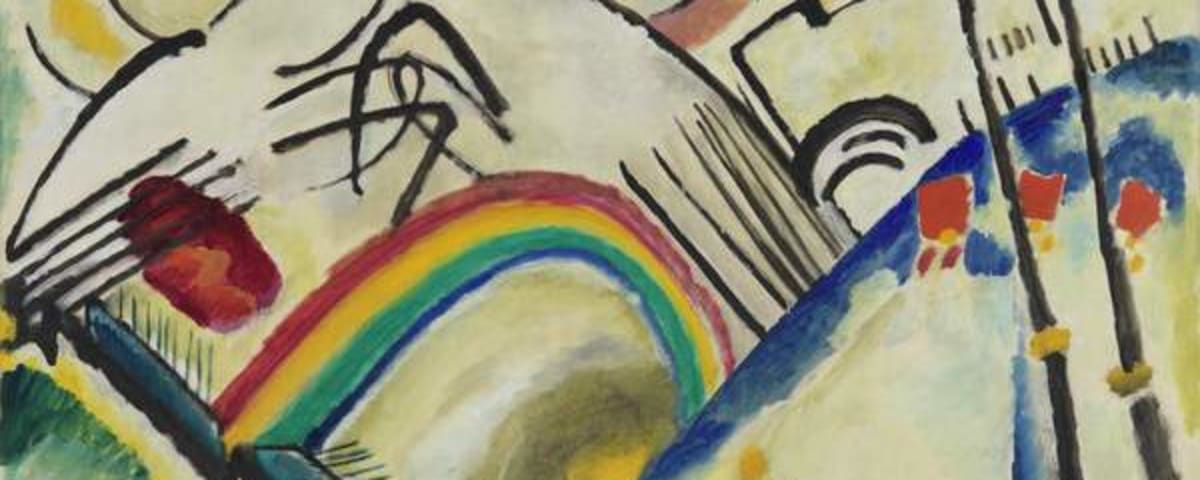
Abstract art comprises works that do not attempt to represent visual reality accurately but instead use forms, colours, lines, volumes and gestural marks to achieve their effect. Abstraction may depart from the visible world partially, by simplifying or stylising it, or completely, when the image bears no reference to recognisable objects. The aim is to express ideas, emotions, rhythms and spiritual states through a purely plastic language. Abstract art took shape in the early twentieth century as a logical extension of the experiments of Post-Impressionism, Fauvism and Cubism. One of its founders is considered to be Wassily Kandinsky, who had close ties to Ukraine and studied in Odesa; his theoretical work Concerning the Spiritual in Art (1911) argued for the possibility of non-objective painting. Important contributions came from Kazimir Malevich, the creator of Suprematism who was closely connected with Kyiv, and from Piet Mondrian with Neoplasticism. Abstraction branched into geometric and lyrical tendencies and remains one of the defining languages of modern art.




