




Allegory
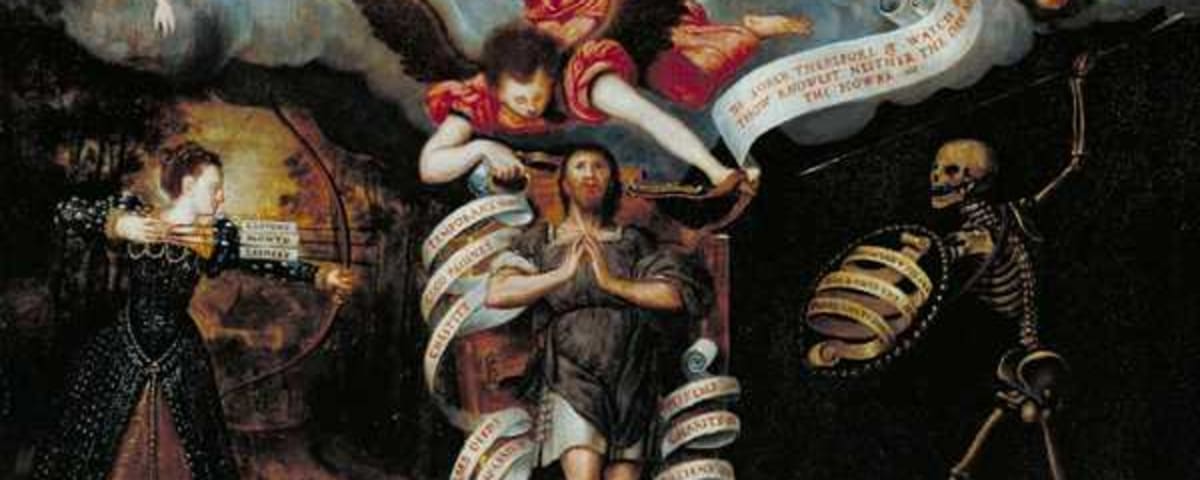
Allegory in art is a device by which depicted objects, figures or whole scenes symbolize a deeper meaning — usually moral, religious or philosophical — that goes beyond the literal subject. Abstract concepts such as Justice, Love, Death, Peace, Time, virtues and vices are embodied in recognizable personified figures, often equipped with characteristic attributes: scales and a blindfold for Justice, a scythe and hourglass for Time or Death. Reading such images requires knowledge of iconographic codes that developed over centuries. Allegory has ancient roots in antiquity and flourished in the art of the Middle Ages, the Renaissance and the Baroque, when painters such as Sandro Botticelli, Titian, Peter Paul Rubens and Nicolas Poussin created complex allegorical compositions for princely, ecclesiastical and state patrons. Reference works such as Cesare Ripa's Iconologia (1593) codified the standard ways of depicting abstract concepts. Allegory remained a powerful means of political and moral rhetoric for centuries and retains its relevance in contemporary art, where artists often turn to symbolic language to comment on social, ecological and ideological questions.




