




Analytical cubism
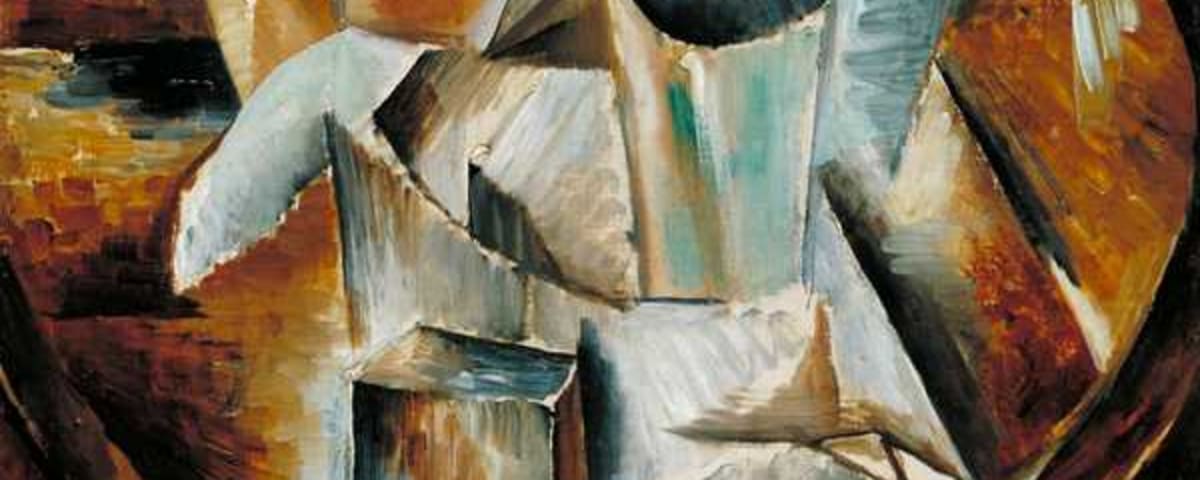
Analytical Cubism is the early phase of Cubism, usually dated to roughly 1908 to 1912. It is characterised by the fragmented appearance of objects shown simultaneously from multiple viewpoints and by a system of overlapping planes that break volume into facets. Instead of depicting the world from a single fixed position, the artists analysed form, broke it into components and redistributed them across the surface of the canvas, combining different angles in one image. The approach was developed by Pablo Picasso and Georges Braque in close creative collaboration in Paris. Their canvases of this period are distinguished by a restrained, almost monochrome palette of ochres, greys and browns, so that attention is not drawn away from the complex structure of the form. Favoured subjects were portraits and still lifes with musical instruments, bottles and newspapers. Analytical Cubism radically rethought the foundations of Western painting since the Renaissance by abandoning illusionistic perspective, and it prepared the transition to Synthetic Cubism, in which collage and brighter colours appeared. It had an enormous influence on the entire later development of modernist art.




