




Modular
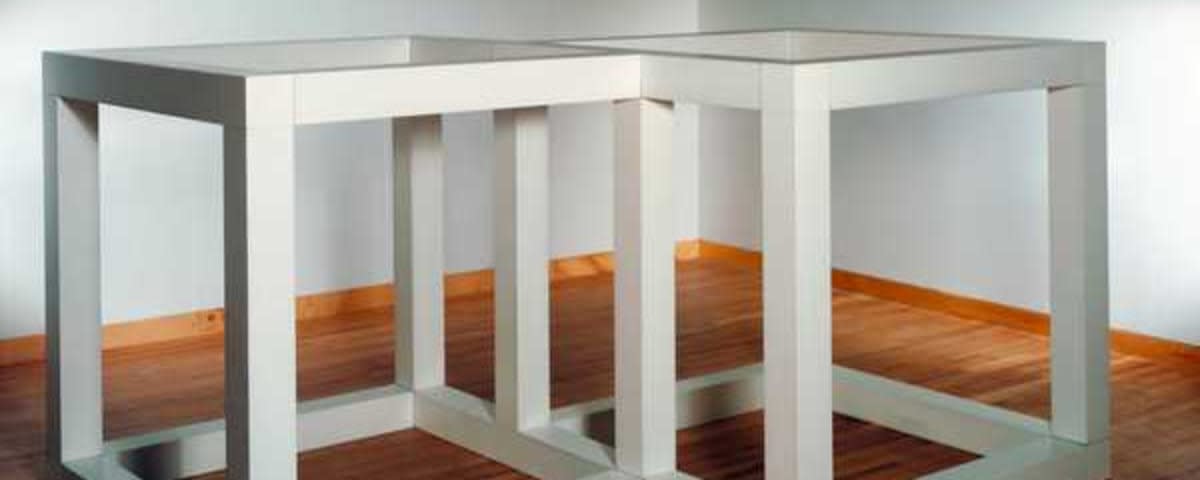
Modular is a term used in connection with Minimalism to denote an artwork composed of repeated identical parts, or modules, that can be moved, separated, and rejoined. A module is a standard unit from which, by the principle of repetition and combination, the entire structure of the work is built. This approach rejects the idea of a unique, hierarchically constructed composition in favour of an impersonal, serial logic often associated with industrial production. Modularity became one of the central ideas of 1960s Minimalism in the United States. Donald Judd created «progressions» and stacks of identical metal boxes, Carl Andre laid out floor pieces from identical bricks or metal plates, and Sol LeWitt built open cubic lattice structures. The modular principle is linked to serial art and emphasises the system, the set of rules, and the relationships between elements rather than the artist's individual gesture, radically transforming the conception of twentieth-century sculpture.




