




Nabis
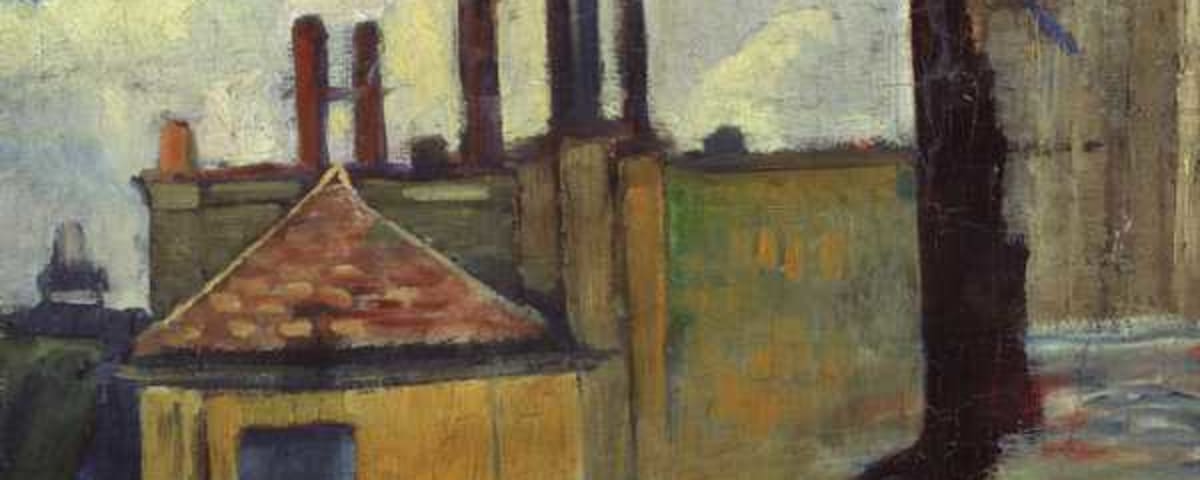
The Nabis were a group of Post-Impressionist French painters active from about 1888 to 1900, whose works are distinguished by flat patches of colour, bold outlines and simplified, decorative drawing. The name derives from the Hebrew word 'nabi' ('prophet') and reflected the semi-secret, almost mystical character of the association. The group arose under the influence of Paul Gauguin and the Pont-Aven school; the immediate spark was a small 'talisman' picture that Paul Sérusier painted under Gauguin's guidance. The Nabis included Pierre Bonnard, Édouard Vuillard, Maurice Denis, who formulated the famous dictum that a painting is above all a flat surface covered with colours in a certain order, as well as Paul Sérusier, Ker-Xavier Roussel and Félix Vallotton. The Nabis erased the boundary between high and decorative art, working on panels, stained glass, theatre sets, posters and book illustration. Their leaning toward flatness, symbolism and ornament made the group an important link in the passage from Impressionism to Modernism and Art Nouveau.




