




Naïve art
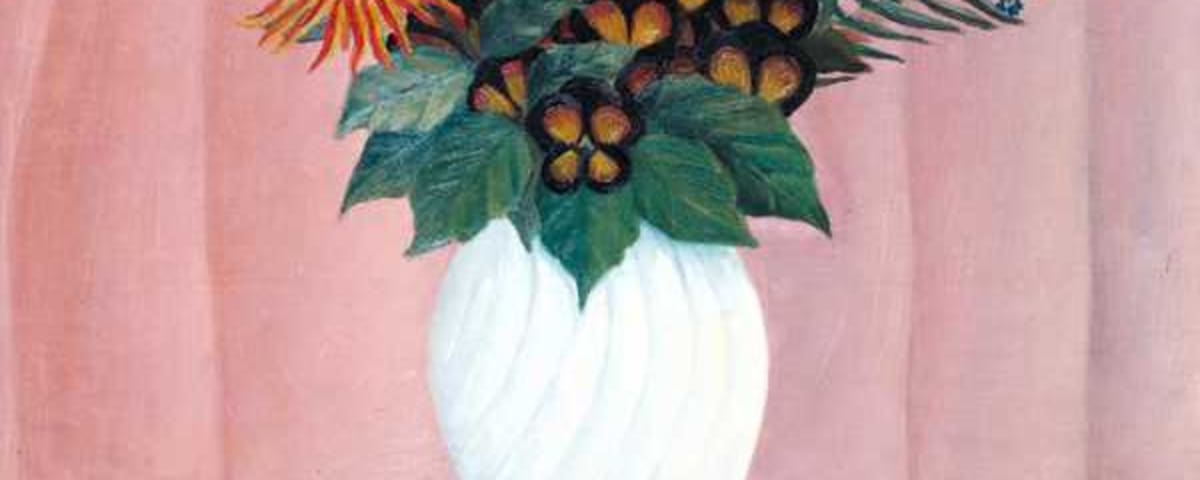
Naive art is the visual language of self-taught makers who create outside the academic tradition, relying on a direct feeling for the world rather than learned rules. Its core is a sincerity of vision in which naivety becomes not a fault but an aesthetic virtue. Formally, such works are marked by flattened space and a deliberate disregard for linear perspective and anatomical proportion. The palette is usually bright, local and decorative, without tonal gradation or academic chiaroscuro modelling. Composition tends toward symmetry, ornament and an even filling of the surface, where every detail is rendered with equal attention. Motifs are drawn from folklore, everyday life, religious subjects, and flora and fauna, often fantastical. The technique may be intentionally simplified, yet it astonishes with confident line and bold colour. In the international context the movement's classic figure is the Frenchman Henri Rousseau (the Douanier), with his fairy-tale jungles. In Ukrainian art the naive impulse reached world stature in the work of Maria Prymachenko, with her fantastical beasts and flowers. The circle of masters also includes the Lemko Nikifor Krynytsky (Epifaniy Drovniak), a singular watercolour chronicler of the provinces. Naive art is closely akin to primitivism and folk painting, yet it preserves an inimitable authorial voice. It influenced the avant-garde, which sought in it a pristine freshness. Today the movement is prized for its authenticity, decorative power and capacity to renew the very idea of artistic truth.




