




Papier collé
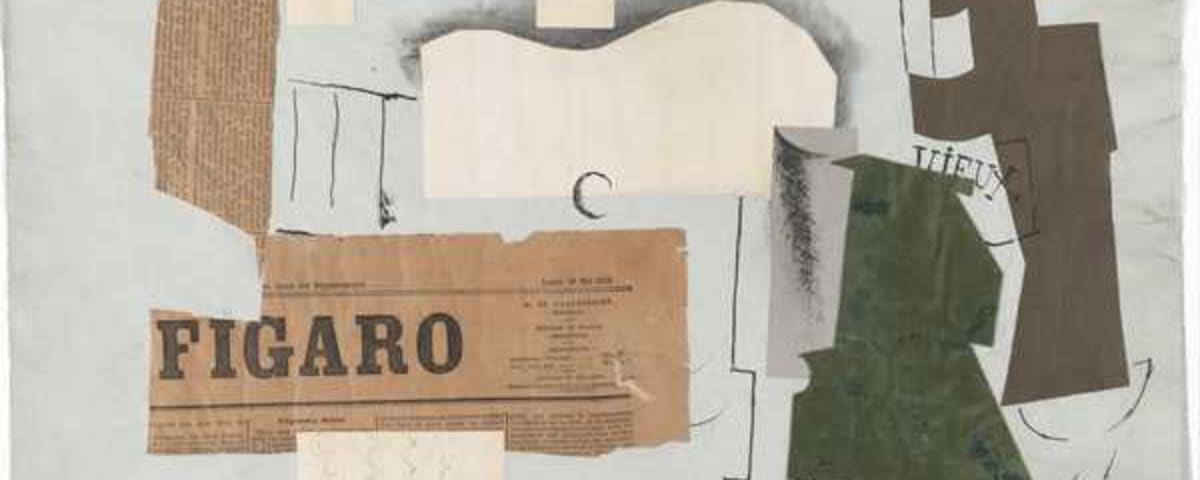
Papier collé (from the French for «pasted paper») is a specific form of collage, closer to drawing than to painting, in which pieces of paper — often printed, coloured, or textured — are pasted onto a support. The technique was invented by Georges Braque in 1912, when he pasted onto a sheet strips of paper imitating wood panelling; almost simultaneously it was taken up by Pablo Picasso. Papier collé was a logical continuation of Analytic Cubism and an important step towards Synthetic Cubism: instead of depicting objects, the artists introduced into the composition actual pieces of real material — scraps of newspaper, wallpaper, sheet music — which remained at once planes of colour and form and allusions to recognisable things. This created a play between reality and representation, between the flat surface and illusion. Papier collé differs from the broader notion of collage in its predominant use of paper and its close link to drawing. The technique had an enormous influence on the development of twentieth-century modern art.




