




Neo-romanticism
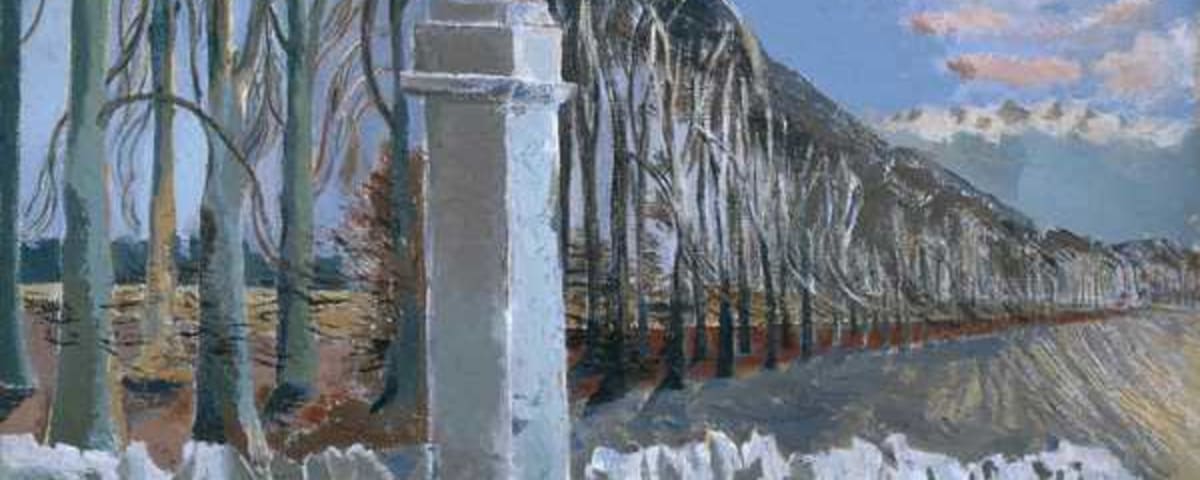
Neo-Romanticism is a term applied to the imaginary and often quite abstract landscape paintings of the British artists Paul Nash, Graham Sutherland and others in the late 1930s and the 1940s. The movement arose as a kind of revival of the spirit of nineteenth-century English Romanticism — of William Blake, Samuel Palmer and John Martin — in response to the anxieties of the pre-war and wartime years. The Neo-Romantics turned to the native landscape as a source of mystical, poetic and sometimes eerie experience, endowing hills, trees, ruins and ancient stones with a sense of spiritual presence and historical depth. Their landscapes are full of melancholy, solitude and charged atmosphere, and their forms often approach surrealist deformation and symbolic generalisation. The circle of Neo-Romantics also included John Piper, John Minton and the young Lucian Freud in his early phase. The movement played an important role in British wartime and postwar art, notably in the work of the official war artists, and expressed a yearning to seek spiritual roots and national identity in the landscape of the homeland.




