




Washington Color School
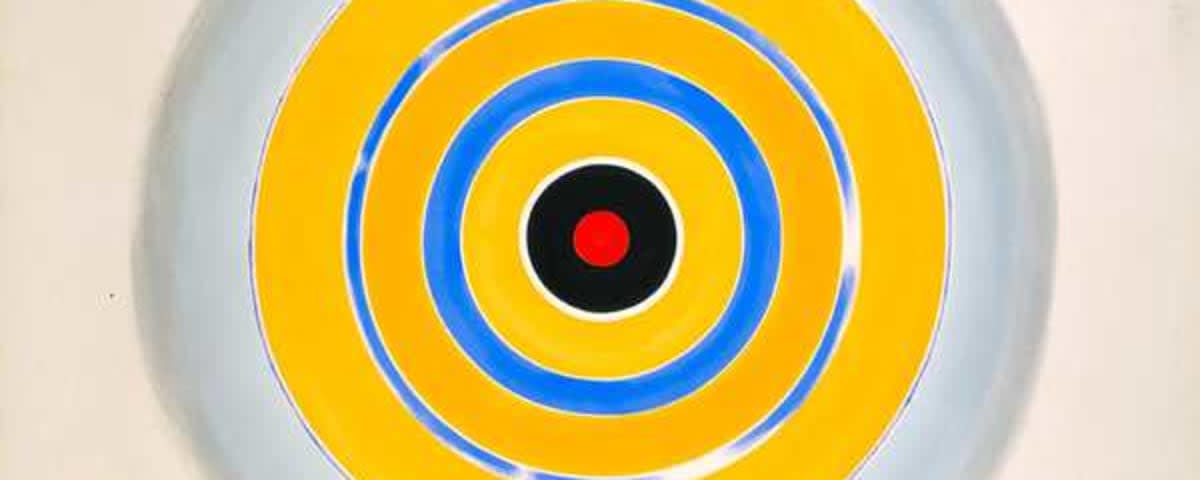
The Washington Color School was an art movement that emerged in the late 1950s and early 1960s in Washington, D.C., developing an abstract art based on colour. Its key figures were Morris Louis and Kenneth Noland, along with Gene Davis, Howard Mehring, Thomas Downing and Paul Reed. The movement grew out of color field painting and was part of the broader tendency of post-painterly abstraction, which the critic Clement Greenberg gave a theoretical foundation. The school's artists abandoned the gestural expression of Abstract Expressionism in favour of the pure, calm, optical impact of colour. An important technical innovation was staining: Louis and Noland applied diluted acrylic paint directly onto unprimed canvas, so that the colour soaked into the fibres of the fabric and became inseparable from the surface, eliminating any sense of the brushstroke. Louis created flowing veils and rivulets of colour in his Veils and Unfurleds series, while Noland worked with concentric target circles and chevrons. The Washington Color School made a significant contribution to the development of American abstraction and to the geometric, optically saturated painting of the 1960s.




