Ukrainian art & cultureOnline


Other dimensions of culture
Other dimensions of culture





Test mode: all content on this site is for testing and will be removed at launch.
Art Glossary
Ukrainian Art&Culture online glossary of art terms covers movements, styles and techniques such as Impressionism, Printmaking, Video art and more.
from Realismto Cyberpunk
34from Oilto 3D Modeling
8from Paintingto Design
7from Trypilliato Contemporary
2311 terms

A diptych is an artwork consisting of two separate panels, pictures or images that together form a single whole, often joined by hinges so that they can be folded like a book. The word derives from the Greek diptychon, meaning "folded in two." In ancient Rome, diptychs were two joined wax tablets used for writing; in the early Christian and medieval periods, diptychs of carved ivory or wood were made into portable relics and altarpieces. In Western European art of the Middle Ages and the Renaissance, the diptych became a popular form of religious painting: one panel often depicted the Madonna and Child, while the other showed a portrait of the patron-donor in a praying pose. The folding structure protected the images and allowed the diptych to be used as a personal travelling altar. A classic example is the Melun Diptych by Jean Fouquet. The format did not disappear in modern art: twentieth- and twenty-first-century artists, including Francis Bacon with his treatment of the triptych and diptych and Andy Warhol in his Marilyn Diptych, used the paired juxtaposition of two images to create a dialogue of meaning, contrast or narrative sequence.

Drawing is a technique by which images are produced on a flat surface chiefly through the drawing of lines, although drawings may also contain tonal areas, shading and other non-linear marks. It is one of the oldest and most fundamental forms of visual art: humans drew on cave walls long before the appearance of painting or writing. Drawing is carried out with dry or liquid means — pencil, charcoal, chalk, sanguine, pen and ink, silverpoint — on paper, parchment or other supports. In art, drawing performs a dual role. On the one hand, it is a preparatory tool — a sketch, study or cartoon by means of which an artist works out a composition, studies nature and plans a future work in painting, sculpture or architecture. On the other hand, a drawing can be a self-sufficient, finished work of art with its own aesthetic value. In the Renaissance, drawing (disegno) was regarded as the intellectual foundation of all the visual arts, a means of expressing an artist's conception and skill. Outstanding draughtsmen — from Leonardo da Vinci, Dürer and Rembrandt to Ingres, Van Gogh and contemporary artists — attest to the inexhaustible expressive possibilities of line. Drawing remains today the foundation of artistic education.

Painting is the practice of applying paint or other materials to a surface, usually with a brush, and more broadly it is one of the fundamental visual arts and its result — the picture. Painting works with colour, tone, line, texture and composition to create images of the real world, to express emotion or to embody abstract ideas. The supporting surface may be canvas, a wooden panel, paper, plaster or a wall, and among its techniques are oil, tempera, watercolour, gouache, acrylic, fresco and encaustic. The history of painting reaches back to prehistoric cave art and continues through Egyptian, classical and medieval art, the flowering of the Renaissance, the Baroque and on to modernism, which radically rethought the very notion of the image. In the twentieth century abstraction, expressionism and conceptualism expanded the limits of what a picture could be. The Ukrainian tradition of painting embraces Byzantine-Rus icon painting, Cossack Baroque, realism and the powerful avant-garde of the early twentieth century, represented by masters of Boichukism and non-objective painting. Despite the rise of photography and new media, painting remains a central and living art form.
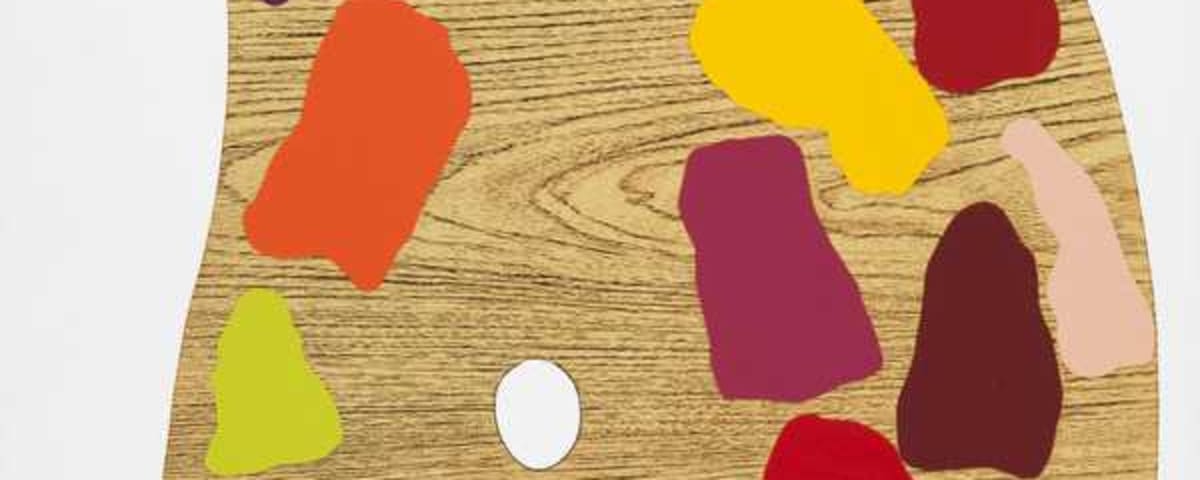
A palette is a smooth flat surface on which the artist lays out and mixes their paints before applying them to the picture; it often has a thumb-hole so that it can be conveniently held in the hand. The classic painter's palette is a thin wooden board of oval or rectangular shape, though glass, porcelain, metal and modern disposable paper palettes are also used. On it the artist prepares the required shades, adjusts the amount of paint and solvent and keeps an ordered set of colours at hand throughout the work. In a figurative, broader sense, "palette" refers to the characteristic set of colours of an artist or work — its colour range. Thus one speaks of a "cool" or "warm" palette, or of the restrained or saturated palette of a particular master. The way paints are arranged on the palette reflects the working method: some artists build a clear tonal series, others mix colours intuitively. In a still wider figurative sense the word is used beyond painting too — one speaks of a composer's tonal palette or a writer's palette of devices. Thus the palette is at once a concrete tool and a metaphor for artistic range.
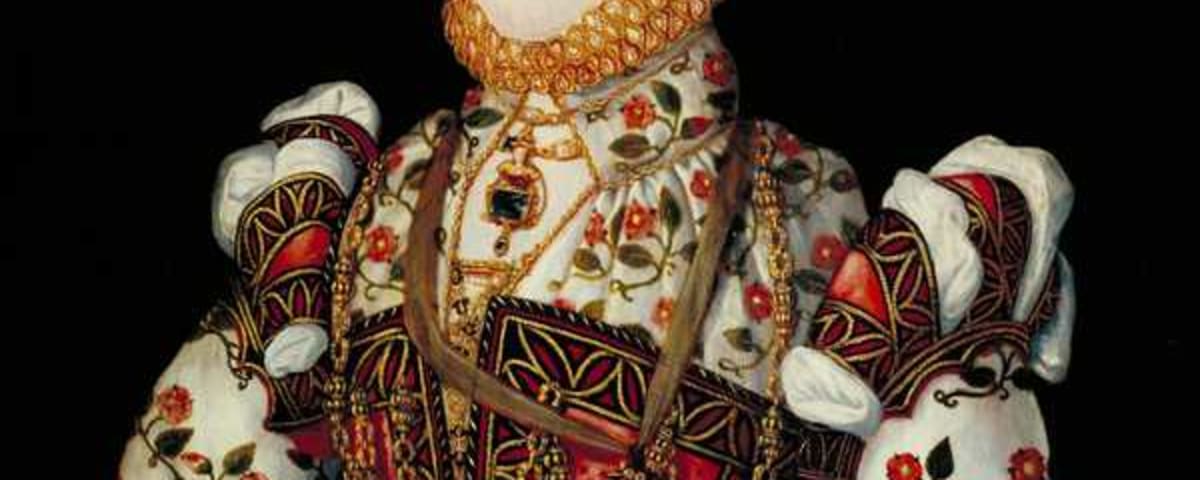
A panel in painting is a rigid support or surface for applying paint, as opposed to flexible stretched canvas. The most common historically was the wooden panel: a prepared board of oak, poplar, lime or another wood, covered with a gesso ground that gave a smooth white surface for tempera or oil. Wood provided a strong, stable base for fine and detailed work, so most easel pictures and altarpieces before the sixteenth century, as well as icons, were executed on panels. With the spread of canvas in Venice and Northern Europe, the panel gave way to it as the principal material because of canvas's lightness, cheapness and suitability for large formats, yet the panel never disappeared entirely. Wooden panels had a drawback — cracking and warping with changes in humidity — so conservators pay them particular attention. In the twentieth century artists returned to rigid supports, using plywood, hardboard, masonite and modern composite panels, which hold impasto well and do not deform. The term "panel" is also used for the individual parts of a polyptych and for wall panels.
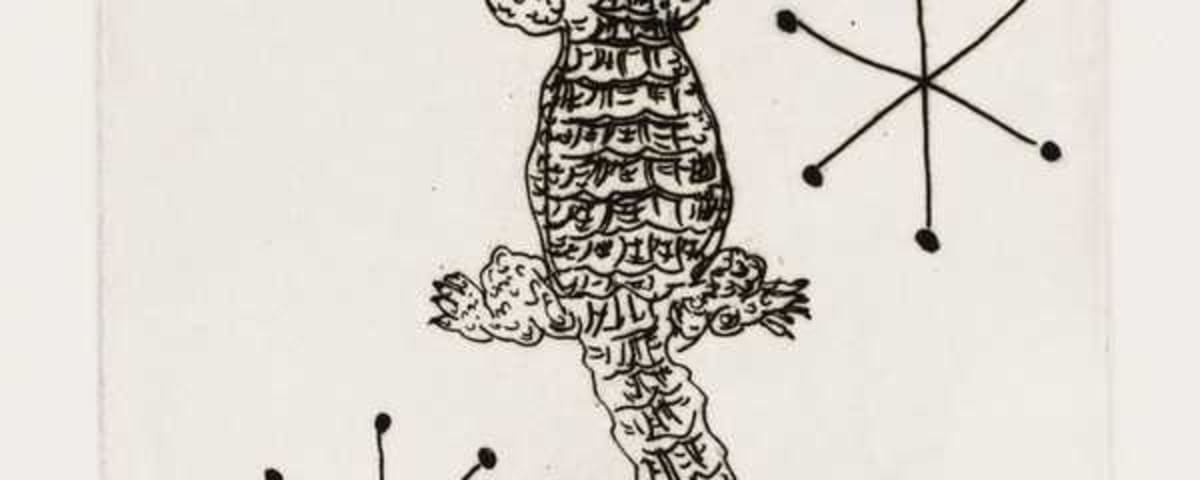
Paper is matted plant fibre formed into a thin sheet either by hand (the traditional method) or by machine (the modern method); artists use it as a surface for drawing, watercolour and printmaking. Paper is made from cellulose fibres — once chiefly from linen and cotton rags, now largely from wood pulp — which are pulped, suspended in water and lifted on a screen, after which the fibres interlock and dry into a strong sheet. The quality, texture, sizing and colour of the paper significantly affect the final appearance of a work. Paper was invented in ancient China, whence it spread through the Islamic world to medieval Europe, revolutionising drawing, book printing and printmaking. Different grades — from rough, grainy watercolour paper to smooth printmaking paper and thin Japanese sheets — serve the needs of particular techniques. In many cultures paper became an artistic material in its own right: in paper-cutting, origami, paper reliefs and installations. The Ukrainian folk vytynanka is a vivid example of turning plain paper into a distinctive decorative art. The fragility and sensitivity of paper require special conditions of storage.
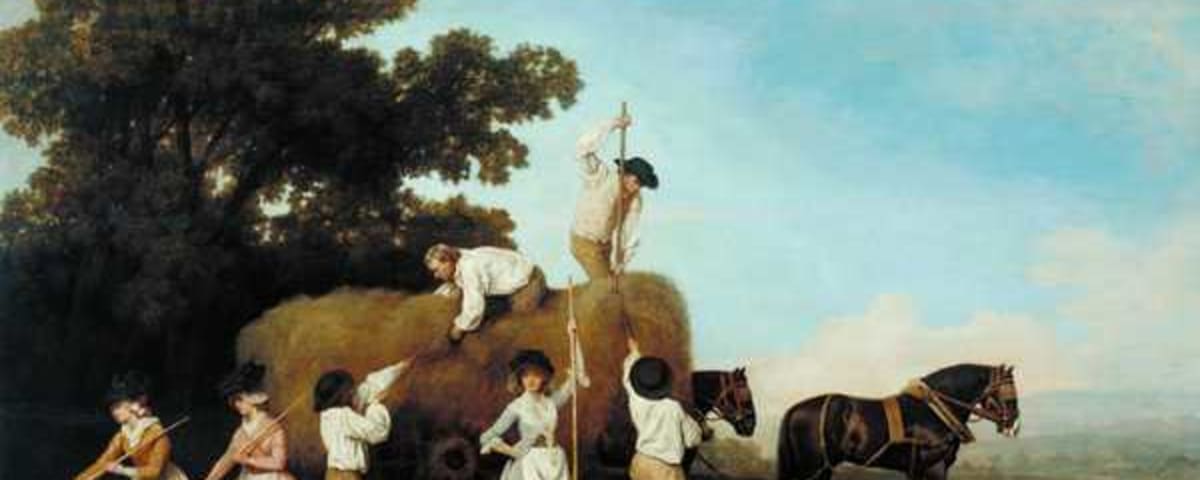
A pendant, or companion picture, is one of two works conceived to be displayed together as a matching pair. The term "pendant" (from the French for "hanging, corresponding") denotes two paintings of the same size and format, with a coordinated composition and usually a shared theme, intended to hang side by side — often symmetrically on either side of a door, fireplace or central image. Together they form a balanced ensemble in which each half complements and "answers" the other. The practice of making companion pictures was especially widespread in European art of the seventeenth and eighteenth centuries. A classic example is the pendant portraits of a married couple, in which husband and wife are depicted separately but turned towards each other, forming a single pair. Pendants could also be landscapes — morning and evening, for instance — or allegorical subjects complementing one another in meaning. Symmetrical hanging was an important part of the decorative scheme of palace and country-house interiors. Recognising works as pendants matters for art history and museum practice, since separating a historically linked pair destroys the dialogue between the images that the artist intended.
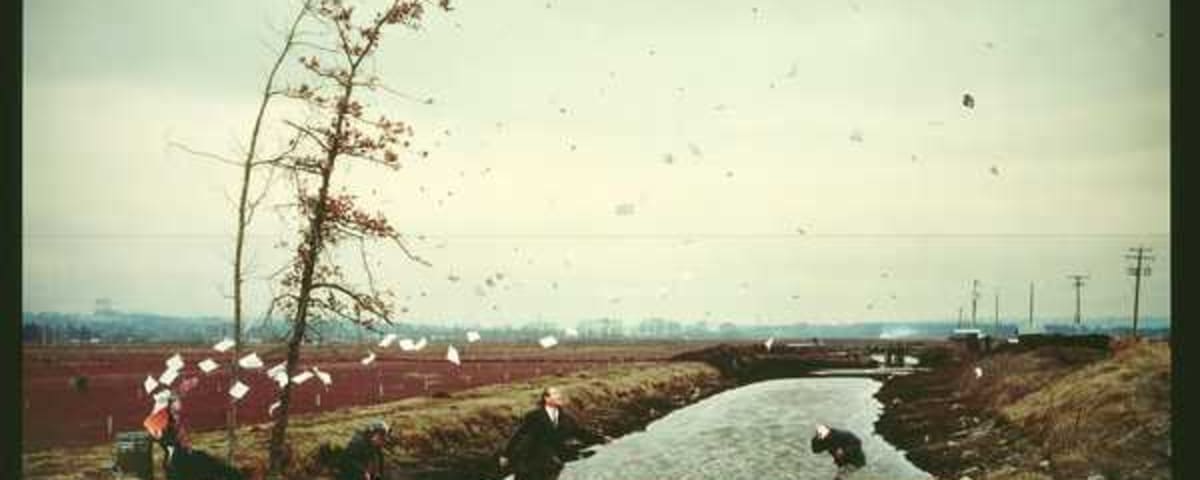
A tableau is a painting in which the figures are arranged for pictorial or dramatic effect and appear wholly absorbed in their actions, entirely unaware of the presence of the viewer. The term comes from the French tableau ("picture") and in art theory denotes a composition that presents itself as a self-sufficient, closed scene, as if a frozen moment of action. The figures do not "play to the audience" or address the viewer with a look or gesture, but behave as though the fourth wall between the picture and the onlooker did not exist at all. The notion of the tableau was developed in the eighteenth century by the philosopher Denis Diderot, who opposed the truthful absorption of figures in their action to artificial theatricality. Later the art historian Michael Fried, in his studies of "absorption" and "theatricality," showed how important this strategy was for the development of European painting from Chardin and Greuze onward. A related notion is the "living picture" (tableau vivant), in which live people froze in poses to reproduce a well-known painting. The idea of the tableau also influenced photography and cinema, where the staged, carefully composed "tableau" became a distinct expressive device of framing.

A triptych is a work of art composed of three panels or sections, usually unified by a shared theme or composition. The central panel is typically the largest, while the two side wings can fold inward to protect the main image. The format originated in early Christian and medieval art, where triptychs functioned as altarpieces for churches and private devotional spaces. The three parts often symbolised the Trinity or allowed a narrative to unfold across a sequence of scenes. During the Renaissance and the Northern Renaissance the triptych flourished in the hands of masters such as Hans Memling and Hieronymus Bosch, whose Garden of Earthly Delights is a celebrated example. In Ukrainian sacred art the tradition of folding devotional images likewise appeared in icon painting and iconostasis design. In the twentieth century artists such as Francis Bacon revived the triptych as a secular form, using three panels for psychological tension and the juxtaposition of images. Today the term also applies to photography, video and installation, where a threefold structure organises the viewer's perception.