Ukrainian art & cultureOnline


Other dimensions of culture
Other dimensions of culture





Test mode: all content on this site is for testing and will be removed at launch.
Art Glossary
Ukrainian Art&Culture online glossary of art terms covers movements, styles and techniques such as Impressionism, Printmaking, Video art and more.
from Realismto Cyberpunk
34from Oilto 3D Modeling
8from Paintingto Design
7from Trypilliato Contemporary
2349 terms

Airbrushing is a painting technique in which paint is atomized by compressed air through an airbrush, a small pneumatic tool. It allows the creation of even, uniform surfaces, soft tonal transitions, and smooth gradients without visible brushwork, which is why it is often used to achieve a high degree of realism. The airbrush appeared in the late nineteenth century and was first used for retouching photographs and for commercial illustration. In the twentieth century it was widely applied in poster art, advertising, automotive design, and scientific illustration. In fine art, airbrushing became an important tool for Photorealists and Pop artists; Audrey Flack, for example, used it for smooth, almost photographic surfaces. The term airbrushing is also used figuratively to mean retouching or removing unwanted details from an image. The technique requires precise control of pressure and distance, along with stencils or masks to define crisp shapes.
A technique of making a three-dimensional work by combining disparate elements, above all found or ready-made objects; also the resulting work.
Cadavre exquis, the exquisite corpse, is a collective method of drawing or writing invented by the Surrealists around 1925. Several participants add a fragment to a shared work in turn without seeing the earlier parts: the sheet is folded to hide what has already been made, leaving visible only the connecting lines. The result is a strange, unpredictable creature or phrase born of the collective unconscious. The name comes from the first sentence produced in the literary version of the game: the exquisite corpse shall drink the new wine. Participants included Andre Breton, Yves Tanguy, Marcel Duchamp, and Joan Miro. The method embodied key Surrealist principles, automatism, chance, the refusal of individual control, and the freeing of imagination from logic. The exquisite corpse became not merely a game but a serious creative tool that influenced later collective and performative practices and is still used in art education to loosen the imagination.
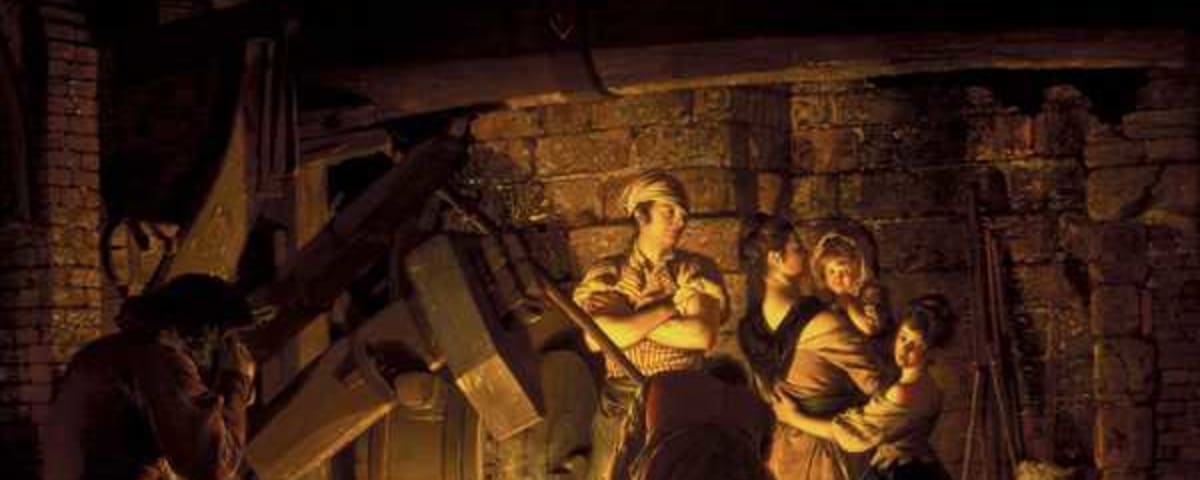
Chiaroscuro is an Italian term meaning literally light-dark, denoting the distribution and interplay of light and shadow in a work, and the modelling of volume and space through tonal contrast. The device developed during the Renaissance: Leonardo da Vinci studied gradual transitions from light to shade, a related idea known as sfumato, giving forms a sense of three-dimensional fullness. Chiaroscuro found its most dramatic expression in the Baroque: Caravaggio used sharp contrasts of brilliant light and deep darkness, called tenebrism, to heighten the emotional tension and theatricality of his scenes. This approach influenced numerous masters of light and shade across Europe. Chiaroscuro remains a fundamental means of expression in painting, drawing, photography, and cinema, where the contrast of light and dark shapes mood, volume, and drama. The term is also applied to the chiaroscuro woodcut, printed from several blocks to render tones.
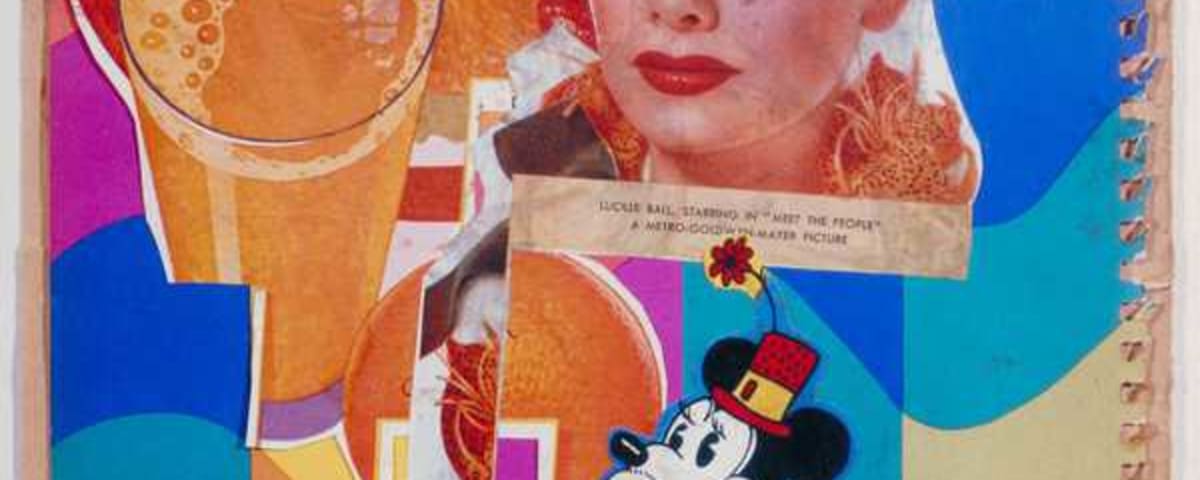
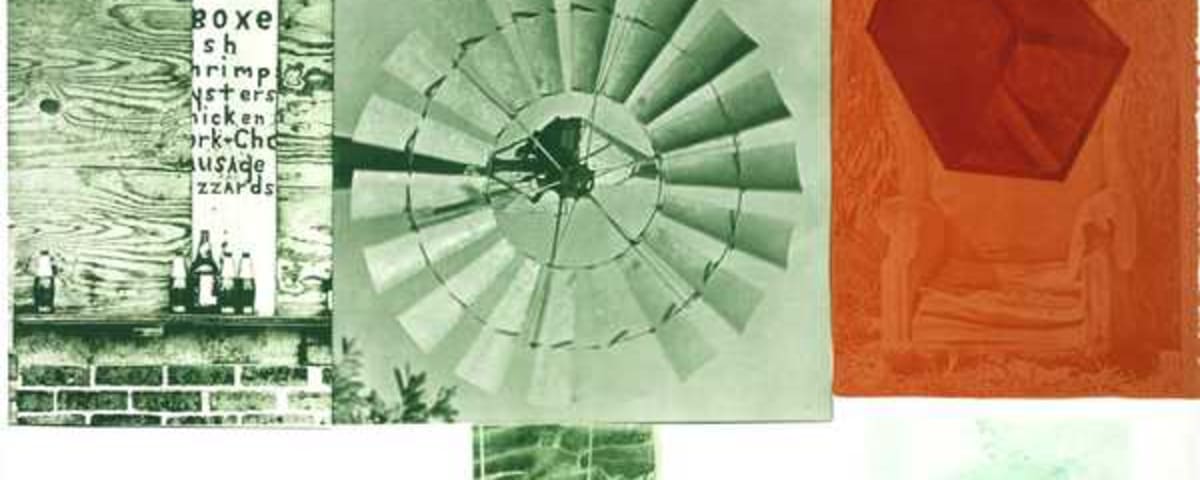
Collage, from the French coller meaning to glue, is a technique and its resulting work in which pieces of paper, photographs, fabric, newspaper clippings, and other found materials are arranged and pasted onto a supporting surface. Although pasting was long known in folk and decorative art, collage gained the status of a serious modernist method around 1912 through Pablo Picasso and Georges Braque, who introduced scraps of the real world into Cubist pictures, questioning the boundary between image and reality. Collage was then taken up by the Dadaists and Surrealists as well as the Constructivists. Within the Ukrainian avant-garde the Kharkiv artist Vasyl Yermilov developed montage and collage principles, combining wood, metal, typography, and texture. Collage radically expanded ideas about the material of art, becoming the basis for assemblage, photomontage, and mixed media. It remains one of the most widespread methods in contemporary visual art, design, and education.

Decalcomania is an image-transfer technique in which liquid paint is applied to a surface, another surface such as paper, glass, or canvas is pressed against it, and the two are then pulled apart. The stretching and lifting of the paint produces unexpected, mirror-like branching, spongy, or lacy structures that suggest rocks, forests, coral, or clouds. Decalcomania began as a commercial method of transferring patterns onto ceramics in the nineteenth century, but around 1936 the Surrealist Oscar Dominguez developed it as an artistic device, and Max Ernst later used it extensively, embedding chance textures into fantastic landscapes. For the Surrealists decalcomania was another method of automatism, a way to invite chance and the unconscious and to free the image from the artist's conscious control. The resulting textures often became a starting point for painted-over scenes in which an abstract blot was transformed into a recognizable yet unsettling world.
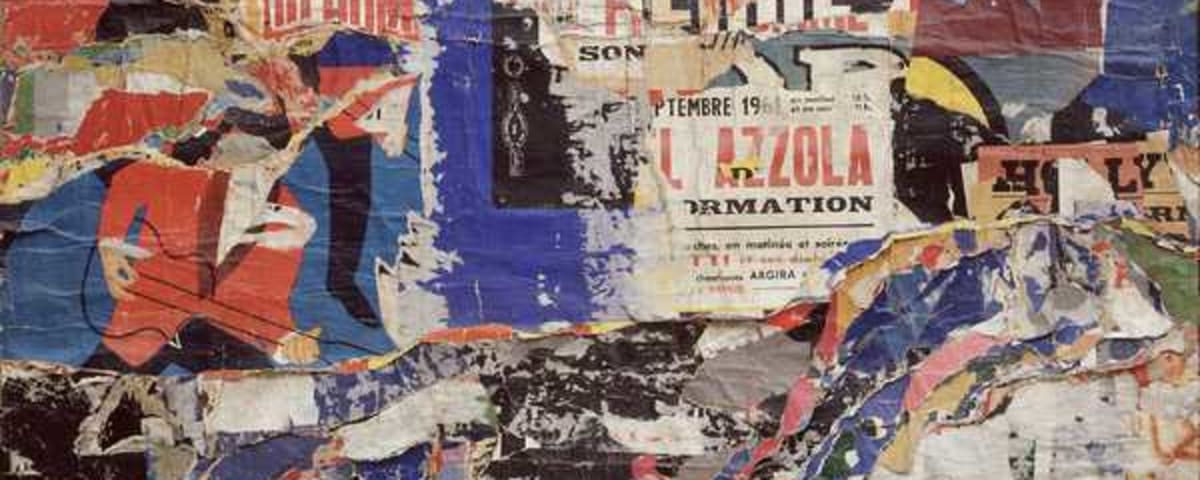
Decollage is a technique and practice that is the opposite of collage: instead of pasting elements on, the artist tears, rips, or removes layers of already existing material, most often posters and billboards, exposing lower strata and accidental rents. The term is associated above all with the Nouveau Realisme movement in France of the late 1950s and 1960s. The affichiste artists Jacques Villegle, Raymond Hains, Francois Dufrene, and Mimmo Rotella stripped tattered, torn advertising posters from city walls and presented them as finished works, in which chance rips, overlappings, and traces of time became an aesthetic statement about the modern urban environment and consumerism. Decollage turned the anonymous street surface into a kind of palimpsest of the city's collective memory. This strategy of the found and partly destroyed image echoes the idea of the ready-made and influenced later practices of appropriation, street art, and conceptual art.
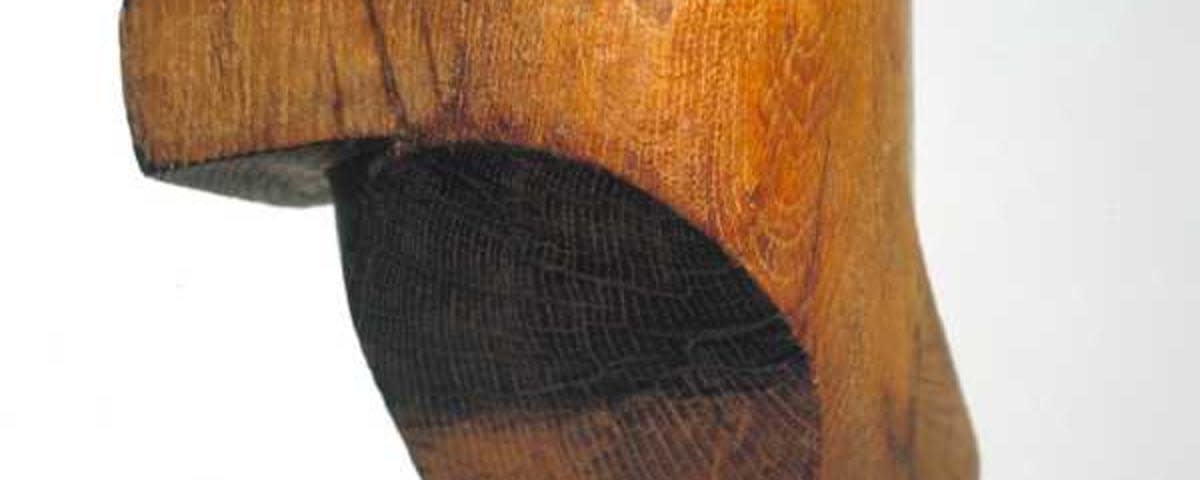
Direct carving is an approach to making sculpture in which the artist works straight into a block of material, stone or wood, allowing the process of carving and the nature of the material itself to suggest the final form, rather than transferring a pre-made clay or plaster model by means of assistants. Established in the early twentieth century, this method was an aesthetic and ethical manifesto: it proclaimed truth to materials, a respect for the texture, grain, and weight of the natural substance. Direct carving restored the value of manual labour and the uniqueness of the artist's own touch, setting them against the academic practice of casting and reproduction. Its leading masters were Constantin Brancusi and Eric Gill, and later Henry Moore and Barbara Hepworth, who believed that form should grow organically out of the material. The ideas of direct carving profoundly shaped modernist sculpture and the very understanding of three-dimensional art.
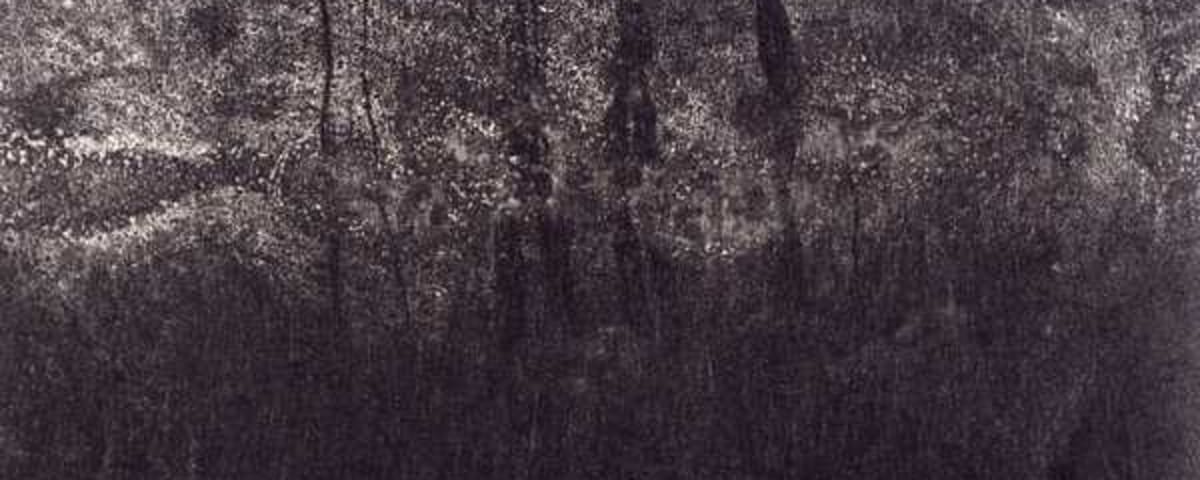
Drypoint is an intaglio printmaking technique in which the design is scratched into a metal, usually copper, plate with a sharp needle-like tool, without the use of acid. Unlike line engraving, drypoint does not cut a clean furrow but raises on both sides of the stroke a thin ridge of metal called the burr. It is this burr that holds extra ink and prints a soft, velvety, slightly blurred line, giving the impressions a characteristic warmth and depth. This delicate burr wears down quickly under the pressure of the press, so the run of fine impressions is small, which makes early sheets especially prized. Rembrandt was a master of the technique, combining it with etching for richness of tone, and modernists, including the Expressionists, used it actively. Drypoint remains a favourite means of printmakers because of the directness of its gesture: the act of scratching is close to free drawing, and the result preserves the intimacy of the artist's hand.
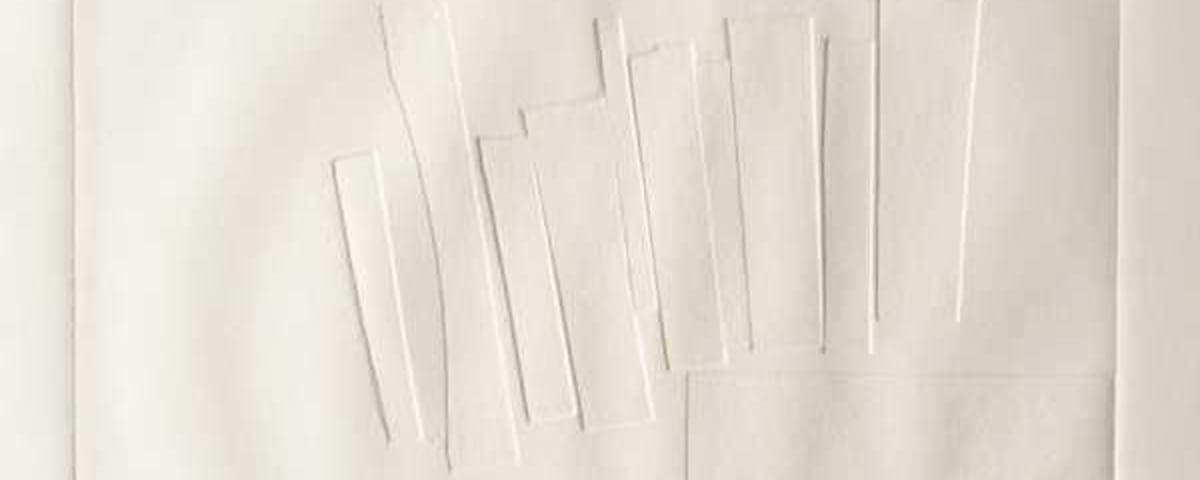
Embossing produces a raised or recessed relief surface created during printing or finishing processes, when material, most often paper, is pressed between a die and a counter-die either without ink or with it. As a result the image or text is perceived not only by sight but also by touch. Within printmaking there is a distinct form, blind embossing, an inkless relief impression that questions the traditional role of ink and emphasizes the texture and the play of light across the surface of the sheet. In the twentieth century relief impressions were explored by artists interested in pure form and materiality, including practitioners of Minimalism and constructive abstraction. Embossing is also widely used in the applied and decorative arts, bookbinding, book and packaging design, and commercial printing, where it lends objects a tactile expressiveness and a sense of quality. The term also describes relief worked into leather, metal, and fabric.
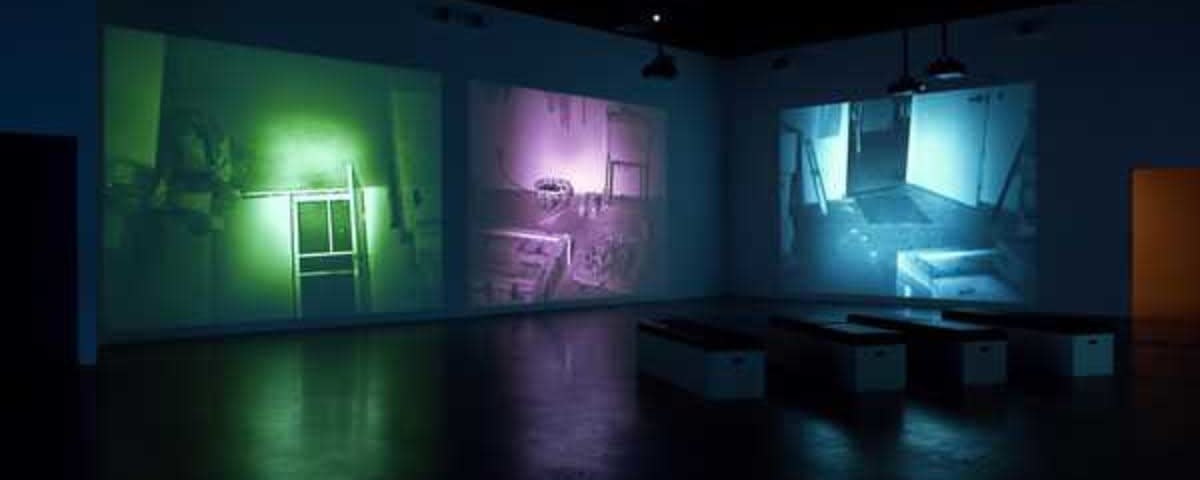
Emulation, in the field of preserving digital and media art, is the process of reproducing a work's original software and hardware environment on a newer platform so that it can keep functioning despite technological change. Many works of media art, video games, interactive installations, and pieces built on obsolete operating systems or storage media depend on specific, often no longer existing, hardware and software. Emulation creates a virtual model of that outdated environment, allowing the original code to run on modern computers without rewriting the work itself. It is one of the key methods of conservation alongside migration, the transfer to new formats, and documentation. Emulation raises complex questions of authenticity: how faithfully the reproduced experience matches the artist's intention, what counts as the original of an immaterial work, and where the limit of acceptable change lies. Museums and archives develop dedicated strategies and ethical protocols to preserve digital heritage, including Ukrainian digital and media art, for future generations.

Engraving is a technique of high-precision intaglio printmaking in which the image is cut directly into a metal, usually copper, plate with a burin, a steel tool with a V-shaped profile. The artist physically removes metal, ploughing clean, crisp furrows that are then filled with ink; the surplus is wiped from the surface, and under the pressure of the press the ink is transferred from the grooves onto dampened paper. The technique demands great skill and strength, since every line is cut by hand and corrections are almost impossible. Engraving developed in Europe in the fifteenth century and reached its heights in the work of Albrecht Durer, whose sheets astonish with the tonal richness achieved through the density of hatching alone. For centuries reproductive engraving was the chief means of multiplying and disseminating images before the advent of photomechanical printing. In Ukraine copperplate engraving flourished in the seventeenth and eighteenth centuries in the workshops of the Kyiv Pechersk Lavra, becoming an important part of Baroque book culture.
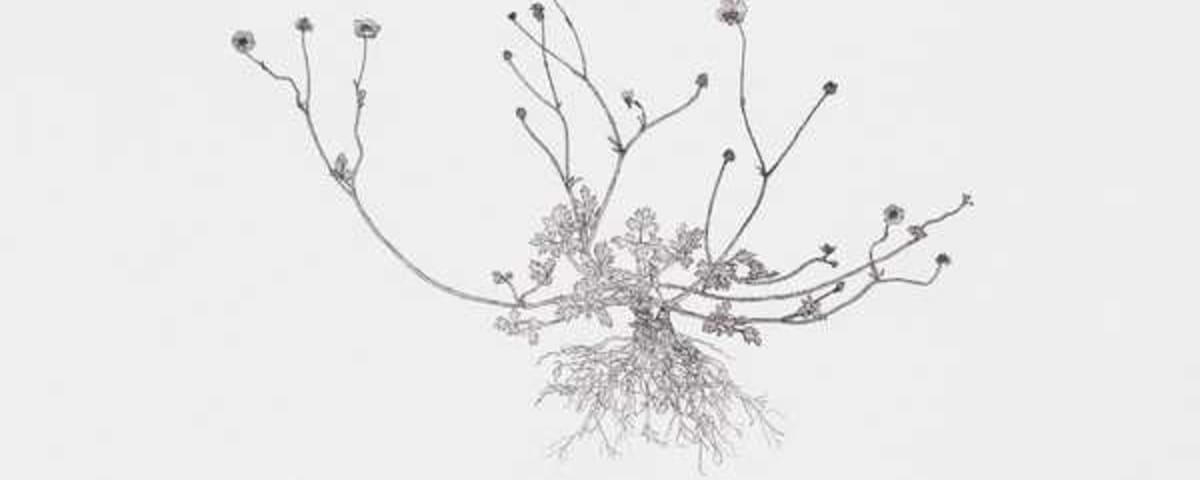
Etching is an intaglio printmaking technique in which the image is formed by the chemical action of acid rather than by mechanical cutting. A metal plate is covered with an acid-resistant varnish, the ground, through which the design is drawn with a needle, exposing the bare metal. The plate is then immersed in acid, which bites into the open lines, creating recesses to hold ink. Because drawing with a needle across the soft ground is almost as free as drawing with a pencil, etching gives artists far greater spontaneity and ease of line than engraving with a burin. By regulating the time of biting and re-covering areas with varnish, a wide range of tones can be obtained. Rembrandt was an unrivalled master of the technique, as was Francisco Goya, whose series the Caprichos and the Disasters of War became summits of graphic art. Etching remains one of the most popular and expressive methods of fine-art printmaking, widely used by contemporary Ukrainian printmakers as well.
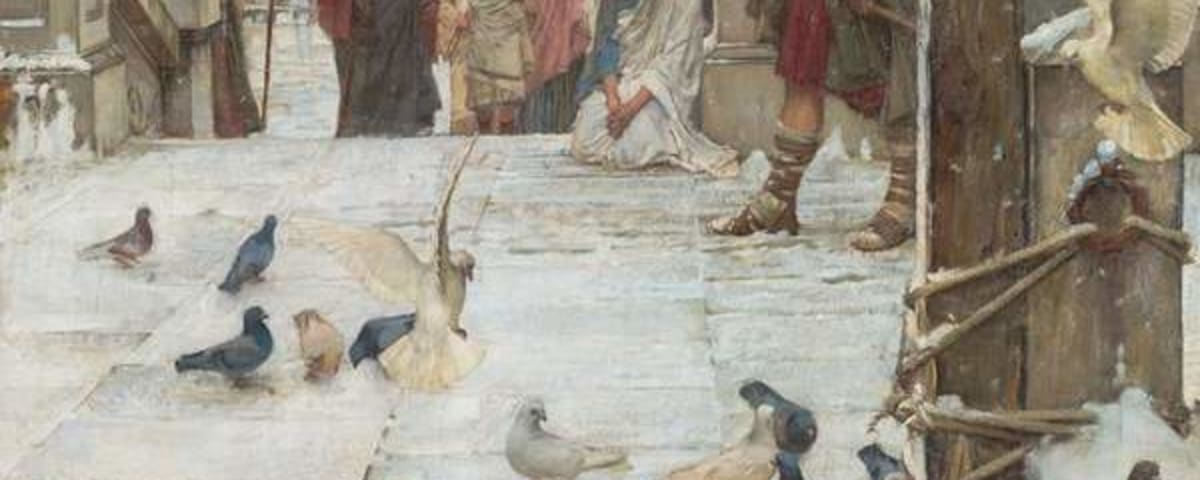
Foreshortening is the device of depicting an object or the human body at an angle to the picture plane so as to create a convincing illusion of projection into the depth of space. Forms pointing toward the viewer are shown shorter and compressed, while overlapping and sharp changes of scale reinforce the sense of three-dimensionality. Foreshortening is a particular case of the broader principle of perspective and became one of the chief technical challenges for artists, since it demands precise observation and often contradicts what the mind knows about the true proportions of the body. Masterly use of foreshortening has been a mark of high skill since the Renaissance: a classic example is the radically foreshortened figure in Andrea Mantegna's Lamentation of the Dead Christ, where the body seems to project straight toward the viewer. Caravaggio, Tintoretto, and the masters of the Baroque used dramatic foreshortening to heighten dynamism and emotional impact. The device remains fundamental to realist drawing, animation, and three-dimensional graphics.

Fresco is a technique of wall painting in which water-based pigments are applied directly onto fresh, damp lime plaster, known in Italian as buon fresco, meaning true fresco. As the plaster dries and the lime undergoes carbonation, the paint is absorbed into the surface and becomes an integral part of the wall, ensuring exceptional durability. The artist must work quickly, in sections called giornate, while the plaster is still wet, because once it dries corrections are impossible. Fresco reaches back to antiquity, as in the Minoan murals of Crete, and attained its heights in Italian art, from Giotto to Michelangelo and his ceiling of the Sistine Chapel. In Ukraine fresco has a thousand-year tradition: the pre-Mongol eleventh-century murals of the Saint Sophia Cathedral in Kyiv and the frescoes of Saint Cyril's Church are among the oldest monuments of monumental art. In the early twentieth century Mykhailo Boychuk and his school revived monumental fresco painting, drawing on Byzantine and folk heritage; tragically, most of their works were destroyed by the totalitarian regime.
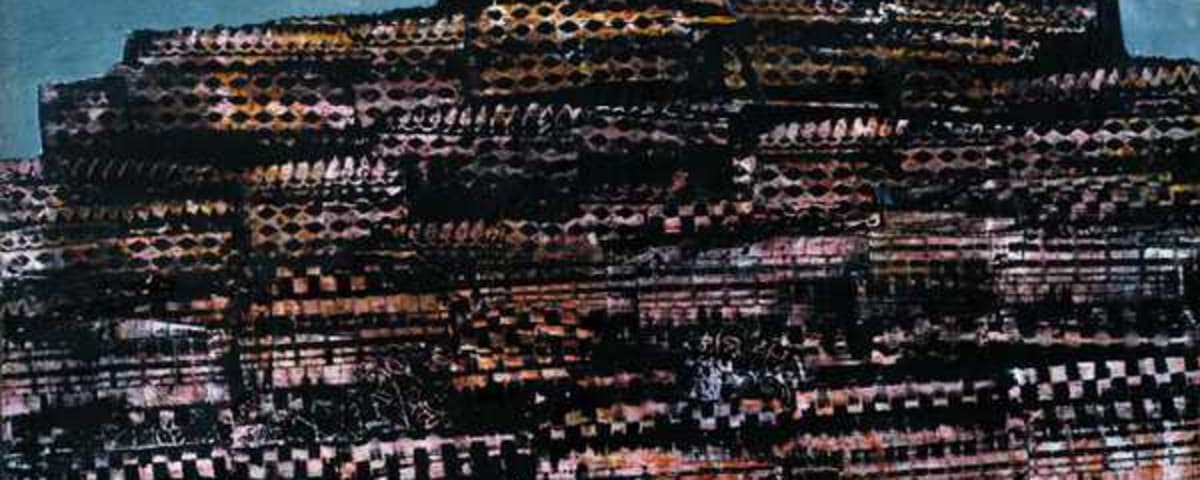
Frottage, from the French frotter meaning to rub, is a Surrealist automatic method of creation in which a sheet of paper is laid over a textured surface, wood, leaves, fabric, or stone, and rubbed with a pencil or another dry material, so that the relief pattern of the support is transferred onto the paper. The technique was invented as an artistic device by Max Ernst around 1925: according to legend, inspiration came to him from contemplating the worn boards of an old floor. Ernst treated the resulting textures as a kind of vision, a starting point for the imagination out of which fantastic forests, creatures, and landscapes emerged; he gathered these works into the series Natural History. For the Surrealists frottage, like decalcomania and fumage, was a way to invite chance and the unconscious while bypassing the conscious control of the mind. Its simplicity and accessibility have made frottage popular not only in art but also in art education and children's creativity, where it develops sensitivity to texture and imagination.

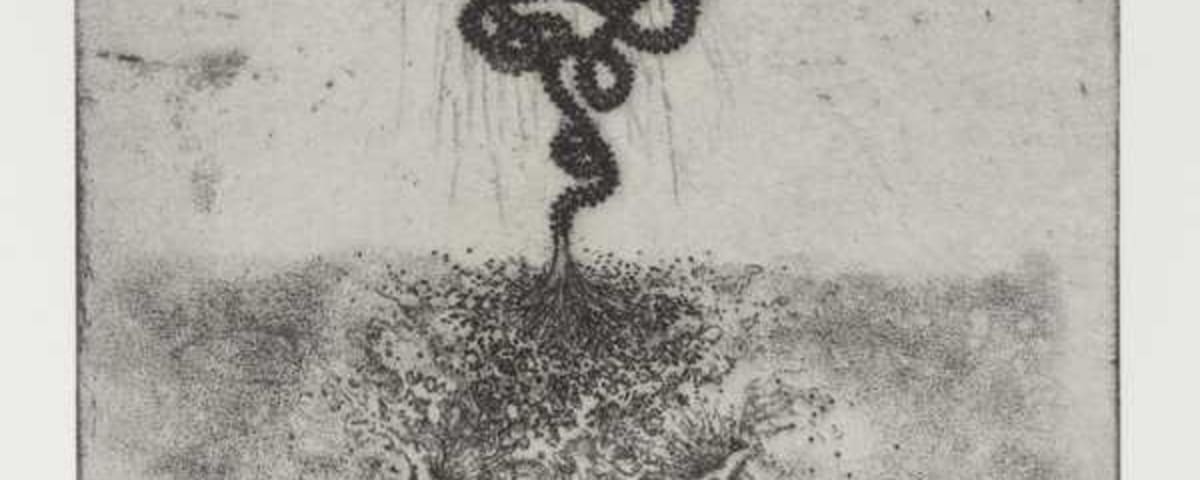
Fumage, from the French fumee meaning smoke, is an artistic technique in which an image or texture is created by the soot and smoke of the flame of a lit candle or oil lamp held beneath a support, paper, canvas, or a still-wet painted surface. As it settles, the soot leaves soft, cloud-like, unpredictable traces that the artist can partly control by directing the flame, and then paint over or fix. The technique was developed by the Surrealist Wolfgang Paalen around 1936, and related experiments were made by Salvador Dalí, who called the technique sfumato. Fumage belongs to the circle of Surrealist automatic methods, alongside frottage, decalcomania, and solarisation, which sought to invite chance, the elemental, and the unconscious while loosening the artist's rational control. The ghostly, atmospheric images born of smoke suited the Surrealist interest in dreams, anxiety, and the irrational. Today fumage is used by experimental artists exploring elemental, process-based ways of making an image.
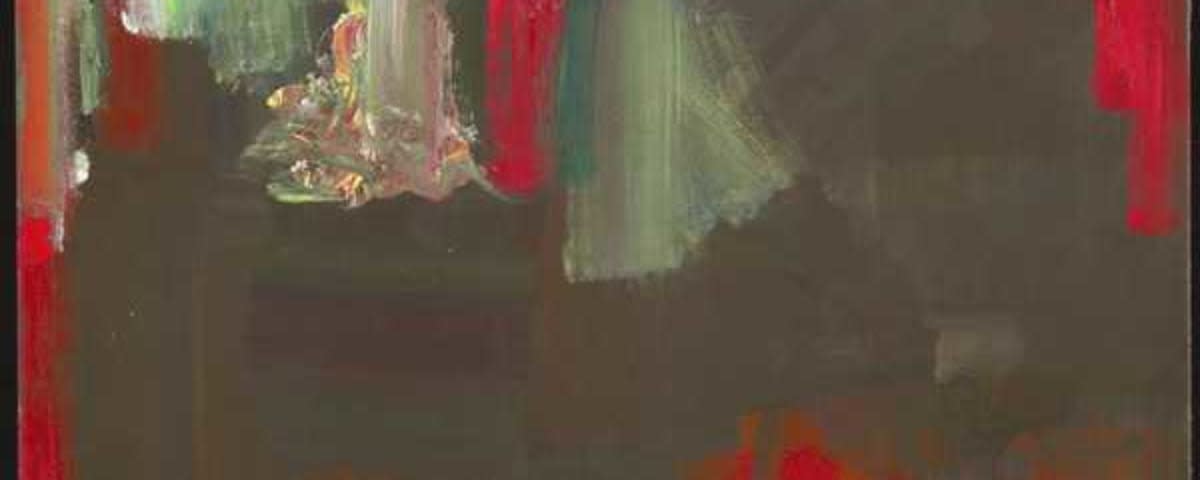
Gestural is a term describing the application of paint in free, sweeping, energetic movements of the hand and the whole body, where the trace of the brush, its span, pressure, and speed themselves become the chief expressive content of the work. In gestural painting the act of painting is equated with an action or performance: the canvas records the physical presence of the artist, their emotion, and their movement through time. The concept found its most vivid expression in the Abstract Expressionism of the mid-twentieth century, particularly in so-called action painting, a term the critic Harold Rosenberg applied to the practice of Jackson Pollock, who splashed and poured paint onto canvas spread on the floor, and of Willem de Kooning with his turbulent strokes. Related searches were developed by European Tachisme and Lyrical Abstraction. Gesturalism stresses the immediacy, spontaneity, and bodily nature of the creative act, setting them against measured, geometric abstraction. Its influence is felt in contemporary painting and in calligraphic and performative practices.

Grattage (from the French gratter, «to scrape») is a painting technique in which paint is scraped away from the surface of a canvas or paper with a sharp tool, exposing lower layers or the ground beneath. Typically a canvas prepared with a layer of oil paint is laid over a textured object, and the subsequent scraping produces unexpected surface effects. The method was invented by the Surrealist Max Ernst in 1927 as a form of automatism — a means of bypassing the artist's conscious control and giving scope to chance and the unconscious. Max Ernst was its most inventive practitioner, combining grattage with frottage to transfer the relief of wood, leaves, or wire mesh onto the painted surface. Alongside decalcomania and fumage, grattage belongs to the repertoire of experimental methods with which Surrealists expanded the boundaries of traditional painting. It remains a key example of automatist techniques that shaped European modernism and the graphic experiments of the twentieth century.
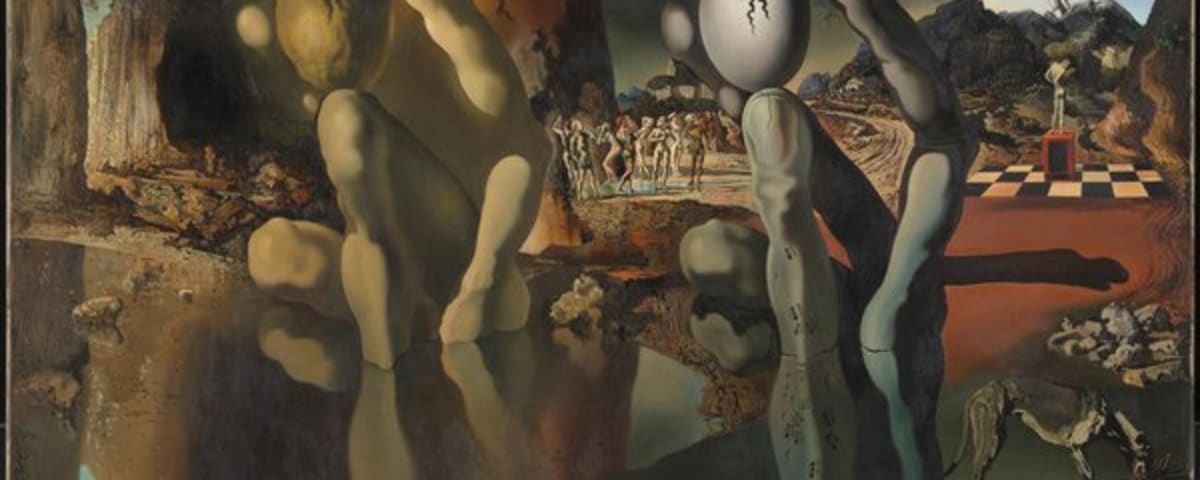
Illusionism is painting that creates a convincing illusion of a real object or space, or sculpture in which a figure is rendered so lifelike that it appears alive. The term covers a broad range of devices, from meticulous light-and-shade modelling to the use of linear and aerial perspective. The origins of illusionism reach back to antiquity — Pliny the Elder describes the contest between Zeuxis and Parrhasius, in which painted grapes supposedly attracted birds. Illusionism reached its most spectacular flowering in the art of the Renaissance and Baroque, when masters painted the ceilings of churches and palaces so that the architecture seemed to continue into the sky (the di sotto in su technique). Outstanding examples include the ceiling frescoes of Andrea Pozzo and Correggio. Illusionism is closely linked to trompe l'oeil and quadratura. In Ukrainian monumental painting, illusionistic murals adorned the interiors of Baroque churches, testifying to a deep assimilation of the European tradition of illusory space.

Impasto (from the Italian impasto, «dough» or «mixture») is an area of thickly applied paint or texture in painting, in which brushstrokes stand out from the surface of the canvas and preserve the marks of the brush or palette knife. The thick layer of paint catches the light, creating a play of relief, shadow, and material tangibility that lends an image energy and immediacy. The technique became possible with the spread of oil paints in European painting. It was used masterfully by Titian and Rembrandt, in whose work impasto modelled faces and fabrics, heightening the effect of an inner glow. In the nineteenth century, impasto achieved its most emotional expression in the work of Vincent van Gogh, whose swirling relief strokes became a hallmark of Post-Impressionism. Later, Expressionists and Abstract Expressionists developed the expressive potential of thick paint. Impasto stands in contrast to smooth, mark-free painting and remains one of the principal means of textural expressiveness.
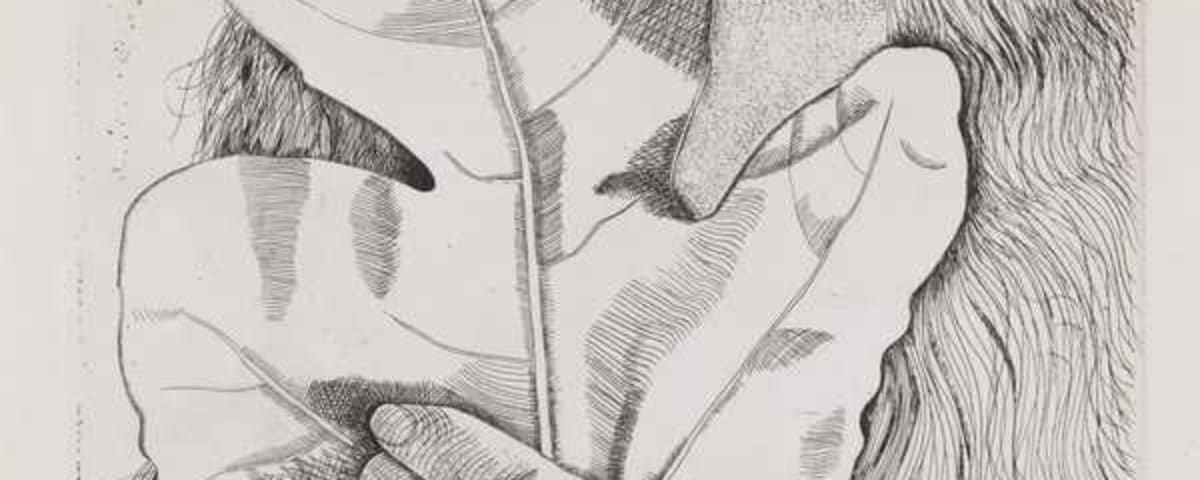
Intaglio (from the Italian intaglio, «carving» or «incising») is a general term for printmaking methods in which the image is formed by recesses in the printing plate: it is precisely the incised lines or etched areas that hold the ink. The plate, usually copper or zinc, is fully covered with ink, after which the surface is wiped clean, leaving ink only in the grooves; under the pressure of the press, dampened paper is forced into the recesses and picks up the image. Intaglio techniques include engraving, etching, drypoint, aquatint, and mezzotint. This family of techniques is the opposite of relief printing (woodcut, linocut), where the raised elements hold the ink. Intaglio flourished in the fifteenth to eighteenth centuries in the work of Dürer, Rembrandt, and Goya. In Ukraine, copperplate engravings developed vigorously in the book and iconographic art of the Baroque era, notably in the workshops of the Kyiv-Pechersk Lavra.

Linocut is a relief printing technique, akin to woodcut, but using linoleum as the surface into which the design is cut and from which it is then printed. The artist removes the areas that are to remain white, while the raised parts that are retained are inked and pressed against the paper. The softness of linoleum, which cuts equally easily in all directions, allows for free, energetic lines and large areas of colour, making the technique accessible and expressive. Linocut emerged in the early twentieth century; its artistic potential was revealed by the German Expressionists, and later by Henri Matisse and especially Pablo Picasso, who demonstrated the reductive method of printing multiple colours from a single block. Because of its simplicity and democratic character, the technique was widely used in posters, book graphics, and teaching. In twentieth-century Ukrainian art, linocut became an important means of easel and book graphics, notably in the work of masters who developed the national graphic school.

Lithography (from the Greek lithos, «stone», and graphein, «to write») is a planographic printing technique based on the mutual repulsion of grease and water. The artist draws the image with a greasy crayon or ink on a smooth limestone or metal plate; the surface is treated so that the image areas attract printing ink, while the non-image areas, dampened with water, repel it. Unlike intaglio or relief printing, there are neither recesses nor raised areas — printing takes place from a flat surface. Lithography was invented by Alois Senefelder in Munich around 1796. The technique quickly gained popularity for its ability to reproduce free drawing faithfully; it was used brilliantly by Honoré Daumier in political caricature, by Toulouse-Lautrec in colour posters, and by Odilon Redon. Lithography opened the age of the mass-reproduced image and remains an important medium of artistic graphics. In Ukraine, lithography was widely used in publishing and easel graphics of the nineteenth and twentieth centuries.
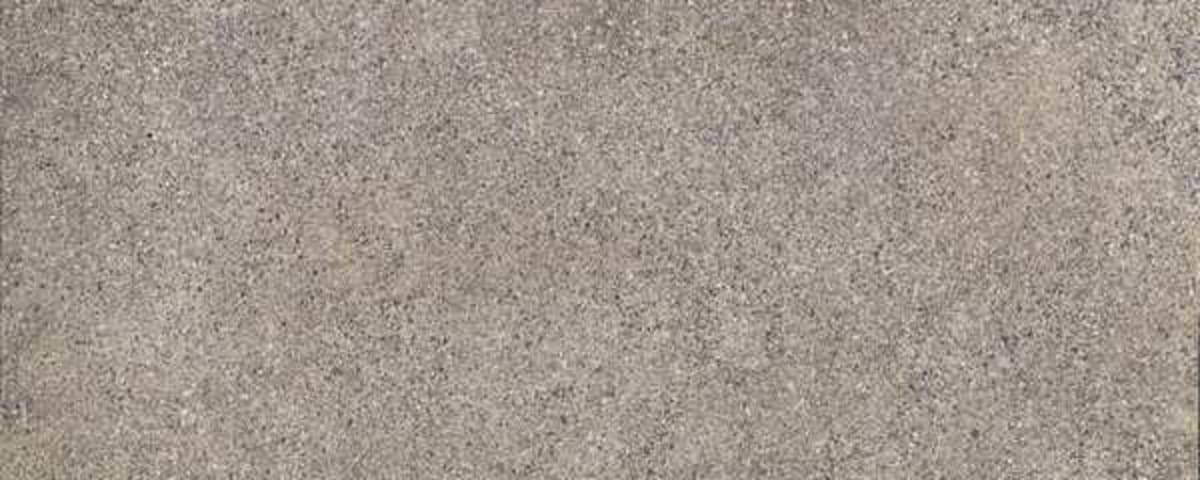
Matter painting is a technique in which foreign materials — sand, earth, cement, plaster, sawdust, shells, or scraps of fabric — are added to thick impasto paint in order to give the surface a tangible physical texture and weight. Instead of depicting the world, the artist emphasises the very materiality of the work, turning the canvas into an object with its own relief and substance. This practice flourished in European art after the Second World War, within Art Informel and Tachisme of the 1940s and 1950s, as a reaction against geometric abstraction and a striving for immediate, almost organic expressiveness. Leading practitioners of matter painting were Jean Dubuffet, with his «texturologies», and the Spanish artist Antoni Tàpies, who mixed marble dust and sand to create wall-like surfaces bearing traces of scratches and inscriptions. The technique influenced the development of assemblage and blurred the boundary between painting and sculpture, enriching the vocabulary of postwar abstraction.

Mezzotint (from the Italian mezzo, «half», and tinto, «tone») is an intaglio printing technique developed in the seventeenth century that allows for soft tonal gradations and rich, velvety blacks. Work begins by uniformly roughening a copper plate with a special toothed tool, the rocker, which covers the surface with countless tiny burred pits; if such a plate were printed straight away, it would yield an even velvet-black impression. The artist creates the image working «from dark to light», scraping and burnishing the areas that are to be lighter: the more they are smoothed, the less ink they hold. The technique is attributed to Ludwig von Siegen; mezzotint developed especially in eighteenth-century England, where it was widely used to reproduce portraits. Unlike linear techniques such as etching or engraving, mezzotint works with tone and chiaroscuro, approaching painterly expressiveness, which is precisely why it was prized for reproducing paintings.
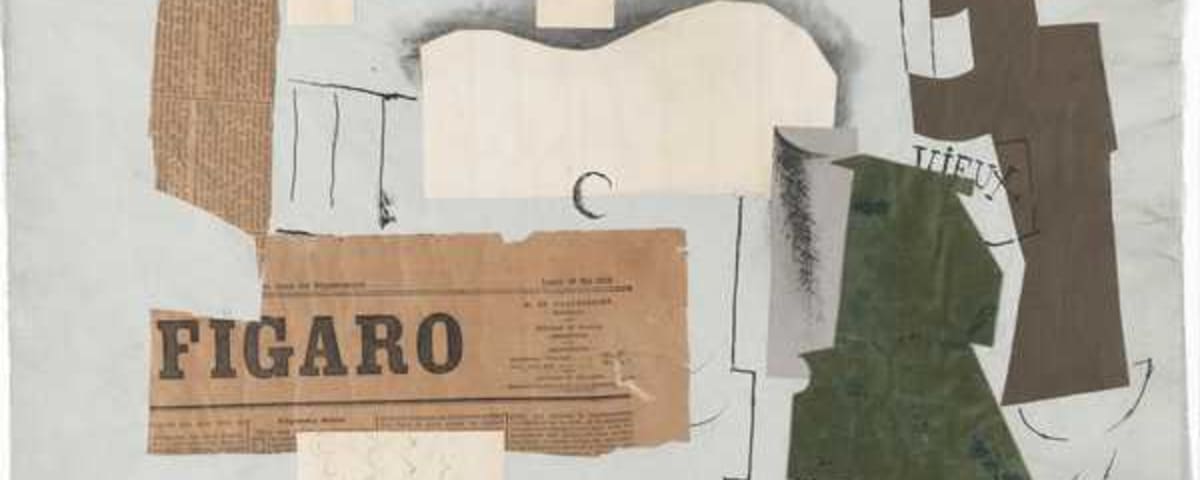
Mixed media is a term describing artworks made from a combination of different materials or means of expression within a single image or object. For instance, a drawing might combine graphite pencil, ink, watercolour, and pasted paper elements, while a painting might unite oil paint with collage or everyday objects. The practice of systematically mixing media became a defining feature of twentieth-century art, when the boundaries of traditional techniques began to be deliberately broken down. A turning point was the invention of collage by the Cubists Pablo Picasso and Georges Braque around 1912, when newspaper, wallpaper, and fabric were first glued onto the painted surface. Mixed media developed further in Dada, Surrealism, and the art of assemblage. The term is distinct from «multimedia», which usually implies an electronic or time-based component. Mixed media gave artists an almost limitless freedom of materials and became one of the defining traits of modern and contemporary art.
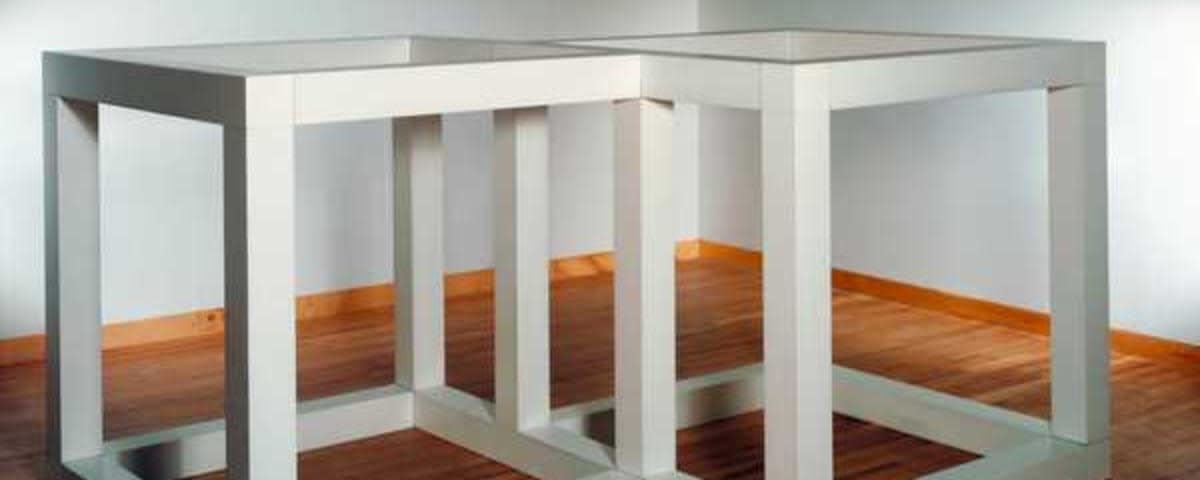
Modular is a term used in connection with Minimalism to denote an artwork composed of repeated identical parts, or modules, that can be moved, separated, and rejoined. A module is a standard unit from which, by the principle of repetition and combination, the entire structure of the work is built. This approach rejects the idea of a unique, hierarchically constructed composition in favour of an impersonal, serial logic often associated with industrial production. Modularity became one of the central ideas of 1960s Minimalism in the United States. Donald Judd created «progressions» and stacks of identical metal boxes, Carl Andre laid out floor pieces from identical bricks or metal plates, and Sol LeWitt built open cubic lattice structures. The modular principle is linked to serial art and emphasises the system, the set of rules, and the relationships between elements rather than the artist's individual gesture, radically transforming the conception of twentieth-century sculpture.
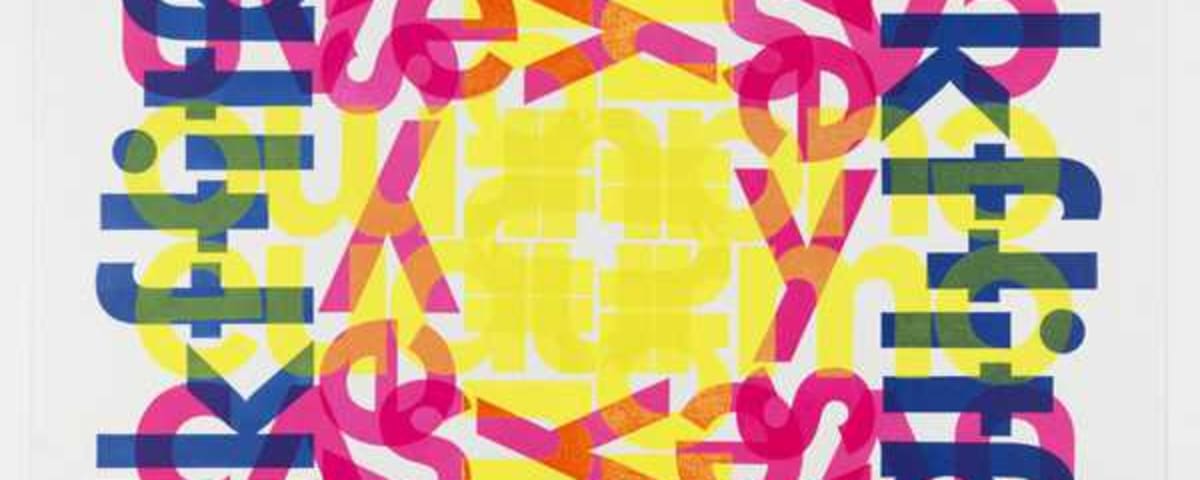
Monoprint is a form of printmaking in which an impression of a given image can be produced only as a single copy, unlike most types of printing that allow many identical impressions to be made. Unlike pure monotype, a monoprint has a fixed matrix — an engraved, etched, or otherwise worked plate with an unchanging underlying design — but each time it is re-inked by hand, with added colours, wiping, or brushstrokes, so that every impression becomes unique. Thus a repeatable printed element and a singular painterly gesture are combined. The term is often used alongside monotype, and the boundary between them can be blurred. Monoprint appeals to artists for its freedom of experiment, its blend of chance and control, and its richness of texture and colour. The technique was used by Edgar Degas and Paul Gauguin, and in the twentieth century by many masters seeking individuality within the printed medium, including representatives of the Ukrainian graphic school who valued the singularity of each sheet.
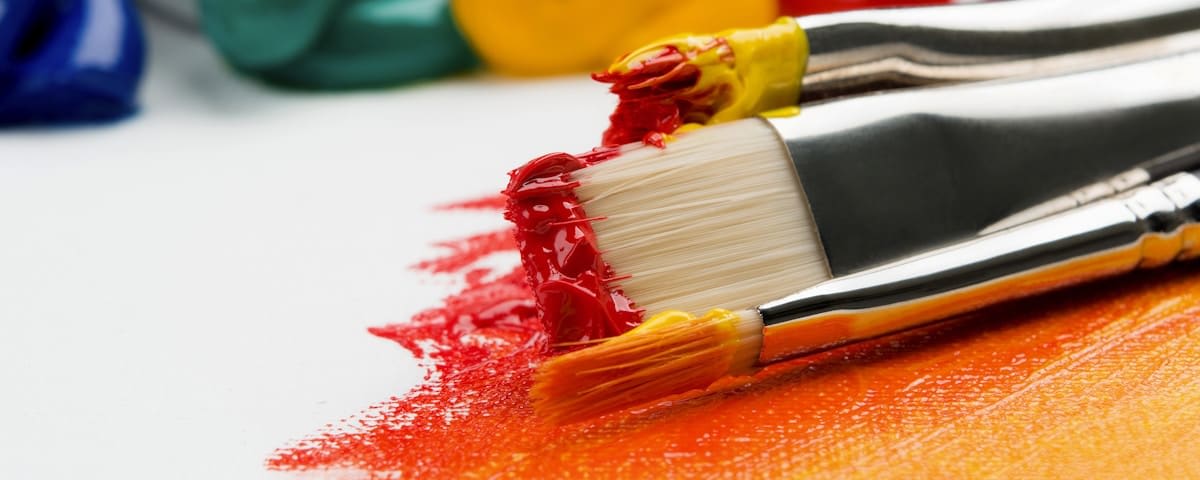
Monotype is a unique image printed from a smooth, non-porous plate, such as glass or metal, onto which a design has been drawn in paint or ink. The artist draws freely on the surface of the plate and then presses a sheet of paper against it, transferring the image; because most of the paint passes to the paper in a single impression, it is impossible to obtain a second identical print — hence the name «mono», meaning single. Monotype combines the spontaneity of painting or drawing with the soft, slightly blurred quality of a printed image and the unpredictable effects that arise under pressure. The earliest examples of the technique are attributed to the seventeenth-century Italian master Giovanni Benedetto Castiglione. Later, monotype was used brilliantly by Edgar Degas, who created series with effects of light and movement. In the twentieth century, the technique attracted many artists for its freedom and immediacy, including masters of Ukrainian graphics, for whom it became a field of experiment with texture, tone, and colour on the border between painting and print.
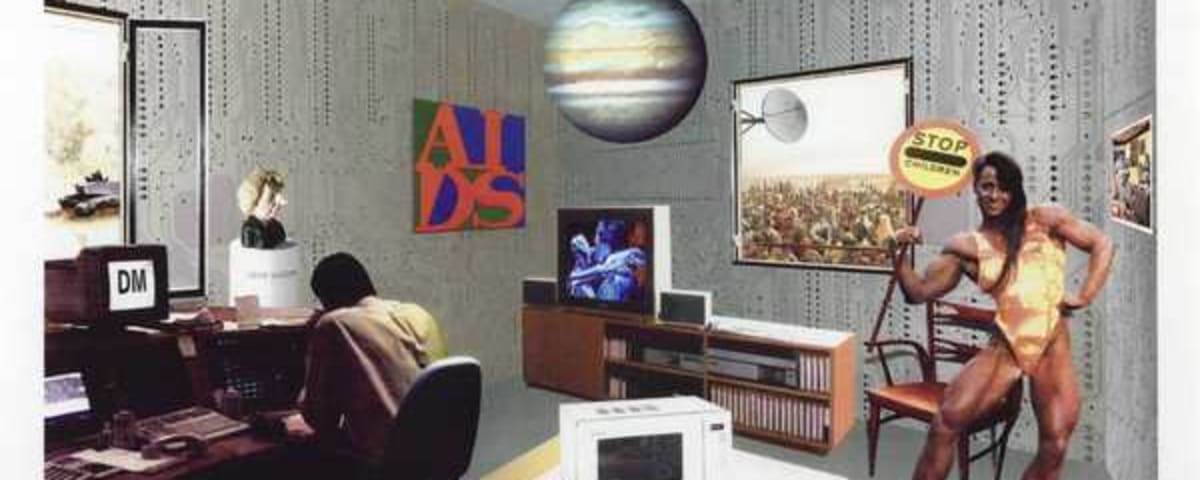
Montage is an assembly of images interrelated in such a way that they form a single unified work or part of one. The term derives from the French monter, «to mount» or «to assemble», and was first used in cinema to denote the splicing of separate shots into a meaningful sequence. In the visual arts, montage means the composing of ready-made images — newspaper clippings, photographs, reproductions — into a new composition that generates unexpected meanings through their juxtaposition. A variety of montage is photomontage, which the Dadaists turned into a sharp political weapon during and after the First World War: Hannah Höch, Raoul Hausmann, and especially John Heartfield created scathing anti-militarist and anti-fascist images by cutting and combining fragments of the mass press. Montage is founded on the principle of juxtaposition, where meaning arises not within a single image but between images. This technique profoundly influenced modern graphics, the poster, advertising, and contemporary digital art.

Mosaic is an image composed of small particles, traditionally little cubes (tesserae) of terracotta, coloured glass, ceramic, stone, or marble, set into mortar on floors, walls, and vaults. The art of mosaic has a history spanning millennia: it developed in Mesopotamia, reached refinement in Hellenistic Greece and Rome, where it adorned the floors of villas, and attained its highest spiritual expression in Byzantine sacred art. Byzantine masters used smalti — opaque coloured glass, often backed with a thin layer of gold — so that the shimmering surfaces of churches seemed to glow from within. This tradition had a decisive influence on Kyivan Rus. The most outstanding monument of Ukrainian mosaic is the ensemble of St Sophia's Cathedral in Kyiv from the eleventh century, notably the majestic «Virgin Orans» in the apse, executed from millions of smalti cubes. The art of mosaic experienced a revival in Art Nouveau and in twentieth-century monumental art, retaining exceptional durability and radiant colour.
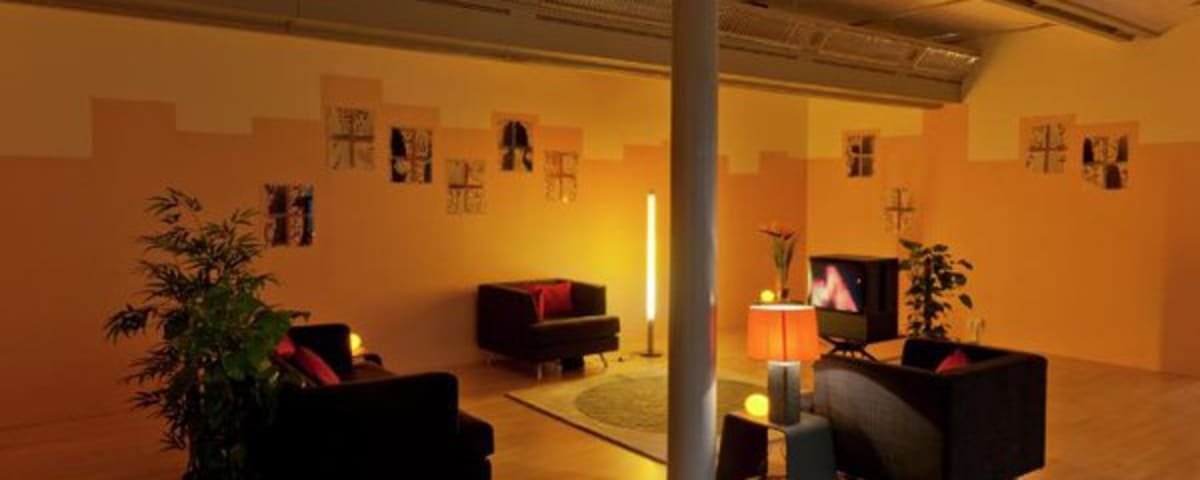
Multi-media is a term first used in the 1960s to describe mixed-media works that contained an electronic component. Unlike simple «mixed media», where traditional materials are combined, multi-media implies the introduction of technological elements — light, sound, film, video, slides, and later computer systems — into an artwork, often within a performance or environment. The development of multi-media was spurred by the happenings and events of the Fluxus movement, as well as by experiments at the intersection of art and technology. A landmark example of early multi-media was Andy Warhol's «Exploding Plastic Inevitable» with the band The Velvet Underground, which combined music, film, light projections, and dance. Multi-media practices were advanced by video artists, notably Nam June Paik, regarded as one of the founders of video art. With the advent of digital technologies at the end of the twentieth century, multi-media expanded into interactive installations and new-media art, becoming one of the leading forms of contemporary artistic creation.

Painterly is a term denoting the application of paint in a «free», less controlled manner, as a result of which visible brushstrokes remain in the finished painting. This approach is contrasted with the linear, or graphic, mode, in which forms are outlined by clear contours and the brushstrokes are smoothed away and imperceptible. The concept of the «painterly» (German malerisch) was developed and given theoretical grounding by the Swiss art historian Heinrich Wölfflin in his «Principles of Art History» (1915) as one of five pairs of opposites by which he distinguished the styles of the Renaissance and the Baroque. In the painterly style, forms merge, and emphasis falls on masses of light and shadow, on colour and movement, rather than on a closed contour. Classic examples of painterly handling are the works of Titian, Rembrandt, Velázquez, and Frans Hals, and later the Impressionists. The painterly approach stresses the very process of painting and the materiality of the paint, and so remains one of the key concepts for the analysis of style in European painting.
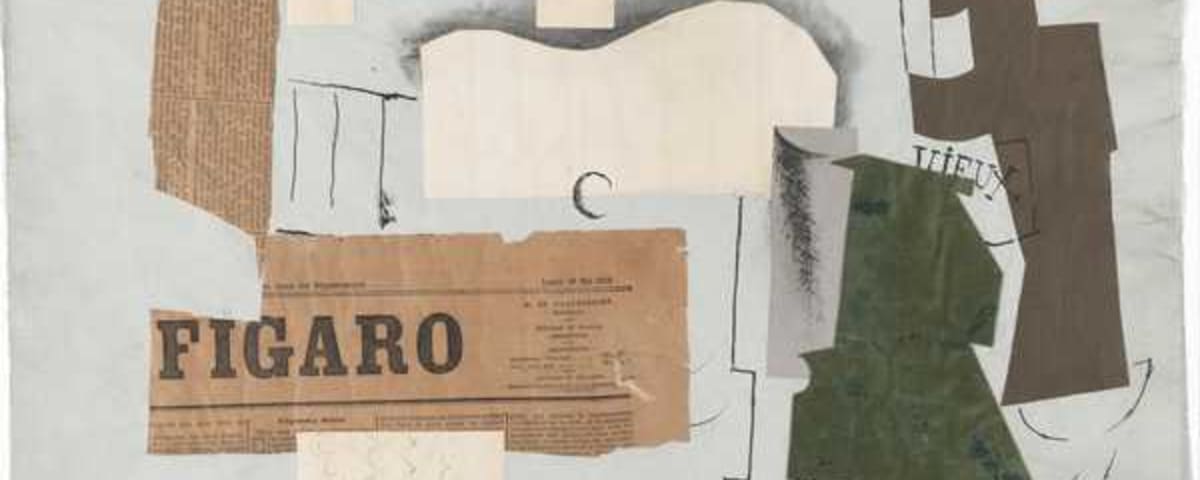
Papier collé (from the French for «pasted paper») is a specific form of collage, closer to drawing than to painting, in which pieces of paper — often printed, coloured, or textured — are pasted onto a support. The technique was invented by Georges Braque in 1912, when he pasted onto a sheet strips of paper imitating wood panelling; almost simultaneously it was taken up by Pablo Picasso. Papier collé was a logical continuation of Analytic Cubism and an important step towards Synthetic Cubism: instead of depicting objects, the artists introduced into the composition actual pieces of real material — scraps of newspaper, wallpaper, sheet music — which remained at once planes of colour and form and allusions to recognisable things. This created a play between reality and representation, between the flat surface and illusion. Papier collé differs from the broader notion of collage in its predominant use of paper and its close link to drawing. The technique had an enormous influence on the development of twentieth-century modern art.
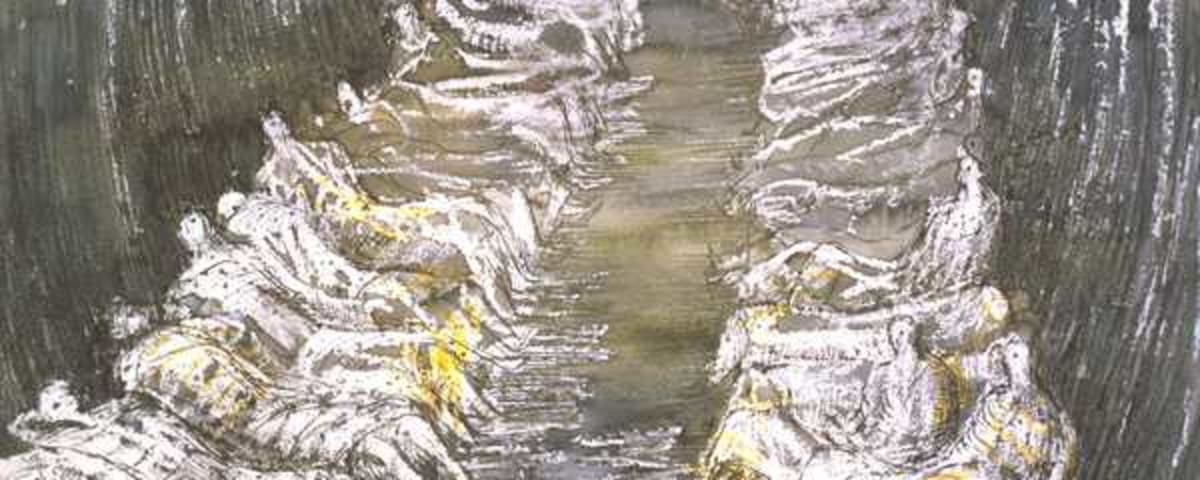
Perspective is a system for representing objects of three-dimensional space on the two-dimensional surface of a picture so as to convey an impression of depth, distance, and volume. Its most influential variety is linear perspective, in which parallel lines, as they recede, appear to converge towards one or several vanishing points on the horizon line, while objects diminish in proportion to their distance. The mathematical foundations of linear perspective were developed in Renaissance Florence: the first experiments are credited to the architect Filippo Brunelleschi around 1415, and they were set out theoretically by Leon Battista Alberti in his treatise «On Painting» (1435). This discovery fundamentally transformed European art, enabling artists to construct a convincingly coherent, measurable space. Alongside linear perspective there is aerial (atmospheric) perspective, which conveys depth through the softening of colour and clarity of distant objects, as in the works of Leonardo da Vinci. Perspective remained the basis of academic painting for centuries, until twentieth-century modernists began deliberately to reconsider and dismantle its conventions.

Plein air (from the French for «open air») is the practice of painting finished pictures outdoors rather than in the studio, in order to observe natural light, colour, and atmosphere directly. Although artists had long made studies from nature, the custom of executing the final work itself outdoors spread in the nineteenth century. This was aided by technical innovations, above all the invention of oil paints in metal tubes (around 1841), which made materials portable. Important precursors of plein-air painting were the masters of the Barbizon school, notably Camille Corot and Théodore Rousseau, who worked in the Forest of Fontainebleau. The principle of plein air was most fully embodied by the French Impressionists — Claude Monet, Auguste Renoir, Camille Pissarro — for whom the rendering of momentary effects of light and time of day became the chief aim. Monet painted series of the same motif under different lighting, so as to capture the changeability of the atmosphere. Plein-air painting transformed the very conception of colour and light and deeply influenced the subsequent development of European art.
A Japanese technique of low-temperature pottery firing in which the piece is taken from the kiln while still hot and cooled in the open air; also the ware itself.

Relief is a type of sculpture in which volumetric forms project from a flat background, remaining integral with it; such a work is usually attached to a wall and intended to be viewed mainly from the front. Depending on the height to which the image projects above the plane, one distinguishes low relief (bas-relief), where the forms are barely raised; high relief (haut-relief), where they project by more than half and in places almost detach from the ground; and sunken relief, where the forms are cut below the surface. Relief is one of the most ancient forms of sculpture: it adorned the temples of ancient Egypt, Assyria, and Greece, notably the celebrated frieze of the Parthenon. In the Renaissance, Lorenzo Ghiberti created unsurpassed bronze reliefs for the Florence Baptistery, employing perspective to create an illusion of depth. Relief has long united sculpture with architecture in the decoration of façades, portals, and tombs. In the art of Ukraine, relief is widely represented in the carved decoration of churches and in monumental sculpture.
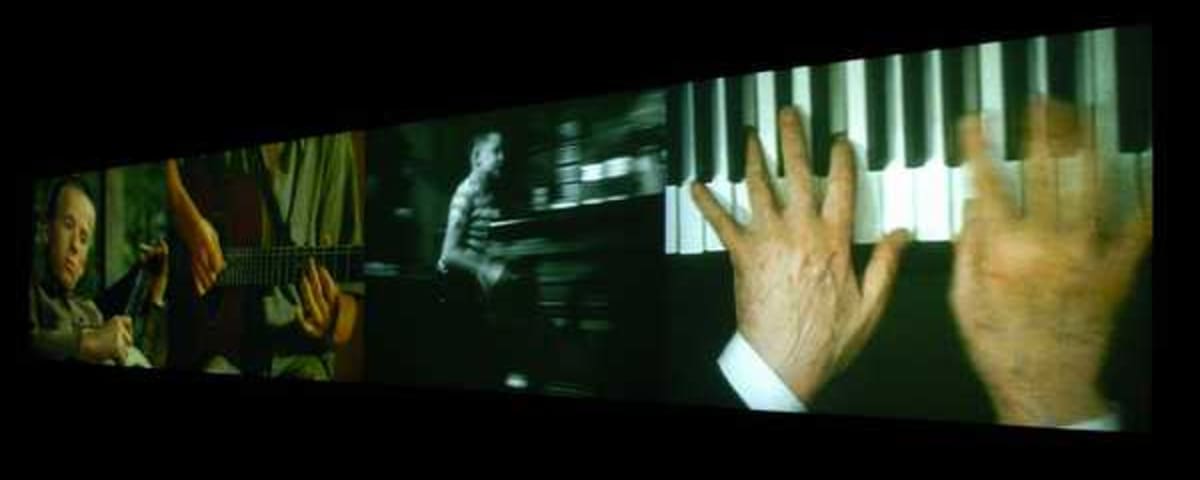
Sampling, in its most basic form, is the reworking of existing culture, usually by technological means, much as collage does. The term originates in music production, where a sample is a fragment of an existing recording embedded in a new work; in a broader cultural sense, sampling means the appropriation, recombination, and reinterpretation of existing images, sounds, or texts. In the visual arts, sampling is connected with practices of appropriation, in which an artist deliberately borrows others' images — advertisements, mass-media stills, famous works of art — and places them in a new context, questioning notions of originality, authorship, and copyright. This strategy became especially prominent in postmodern art of the 1980s, in the work of artists engaging with mass culture. Sampling is a descendant of collage and photomontage, but it emphasises the digital and media-driven nature of contemporary culture, in which images are continuously copied, disseminated, and reworked.
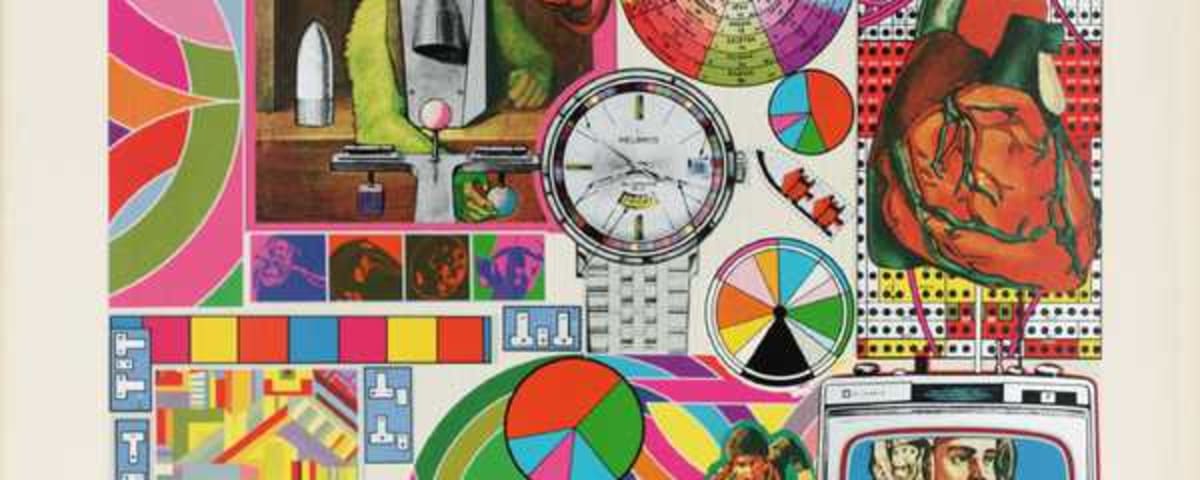
Screenprint (stencil or silkscreen printing) is a variety of stencil printing that uses a screen of fabric — silk or synthetic material — stretched over a frame. The areas of the screen through which ink is not meant to pass are blocked with an impermeable layer, while through the open areas ink is forced with a rubber squeegee directly onto paper, fabric, or other material placed beneath the screen. A separate screen is usually prepared for each colour. The technique allows the printing of flat, saturated areas of colour and the easy reproduction of images on various surfaces. Although stencil printing has ancient roots, modern screenprinting was developed in industry in the early twentieth century, and it was established as an artistic medium by American artists. Its most iconic use was by Andy Warhol in the Pop Art of the 1960s: his portraits of Marilyn Monroe and images of soup cans turned a commercial reproduction technique into a symbol of the age of mass consumption. Screenprinting remains popular in both easel graphics and design.

Serial art is art that follows a strict set of rules to determine its own composition or to generate a whole series of compositions. Instead of intuitive, subjective choice, the artist establishes a system in advance — a sequence, progression, permutation, or mathematical formula — and carries it out consistently, often producing a run of related works. This method removes, or at least limits, the role of personal taste and chance decision, emphasising instead logic, order, and a predetermined structure. Serial art is closely linked to the Minimalism and Conceptualism of the 1960s. Sol LeWitt formulated written instructions and exhaustive sets of variations on geometric forms; Donald Judd constructed rows of identical objects placed at fixed intervals; Hanne Darboven filled sheets with systematic numerical sequences. Seriality is akin to the modular principle, since both operate through repetition and system. The idea of the series challenged the traditional notion of the unique masterpiece and made process and concept central to the work of art.
A hand-woven, pile-free pictorial wall hanging with a figurative or ornamental design, woven so that the weft completely covers the warp.

Trompe l'oeil (from the French for «deceives the eye») is a painting technique that creates an illusion of a real object or scene so convincing that the viewer, at least for a moment, takes what is depicted for an actual thing. This is achieved through the skilful use of perspective, precise light-and-shade modelling, life-size scale, and meticulously rendered surface texture. Trompe l'oeil often depicts objects in shallow space — pinned-up letters, coins, a glazed cabinet door, insects on a wall — things that are easily mistaken for reality. The origins of the device reach back to antiquity, and it flourished in European Baroque art and in seventeenth-century Dutch still life, where masters created illusory niches, shelves, and letter racks. Trompe l'oeil is closely bound up with the notions of illusionism and the still-life «deception». Although often regarded as a virtuoso game, it raises profound questions about the nature of vision, reality, and art itself, which is what has attracted artists from the Renaissance to the present day.

Watermark is an image or mark on a sheet of paper, visible when the sheet is viewed against the light. The mark is produced by variation in the thickness of the paper within a single sheet: during handmade papermaking, a thin wire design is attached to the wire mesh mould, and in those places less fibre settles, so the paper becomes slightly thinner and lets through more light. Watermarks appeared in Italian papermaking at the end of the thirteenth century and initially served as the marks of workshops or paper mills. Over time they became important for establishing the origin and dating of paper. For art historians, watermarks are a valuable tool for studying old drawings, prints, and manuscripts: analysis of the mark helps to determine when and where a sheet was made, and thus to refine the attribution and dating of a work. Watermarks are also used as a means of protection against forgery — on banknotes, documents, and postage stamps. In the artistic context, the study of watermarks is part of the technical examination of works on paper.

Woodcut is a method of relief (raised) printing in which the image is cut into the surface of a wooden block sawn along the grain. The artist removes the areas that are to remain white, leaving raised the lines and planes of the intended image; these raised parts are inked and pressed against the paper. Woodcut is the oldest technique for printing images: in East Asia it was used from the early medieval period, and in Europe it spread in the late fourteenth and early fifteenth centuries alongside the manufacture of paper. European woodcut reached its highest artistic level in the work of Albrecht Dürer, whose prints astonish with the fineness of their line and the complexity of their composition. In the twentieth century, the German Expressionists revived the woodcut for its rough, energetic expressiveness. Woodcut should be distinguished from wood engraving, cut across the grain, and from the related linocut. In Ukrainian art, woodcut had a long tradition in the decoration of early printed books, notably in the book engraving of the Baroque era.

Wood engraving is a relief (letterpress) printing technique in which the image is cut into the end grain of a hard wood, most often boxwood, rather than the side or plank grain used in a traditional woodcut. In a woodcut the artist gouges away the background so that the drawn line stands up in relief; in wood engraving the fine tool, or burin, incises the line itself into a smooth, dense surface, and the untouched areas print as solid black. The compact end grain allows the engraver to achieve extremely fine, precise lines and a rich range of tonal values, which made the medium ideal for detailed reproduction in print. The technique was refined and popularised in late eighteenth-century England by Thomas Bewick, whose natural-history illustrations set the standard, and it became the dominant means of book and magazine illustration throughout the nineteenth century. In Ukrainian art, engraving on wood reaches back to the printing houses of the seventeenth century, above all the Kyiv-Pechersk Lavra workshop with masters such as Illya and Nykodym Zubrytsky (alongside the copper engraver Leontii Tarasevych). In the twentieth century a brilliant school of Ukrainian xylography emerged around Vasyl Kasiian, Ivan Padalka and the Boychukist circle, who fused folk tradition with a modern graphic idiom.