Ukrainian art & cultureOnline


Other dimensions of culture
Other dimensions of culture





Test mode: all content on this site is for testing and will be removed at launch.
Art Glossary
Ukrainian Art&Culture online glossary of art terms covers movements, styles and techniques such as Impressionism, Printmaking, Video art and more.
from Realismto Cyberpunk
34from Oilto 3D Modeling
8from Paintingto Design
7from Trypilliato Contemporary
2319 terms
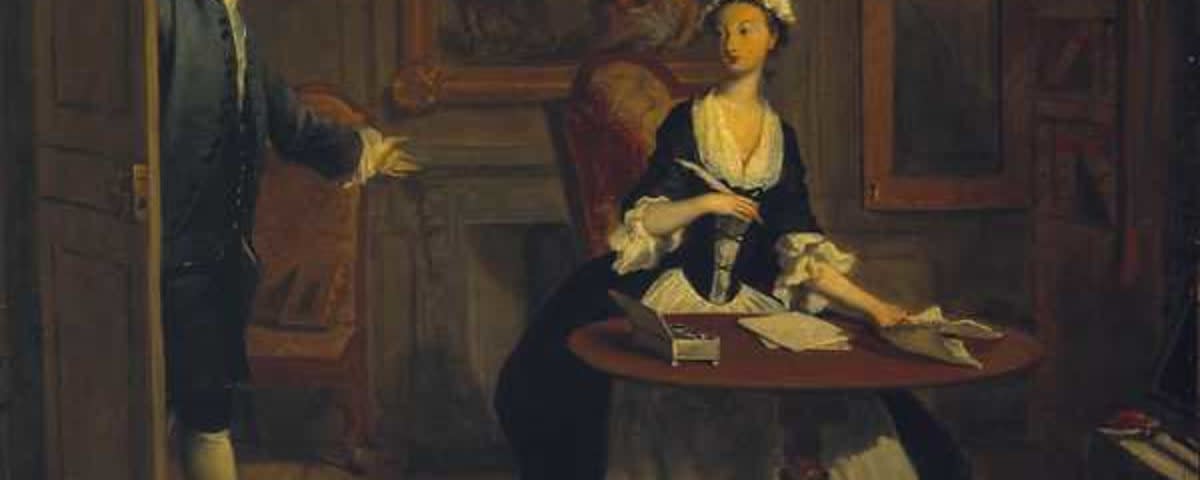
The term Georgian is applied to the styles that prevailed in Britain during the reigns of the four kings named George, from 1714 to 1830 (the period is sometimes extended to 1837). It is an age defined above all by the dominance of classicism and Palladianism in architecture and the decorative arts. The Georgian style is marked by symmetry, clear proportion, restrained elegance and reliance on ancient Roman and Renaissance models, disseminated by the Italian architect Andrea Palladio. Exemplars of Georgian architecture include the refined terraced town houses, squares and set-pieces of Bath and Edinburgh, as well as country houses. In furniture the age is celebrated for the names of Thomas Chippendale, George Hepplewhite and Thomas Sheraton, and in ceramics for the porcelain and earthenware of Josiah Wedgwood. In the fine arts it was a time of flourishing English portraiture and landscape: Joshua Reynolds and Thomas Gainsborough worked then, followed by John Constable and J. M. W. Turner. The end of the period also saw the elegant decorative Regency style. Overall the Georgian era is regarded as a classical, harmonious phase of British culture that laid the foundations of national taste in architecture and applied art.

Gothic was the visual language of the Western European Middle Ages, which took shape in the mid-twelfth century in France and prevailed until the fifteenth and sixteenth centuries, finding its fullest embodiment in the architecture of the cathedral. Its aesthetic core was an aspiration toward the vertical, the dematerialization of mass and the treatment of transcendent light as a symbol of the divine. Its structural basis lay in the pointed arch, the ribbed groin vault and the external flying buttress, which allowed the wall to be reduced to a skeleton and dissolved into vast stained-glass windows. The interior fills with coloured light, space is directed upward, and the silhouette of the church is articulated by towers, gables, pinnacles and openwork tracery. In sculpture the Gothic figure elongates, acquires an S-shaped curve, a gentle tenderness and individualized emotion, and its drapery becomes complex and mobile. Painting develops in stained glass, book illumination and the altarpiece, tending toward a refined line, gold grounds and a growing sense of space. Classic monuments include the cathedrals of Chartres, Reims and Amiens and Notre-Dame of Paris; the late "flamboyant" phase is marked by sumptuous ornament, while the "International Gothic" produced the exquisite works of the Limbourg brothers. In the Ukrainian lands Gothic influences are felt in the Catholic churches and castle architecture of Galicia, Volhynia and Transcarpathia, in Lviv and Kamianets. Gothic bequeathed a conception of art as synthesis, in which architecture, sculpture, stained glass and light merge into a single spiritual image.
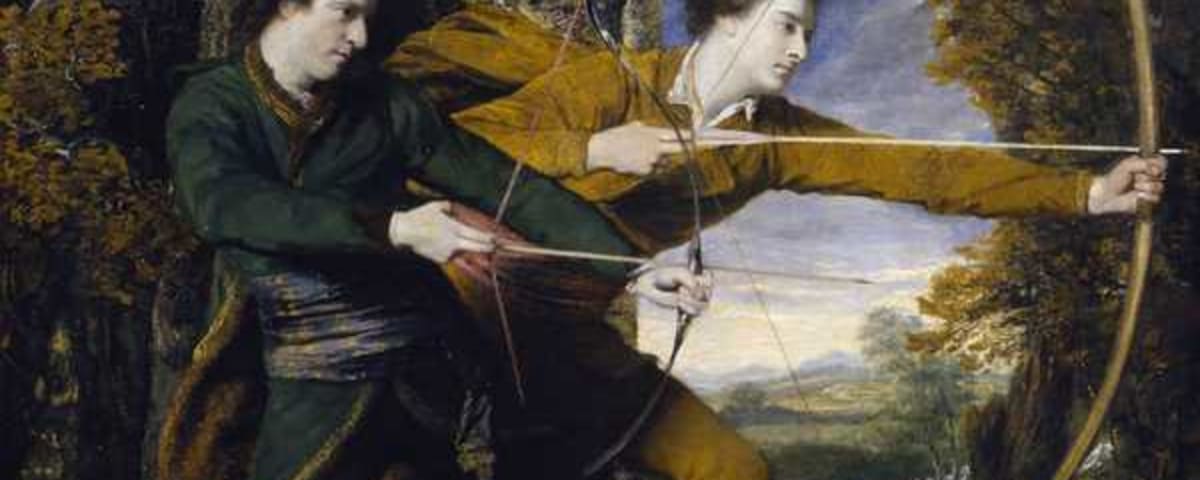
Grand manner is an English term for the highest, most noble style of art in academic theory, based on an idealised classical approach. It involves the depiction of elevated, edifying subjects—from history, mythology, religion or literature—in a monumental, heroic form. Rather than copying nature exactly with all its flaws, the grand manner artist was expected to improve and generalise it, raising the particular to the level of the ideal and universal in imitation of the models of antiquity and the masters of the High Renaissance, above all Raphael. The concept derives from the theory of the hierarchy of genres, in which history painting was regarded as the highest and worthiest kind of art. In Britain the ideas of the grand manner were most fully articulated by Joshua Reynolds, the first president of the Royal Academy, in his celebrated Discourses, where he urged young artists to model themselves on great history painting. Although Reynolds himself was famous chiefly as a portraitist, he sought to give his portraits a heroic elevation. The grand manner reflected the conviction that the task of art was not to entertain but to raise the viewer morally and spiritually, and it remained an influential ideal until the decline of the academic tradition in the nineteenth century.
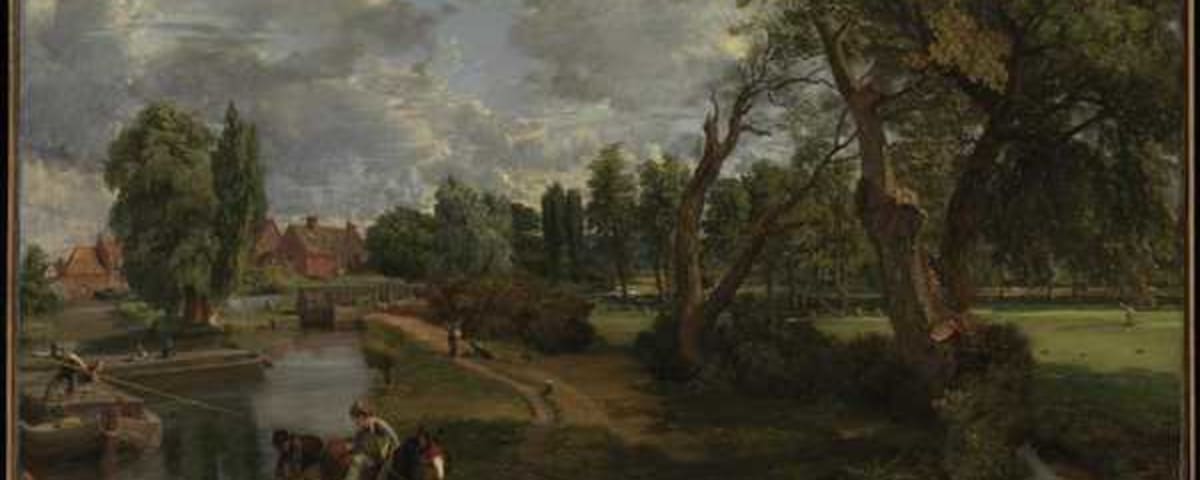
Naturalism is a broad nineteenth-century movement aimed at depicting subjects as close as possible to the way the eye perceives them, without idealisation, embellishment or convention. In painting, Naturalism is bound up with the pursuit of objective truthfulness: artists worked out of doors, carefully observed light, atmosphere and the details of nature and everyday life, and often turned to the lives of peasants and workers. Naturalism is closely interwoven with Realism but stresses precisely the fidelity of visual impression and a scientific, observational approach in keeping with the positivist spirit of the age. In French art its forerunners were the Barbizon school and Jules Bastien-Lepage, whose scenes of rural life influenced whole generations of artists in various countries, including Ukraine. Naturalism was also an important concept in literature, where Émile Zola advocated an almost scientific study of society. In the visual arts the naturalist approach prepared the ground for Impressionism with its attention to immediate perception, while remaining an independent and enduring artistic outlook.

Neoclassicism is an especially pure, austere form of classicism that arose in European art from about 1750 and prevailed into the early nineteenth century. The movement emerged as a reaction against the playful splendour of Rococo and was inspired by the new archaeological discoveries of the ancient cities of Pompeii and Herculaneum, as well as by the ideas of Enlightenment rationalism and the theoretical writings of Johann Joachim Winckelmann, who proclaimed as an ideal the 'noble simplicity and quiet grandeur' of Greek art. Neoclassicism turned to the strict line, clear composition, balance, restrained colour and heroic or moralising subjects drawn from ancient history and mythology. In painting its most eminent exponent was Jacques-Louis David, whose canvases combined classical form with the civic pathos of the French Revolution; he was followed by Jean-Auguste-Dominique Ingres. In sculpture the leading masters were Antonio Canova and Bertel Thorvaldsen. Neoclassicism shaped the appearance of government buildings, museums and monuments across Europe and America, and its influence is felt in Ukrainian art and architecture of the late eighteenth and early nineteenth centuries.
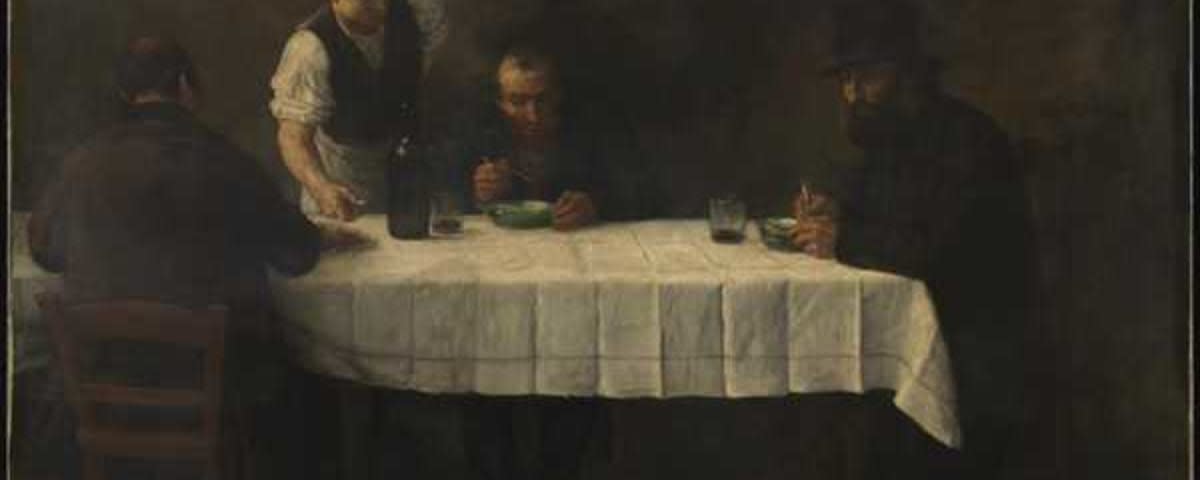
Realism is a visual language that strives to render the surrounding reality truthfully and without bias, as it actually is, free of idealisation, mythological ornament or romantic exaltation. Its core idea is to recognise ordinary people, labour, everyday life and social contradiction as worthy subjects of art. Formally, Realism relies on precise drawing, exact anatomy, convincing perspective and the tonal modelling of volume. The palette is usually restrained and close to nature, attentive to real illumination and the materiality of textures. Composition avoids artificial theatricality, favouring natural, observed scenes. Its motifs are peasants, workers, urban types, portraits of contemporaries, genre scenes and the landscape of one's native land. Technically, its artists prize careful execution and the authenticity of detail. As a conscious programme, Realism took shape in mid-nineteenth-century France: Gustave Courbet challenged academicism with canvases of stone-breakers and a rural funeral, while Jean-François Millet celebrated peasant toil. In Ukraine, Realism produced a constellation of masters born on Ukrainian soil. The Ukrainian artist Illia Repin, a native of Chuhuiv in Sloboda Ukraine, created the monumental "Reply of the Zaporozhian Cossacks" and sharp social canvases. Mykola Pymonenko lovingly recreated Ukrainian village life, rituals and landscapes. Realism laid the foundation for a critical view of society. Today it is valued for its craftsmanship, humanity and capacity to tell the truth about life.
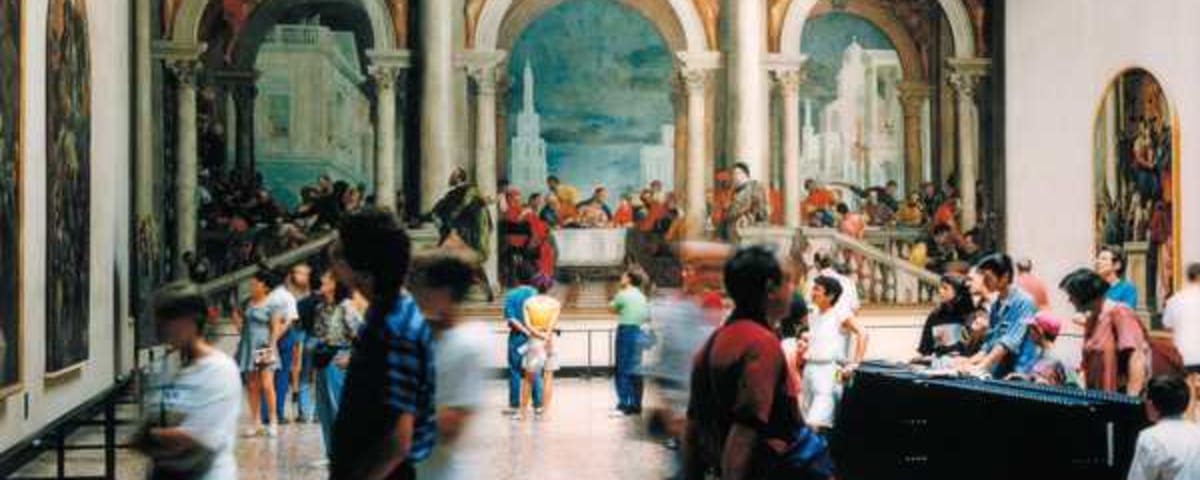
The Renaissance, as a visual language, is a system of pictorial principles that revived the ancient ideal of harmony, measure and human dignity, placing the human being at the centre of the universe. Its central idea is the rational cognition of the visible world, grounded in observation and science, and its embodiment in perfect form. Formally, the Renaissance gave art linear and aerial perspective, precise anatomy, chiaroscuro modelling and a balanced, often symmetrical composition governed by mathematical proportion. The palette grew ever richer, especially with the development of oil painting, which allowed subtle glazes and soft transitions (sfumato). Its motifs embrace religious subjects, classical mythology, portraiture and the birth of landscape. Technically, its artists combined scientific perspective with virtuoso draughtsmanship. The movement arose in Italy in the fourteenth to sixteenth centuries, passing from the Early to the High Renaissance. Its titans were Leonardo da Vinci, with the "Mona Lisa" and "The Last Supper"; Michelangelo, with the ceiling of the Sistine Chapel; Raphael, with his harmonious Madonnas; and Titian, as the master of Venetian colour. In the North, a parallel line developed with Jan van Eyck and Albrecht Dürer and their scrupulous detail. The Renaissance shaped the European canon of beauty for centuries to come. Today it is valued for its synthesis of science and art, its humanist pathos and its unsurpassed technical perfection.

Rococo is a visual language of refined lightness, play and pleasure that arose in the early eighteenth century as an intimate, chamber-scale response to the solemn grandeur of the Baroque. Its core idea is to turn art into a source of exquisite delight, to celebrate love, flirtation, luxury and the fleeting joy of existence. Formally, Rococo is distinguished by asymmetry, capricious flowing lines, the shell motif (rocaille), plant scrolls and mirror-like glints. The palette is built on tender pastel tones — sky blue, pink, pearl grey, cream and gold. Composition is often dynamic yet free of pathos, playful and light instead. Its motifs are gallant fêtes, pastorals, boudoir scenes, cupids and the ancient goddesses of love. Technically, its painting favours a light, almost sketch-like brushstroke, transparency and delicacy. Rococo merged organically with the decorative arts, interiors, porcelain and furniture. Its leading masters were the Frenchmen Antoine Watteau, creator of melancholy "fêtes galantes"; François Boucher, with his sensual mythological scenes; and Jean-Honoré Fragonard, with the sparkling "The Swing" and his amorous subjects. In portraiture, Rococo elegance was embodied by Élisabeth Vigée-Lebrun. The movement reigned at the European courts until the triumph of austere Neoclassicism. Today Rococo is valued for its decorative virtuosity, elegance and the hedonistic sensuality of its imagery.

Romanticism is a visual language of feeling, imagination and freedom that arose in the late eighteenth and early nineteenth centuries as a revolt against the cold rationalism of Neoclassicism and the ordered world of the Enlightenment. Its central idea is to exalt personal experience, passion, dream and the drama of the human soul above rules and norms. Formally, Romanticism employs dynamic, often diagonal composition, energetic movement, contrasts of light and shadow, and an expressive, free brushstroke. The palette can be dramatic and saturated, able to convey a storm, a fire, moonlight or a thunderous sky. Its motifs are the majestic elements of nature, ruins, the exoticism of the East, historical catastrophes, heroic impulses and the solitary dreamer before the infinite. Technically, its artists prize emotional immediacy over academic polish. In France, Eugène Delacroix embodied passionate colour in "Liberty Leading the People", while Théodore Géricault conveyed tragedy in "The Raft of the Medusa". In Spain, Francisco Goya laid bare the dark depths of humanity. The German Caspar David Friedrich created mystical landscapes of solitude, and the Englishman J. M. W. Turner dissolved form in the element of light and air. Romanticism fed the national awakening of peoples, including the Ukrainian, inspiring an interest in folklore and history. Today the movement is valued for its emotional depth, its cult of imagination and its affirmation of the uniqueness of the human personality.
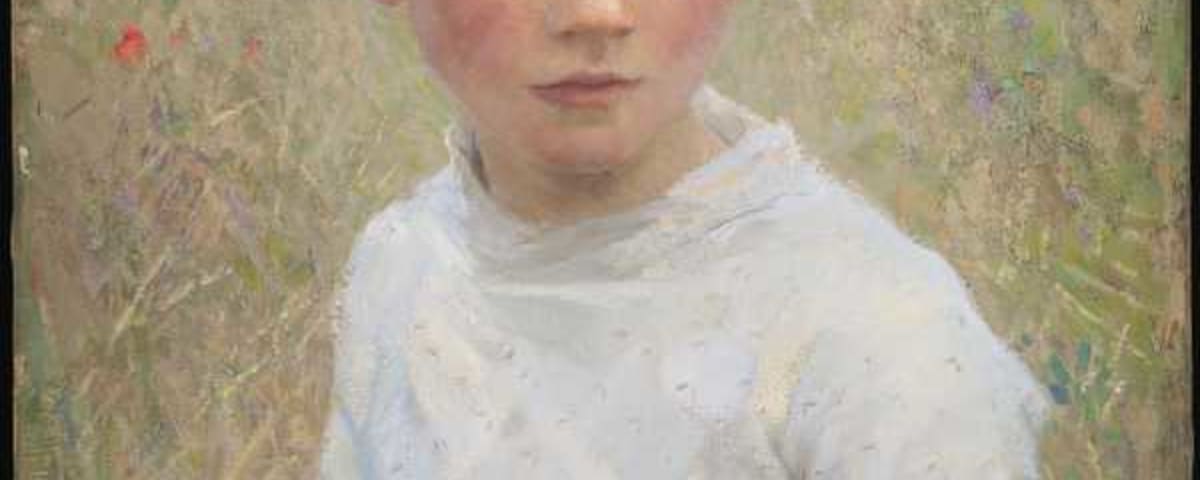
Rural Naturalism was a painting movement of the second half of the nineteenth century characterized by scenes of country life and labor depicted in a realistic and often sentimentalized manner. The tendency developed under the influence of French Realism, notably the work of Jean-François Millet and the Barbizon school, as well as the method of plein-air painting, which allowed artists to work directly in nature and accurately convey light and atmosphere. Particularly influential was the example of Jules Bastien-Lepage, whose canvases of peasants combined documentary fidelity with a poetic sensibility. Rural Naturalism depicted peasants, shepherds, reapers, fishermen, and children in moments of labor and rest, emphasizing the dignity of simple life, the human bond with the land, and the passage of rural existence. The movement spread across many countries of Europe and America, inspiring whole artist colonies such as the Newlyn school in Britain. Although sometimes criticized for idealization, Rural Naturalism played an important role in democratizing the subjects of art and affirming a realistic view of the lives of ordinary people.