Ukrainian art & cultureOnline


Other dimensions of culture
Other dimensions of culture





Test mode: all content on this site is for testing and will be removed at launch.
Art Glossary
Ukrainian Art&Culture online glossary of art terms covers movements, styles and techniques such as Impressionism, Printmaking, Video art and more.
from Realismto Cyberpunk
34from Oilto 3D Modeling
8from Paintingto Design
7from Trypilliato Contemporary
2314 terms

The Heidelberg School was a late-nineteenth-century art movement in Australia, named after the village of Heidelberg near Melbourne, where a small group of artists went to work en plein air, in the open air and directly on site. The movement developed mainly in the 1880s and 1890s and is regarded as the first distinctly Australian school of painting, one that forged a national visual language. Its leading figures were Tom Roberts, Arthur Streeton, Charles Conder and Frederick McCubbin. Influenced by French plein-air painting and Impressionism, the artists sought to capture the peculiar bright light, heat, dust and pastel hues of the Australian bush, as well as scenes of rural and pioneer life. A key event of the movement was the 9 by 5 Impression Exhibition of 1889, which presented sketches painted on small wooden panels taken from cigar-box lids. The works of the Heidelberg painters, including monumental canvases about the labour of wool shearers and pioneers, became something like national icons and played a central role in shaping Australian cultural identity at the close of the colonial era.

The Hudson River School was an American art movement of the mid-nineteenth century whose members were landscape painters depicting picturesque scenes of natural beauty, including the Hudson River valley, the Catskill, Adirondack and White Mountains of the north-eastern United States. The movement was not a formal organisation but rather a generation of like-minded artists, whose founder is considered to be Thomas Cole and whose leading figures included Asher Durand, Frederic Edwin Church, Albert Bierstadt, John Kensett and Sanford Gifford. The painters of the school celebrated the grandeur and pristine quality of American nature, regarding it as a manifestation of divine presence and a symbol of the young country's national identity. Their canvases are distinguished by meticulous detail, dramatic lighting and a Romantic, sometimes exalted and religious mood; many works carry allegorical or moral-philosophical undertones, such as Cole's cycle The Course of Empire. Later painters of the school, notably Church and Bierstadt, expanded its geography to depict the Andes, the Rocky Mountains and the American West. The Hudson River School was the first major national movement in American painting and had a lasting influence on the development of landscape art in the country.
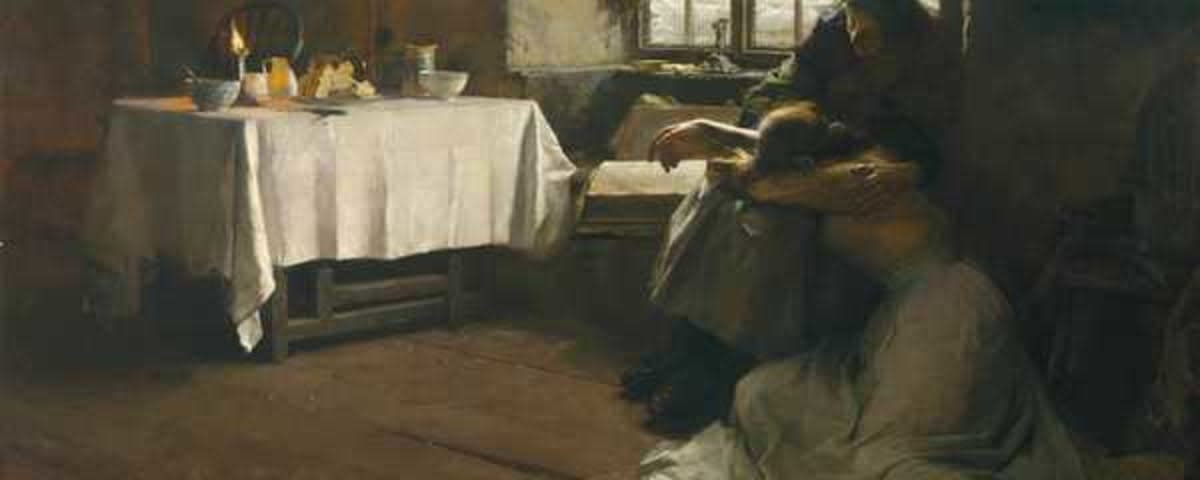
The Newlyn School was a group of artists who settled in the fishing village of Newlyn and neighbouring towns of Cornwall in the late nineteenth century and whose art is marked by the influence of plein-air painting and realism. The artists were drawn to Newlyn by the soft coastal light, the inexpensive living, the picturesque scenery of the shore and the opportunity to work in the open air, depicting the everyday life of the fishing community. The leading figure of the school was Stanhope Forbes, sometimes called its father; the circle also included Walter Langley, Frank Bramley, Elizabeth Forbes and others. The artists followed the method of the French painter Jules Bastien-Lepage, working out of doors and paying particular attention to the truthful rendering of natural light and atmosphere. Their paintings depicted scenes of the labour and daily life of fishermen, dramatic episodes of maritime life such as the waiting for boats or a leave-taking, and often carried a distinct social and emotional charge. In 1895 an art gallery opened in Newlyn, attesting to the importance of the colony. The Newlyn School became one of the best-known British art colonies and made a notable contribution to the development of realist plein-air painting in Britain.
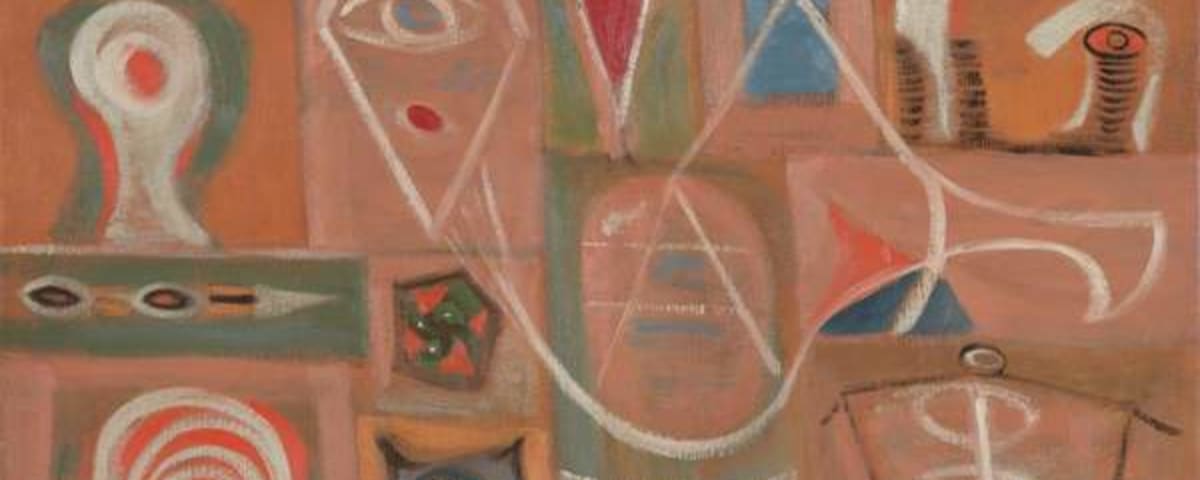
The New York School was a radical art scene that emerged in New York after the Second World War and, for the first time, made that city rather than Paris the principal centre of avant-garde art in the Western world. The term primarily encompasses the Abstract Expressionist artists who worked in the 1940s and 1950s, notably Jackson Pollock, Willem de Kooning, Mark Rothko, Barnett Newman, Clyfford Still, Franz Kline, Robert Motherwell and Arshile Gorky. Despite significant differences of individual manner, from the energetic action painting of dripped and splashed paint to contemplative fields of pure colour, these artists were united by a striving for large scale, non-representation, spontaneity and the expression of deep emotional and existential states. The movement's formation was influenced by European Surrealism, whose representatives emigrated to the United States during the war, and by ideas of automatism and psychoanalysis. The notion of the New York School is sometimes extended to an associated circle of poets, musicians and dancers. This scene, supported by the influential critics Clement Greenberg and Harold Rosenberg, exerted a decisive influence on all the subsequent development of twentieth-century art.
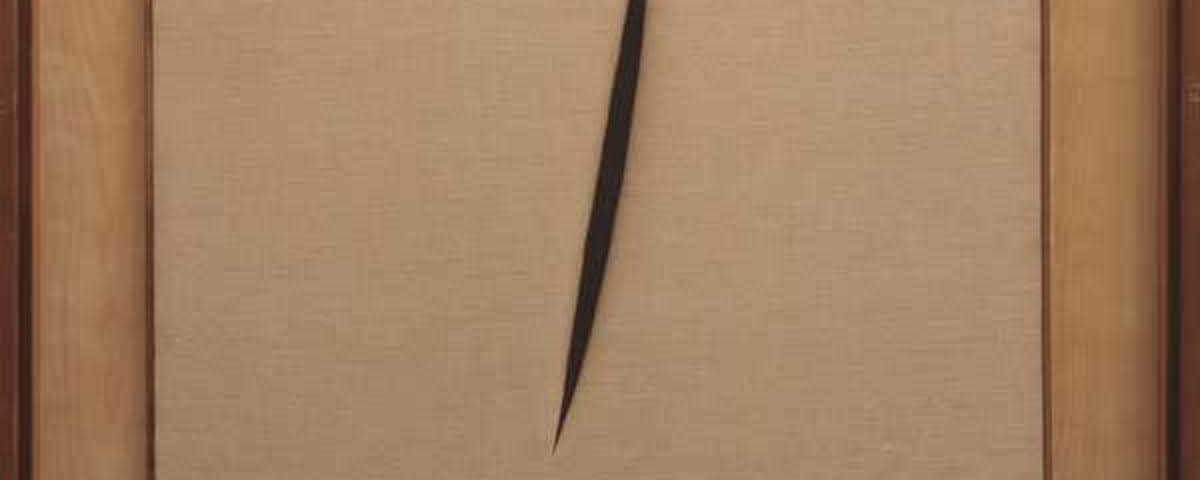
The School of Altamira (Escuela de Altamira) was an avant-garde art school and association founded in 1946 in Buenos Aires, Argentina, by the Argentine-born Italian artist Lucio Fontana together with his students, who that year published the Manifiesto Blanco (White Manifesto). The manifesto advocated the integration of art and science and a new, synthetic art based on movement through time and space: "Matter, colour and sound in motion are the phenomena whose simultaneous development makes up the new art". Its teachers included the painters Emilio Pettoruti and Raúl Soldi, with Jorge Romero Brest as professor of art history; in 1947 Perón ordered the academy dissolved. Fontana did not sign the manifesto but actively contributed to it, and he later expanded its ideas as Spatialism in five manifestos from 1947 to 1952. The academy should not be confused with the School of Altamira founded in 1948 in Santillana del Mar, Spain, by Mathias Goeritz and others, which took its name from the nearby Altamira cave with its prehistoric paintings. The School of Altamira is an important example of how peripheral art centres beyond Europe actively engaged with global modernist debates of the mid-twentieth century, forging their own original versions of the avant-garde.
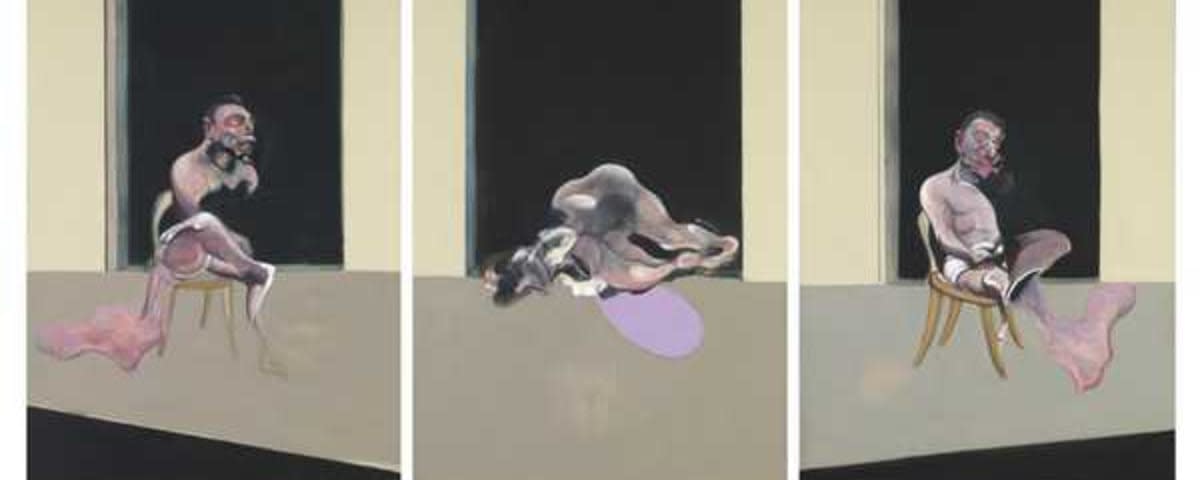
The School of London is a loose label for a group of artists who worked in London and, in the 1960s and 1970s, persistently developed figurative painting against the then-dominant currents of abstraction, Pop art and conceptualism. The term was popularised by the artist R. B. Kitaj, who in 1976, curating the exhibition The Human Clay, used it to describe a circle of artists united by their commitment to the depiction of the human figure and direct observation. The core of the group is traditionally taken to include Francis Bacon, Lucian Freud, Frank Auerbach, Leon Kossoff, Michael Andrews and Kitaj himself. These artists shared neither a common style nor a manifesto; they were united by the conviction that the human figure and bodily experience remain an inexhaustible source for modern art. Bacon created distorted, psychologically charged images; Freud painted nudes with an almost merciless physical precision; Auerbach and Kossoff laid down thick layers of paint, fixing the city and its people in dense matter. Many were émigrés or the children of émigrés, giving the movement a cosmopolitan dimension. The School of London demonstrated the vitality of the figurative tradition in an age of the avant-garde and helped revive interest in painting at the end of the twentieth century.
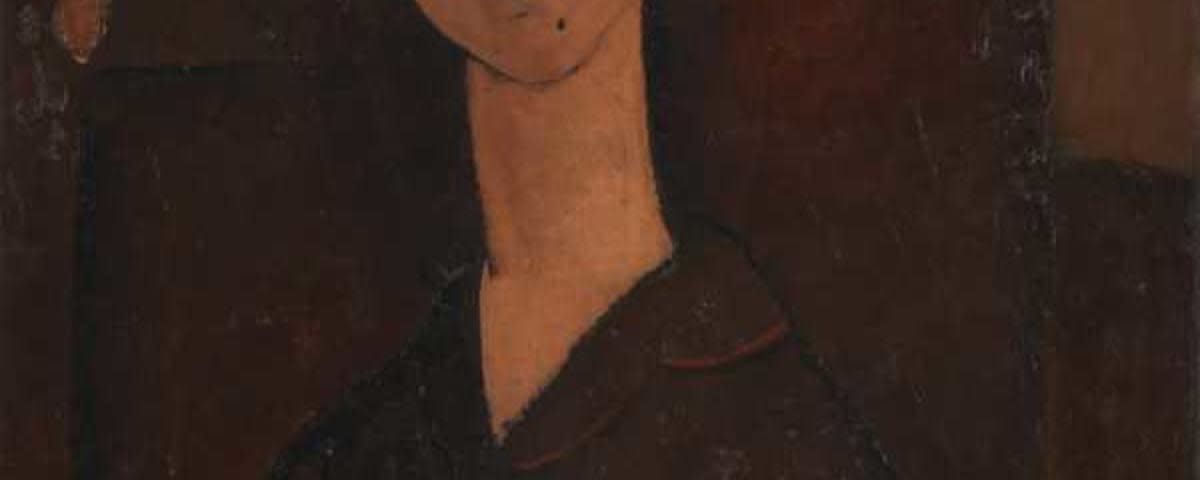
The School of Paris (École de Paris) is a collective term describing the diversity of artists who worked in Paris in the first decades of the twentieth century, when the city became a magnet for artists from around the world and the principal centre of innovation in modern art. It is not a school in the literal sense nor a single style, but rather a designation for an international creative community concentrated in the districts of Montmartre and Montparnasse. Fauvism, Cubism, Expressionism and abstraction intersected here, and artists' cafés and studios such as La Ruche became spaces for the exchange of ideas. A distinctive feature of the School of Paris was the large proportion of foreigners and émigrés: Pablo Picasso and Juan Gris from Spain, Amedeo Modigliani from Italy, Marc Chagall, Chaïm Soutine and Ossip Zadkine from Eastern Europe. Artists of Ukrainian origin made a significant contribution, including the sculptor Alexander Archipenko, Sonia Delaunay (née Stern; known before her marriage as Sonia Terk) and Mykhailo Boichuk, whose presence firmly places their work within the European artistic context. After the Second World War the term was also applied to a new generation of abstract painters. The School of Paris symbolises the era when Paris was the undisputed capital of world art.

The Scuola romana (Roman School) is a general term for artists who worked in Rome or had close ties to it in the 1920s and 1930s and who resisted the official classicising art of the Fascist era. It was not a single institution but rather several centres, notably the circle of artists of the Via Cavour (Scuola di Via Cavour), which included Mario Mafai, Antonietta Raphaël and Scipione (Gino Bonichi), as well as a broader grouping of so-called tonalisti. They were united by a striving for emotionally charged, often Expressionist painting, devoted to colour and the materiality of paint. The artists of the Roman School developed an intimate, lyrical and frequently anxious imagery — urban landscapes, still lifes, portraits, scenes of demolished houses — that contrasted with the monumental rhetoric of the regime's official art. Important figures also included the sculptor and painter Marino Mazzacurati; the expressive, almost hallucinatory canvases of Scipione anticipated post-war tendencies. Antonietta Raphaël, an artist of Jewish origin, brought a cosmopolitan and multicultural dimension. The Roman School became an important alternative to the state art of interwar Italy and prepared the ground for the post-war renewal of Italian painting.

The St Ives School is a loose name for the community of artists associated with the fishing town of St Ives in West Cornwall, which from the 1940s to the 1960s became an important centre of modern and abstract art in Britain. The picturesque coast, distinctive light and seclusion had attracted artists since the nineteenth century, but it was the arrival at neighbouring Carbis Bay in 1939 of Ben Nicholson, Barbara Hepworth and the Constructivist Naum Gabo that transformed the town into a hub of the avant-garde. The circle of St Ives artists included Peter Lanyon, Patrick Heron, Terry Frost, Roger Hilton and the potter Bernard Leach, as well as the self-taught painter Alfred Wallis, whose naive marine scenes inspired professional masters. Their art combined abstraction with a deep sense of the local landscape — the sea, cliffs, light and space of Cornwall. Many maintained ties with American Abstract Expressionism while retaining their own lyrical language rooted in nature. The St Ives School became one of the most important phenomena of post-war British art, and its legacy is today preserved by a branch of the Tate gallery, Tate St Ives, opened in 1993.