Ukrainian art & cultureOnline


Other dimensions of culture
Other dimensions of culture





Test mode: all content on this site is for testing and will be removed at launch.
Art Glossary
Ukrainian Art&Culture online glossary of art terms covers movements, styles and techniques such as Impressionism, Printmaking, Video art and more.
from Realismto Cyberpunk
34from Oilto 3D Modeling
8from Paintingto Design
7from Trypilliato Contemporary
2315 terms
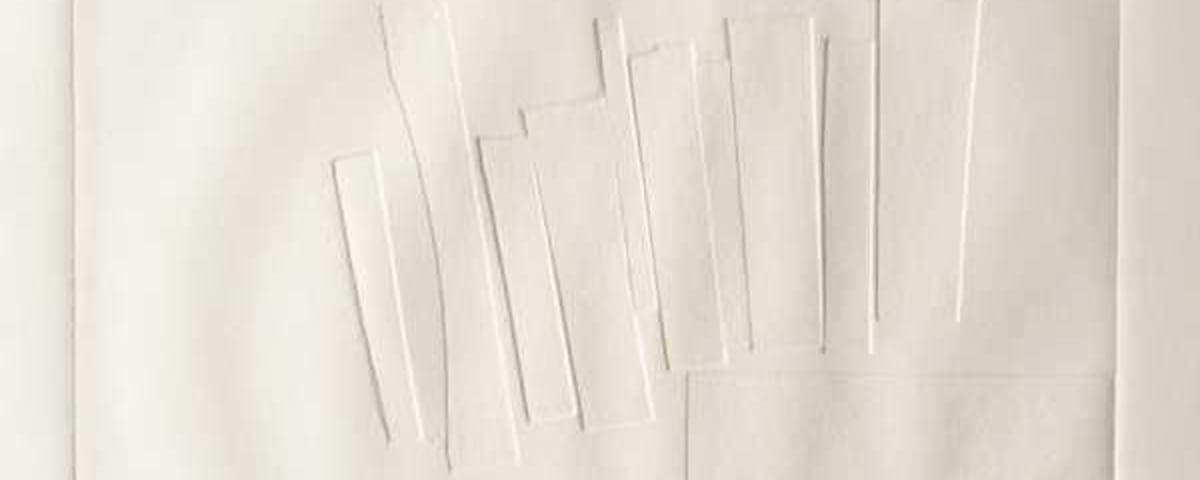
Embossing produces a raised or recessed relief surface created during printing or finishing processes, when material, most often paper, is pressed between a die and a counter-die either without ink or with it. As a result the image or text is perceived not only by sight but also by touch. Within printmaking there is a distinct form, blind embossing, an inkless relief impression that questions the traditional role of ink and emphasizes the texture and the play of light across the surface of the sheet. In the twentieth century relief impressions were explored by artists interested in pure form and materiality, including practitioners of Minimalism and constructive abstraction. Embossing is also widely used in the applied and decorative arts, bookbinding, book and packaging design, and commercial printing, where it lends objects a tactile expressiveness and a sense of quality. The term also describes relief worked into leather, metal, and fabric.

Linocut is a relief printing technique, akin to woodcut, but using linoleum as the surface into which the design is cut and from which it is then printed. The artist removes the areas that are to remain white, while the raised parts that are retained are inked and pressed against the paper. The softness of linoleum, which cuts equally easily in all directions, allows for free, energetic lines and large areas of colour, making the technique accessible and expressive. Linocut emerged in the early twentieth century; its artistic potential was revealed by the German Expressionists, and later by Henri Matisse and especially Pablo Picasso, who demonstrated the reductive method of printing multiple colours from a single block. Because of its simplicity and democratic character, the technique was widely used in posters, book graphics, and teaching. In twentieth-century Ukrainian art, linocut became an important means of easel and book graphics, notably in the work of masters who developed the national graphic school.

Lithography (from the Greek lithos, «stone», and graphein, «to write») is a planographic printing technique based on the mutual repulsion of grease and water. The artist draws the image with a greasy crayon or ink on a smooth limestone or metal plate; the surface is treated so that the image areas attract printing ink, while the non-image areas, dampened with water, repel it. Unlike intaglio or relief printing, there are neither recesses nor raised areas — printing takes place from a flat surface. Lithography was invented by Alois Senefelder in Munich around 1796. The technique quickly gained popularity for its ability to reproduce free drawing faithfully; it was used brilliantly by Honoré Daumier in political caricature, by Toulouse-Lautrec in colour posters, and by Odilon Redon. Lithography opened the age of the mass-reproduced image and remains an important medium of artistic graphics. In Ukraine, lithography was widely used in publishing and easel graphics of the nineteenth and twentieth centuries.

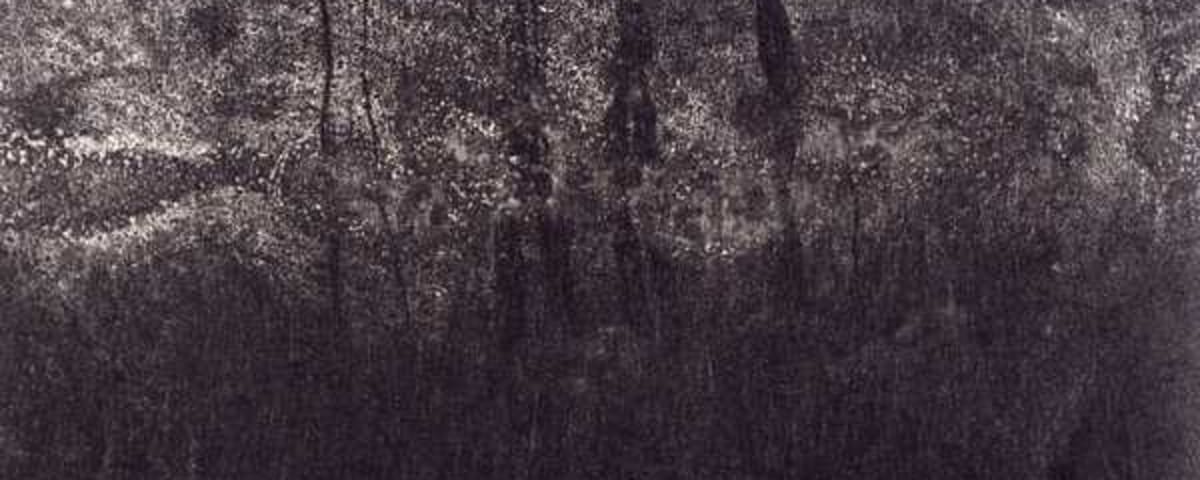
Mezzotint (from the Italian mezzo, «half», and tinto, «tone») is an intaglio printing technique developed in the seventeenth century that allows for soft tonal gradations and rich, velvety blacks. Work begins by uniformly roughening a copper plate with a special toothed tool, the rocker, which covers the surface with countless tiny burred pits; if such a plate were printed straight away, it would yield an even velvet-black impression. The artist creates the image working «from dark to light», scraping and burnishing the areas that are to be lighter: the more they are smoothed, the less ink they hold. The technique is attributed to Ludwig von Siegen; mezzotint developed especially in eighteenth-century England, where it was widely used to reproduce portraits. Unlike linear techniques such as etching or engraving, mezzotint works with tone and chiaroscuro, approaching painterly expressiveness, which is precisely why it was prized for reproducing paintings.
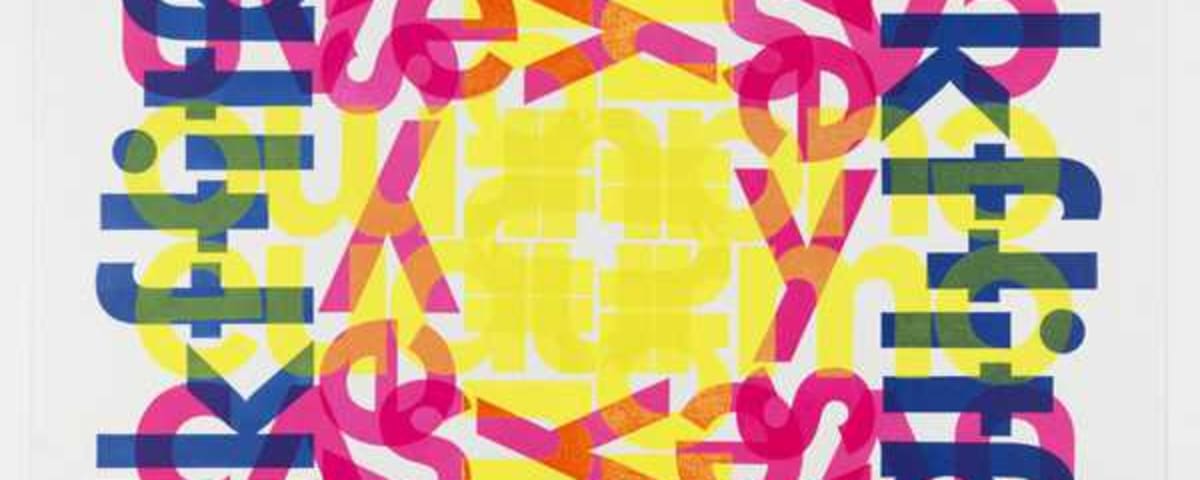
Monoprint is a form of printmaking in which an impression of a given image can be produced only as a single copy, unlike most types of printing that allow many identical impressions to be made. Unlike pure monotype, a monoprint has a fixed matrix — an engraved, etched, or otherwise worked plate with an unchanging underlying design — but each time it is re-inked by hand, with added colours, wiping, or brushstrokes, so that every impression becomes unique. Thus a repeatable printed element and a singular painterly gesture are combined. The term is often used alongside monotype, and the boundary between them can be blurred. Monoprint appeals to artists for its freedom of experiment, its blend of chance and control, and its richness of texture and colour. The technique was used by Edgar Degas and Paul Gauguin, and in the twentieth century by many masters seeking individuality within the printed medium, including representatives of the Ukrainian graphic school who valued the singularity of each sheet.
Monotype is a unique image printed from a smooth, non-porous plate, such as glass or metal, onto which a design has been drawn in paint or ink. The artist draws freely on the surface of the plate and then presses a sheet of paper against it, transferring the image; because most of the paint passes to the paper in a single impression, it is impossible to obtain a second identical print — hence the name «mono», meaning single. Monotype combines the spontaneity of painting or drawing with the soft, slightly blurred quality of a printed image and the unpredictable effects that arise under pressure. The earliest examples of the technique are attributed to the seventeenth-century Italian master Giovanni Benedetto Castiglione. Later, monotype was used brilliantly by Edgar Degas, who created series with effects of light and movement. In the twentieth century, the technique attracted many artists for its freedom and immediacy, including masters of Ukrainian graphics, for whom it became a field of experiment with texture, tone, and colour on the border between painting and print.

Watermark is an image or mark on a sheet of paper, visible when the sheet is viewed against the light. The mark is produced by variation in the thickness of the paper within a single sheet: during handmade papermaking, a thin wire design is attached to the wire mesh mould, and in those places less fibre settles, so the paper becomes slightly thinner and lets through more light. Watermarks appeared in Italian papermaking at the end of the thirteenth century and initially served as the marks of workshops or paper mills. Over time they became important for establishing the origin and dating of paper. For art historians, watermarks are a valuable tool for studying old drawings, prints, and manuscripts: analysis of the mark helps to determine when and where a sheet was made, and thus to refine the attribution and dating of a work. Watermarks are also used as a means of protection against forgery — on banknotes, documents, and postage stamps. In the artistic context, the study of watermarks is part of the technical examination of works on paper.

Woodcut is a method of relief (raised) printing in which the image is cut into the surface of a wooden block sawn along the grain. The artist removes the areas that are to remain white, leaving raised the lines and planes of the intended image; these raised parts are inked and pressed against the paper. Woodcut is the oldest technique for printing images: in East Asia it was used from the early medieval period, and in Europe it spread in the late fourteenth and early fifteenth centuries alongside the manufacture of paper. European woodcut reached its highest artistic level in the work of Albrecht Dürer, whose prints astonish with the fineness of their line and the complexity of their composition. In the twentieth century, the German Expressionists revived the woodcut for its rough, energetic expressiveness. Woodcut should be distinguished from wood engraving, cut across the grain, and from the related linocut. In Ukrainian art, woodcut had a long tradition in the decoration of early printed books, notably in the book engraving of the Baroque era.

Wood engraving is a relief (letterpress) printing technique in which the image is cut into the end grain of a hard wood, most often boxwood, rather than the side or plank grain used in a traditional woodcut. In a woodcut the artist gouges away the background so that the drawn line stands up in relief; in wood engraving the fine tool, or burin, incises the line itself into a smooth, dense surface, and the untouched areas print as solid black. The compact end grain allows the engraver to achieve extremely fine, precise lines and a rich range of tonal values, which made the medium ideal for detailed reproduction in print. The technique was refined and popularised in late eighteenth-century England by Thomas Bewick, whose natural-history illustrations set the standard, and it became the dominant means of book and magazine illustration throughout the nineteenth century. In Ukrainian art, engraving on wood reaches back to the printing houses of the seventeenth century, above all the Kyiv-Pechersk Lavra workshop with masters such as Illya and Nykodym Zubrytsky (alongside the copper engraver Leontii Tarasevych). In the twentieth century a brilliant school of Ukrainian xylography emerged around Vasyl Kasiian, Ivan Padalka and the Boychukist circle, who fused folk tradition with a modern graphic idiom.