Ukrainian art & cultureOnline


Other dimensions of culture
Other dimensions of culture





Test mode: all content on this site is for testing and will be removed at launch.
Art Glossary
Ukrainian Art&Culture online glossary of art terms covers movements, styles and techniques such as Impressionism, Printmaking, Video art and more.
from Realismto Cyberpunk
34from Oilto 3D Modeling
8from Paintingto Design
7from Trypilliato Contemporary
2313 terms
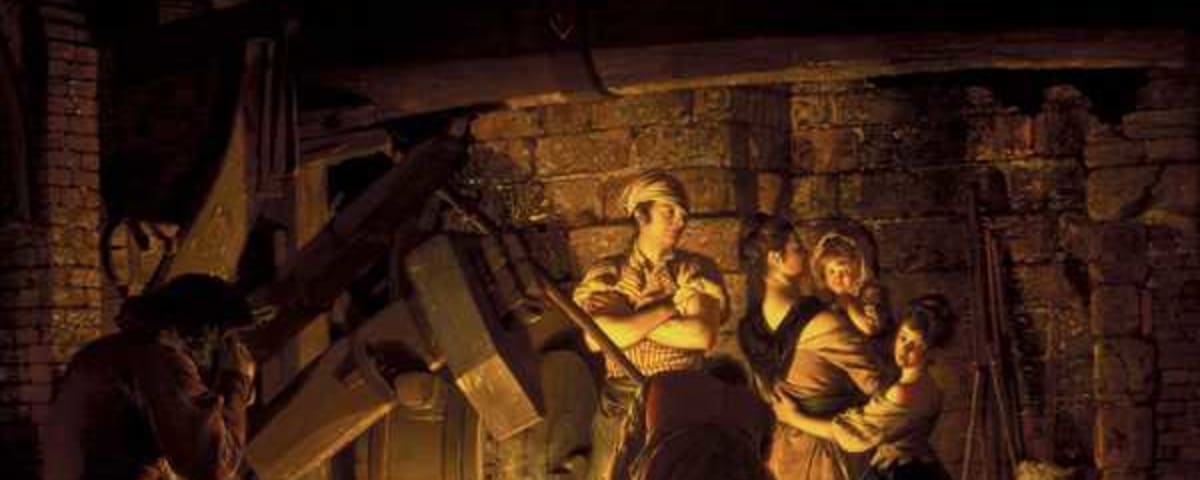
Chiaroscuro is an Italian term meaning literally light-dark, denoting the distribution and interplay of light and shadow in a work, and the modelling of volume and space through tonal contrast. The device developed during the Renaissance: Leonardo da Vinci studied gradual transitions from light to shade, a related idea known as sfumato, giving forms a sense of three-dimensional fullness. Chiaroscuro found its most dramatic expression in the Baroque: Caravaggio used sharp contrasts of brilliant light and deep darkness, called tenebrism, to heighten the emotional tension and theatricality of his scenes. This approach influenced numerous masters of light and shade across Europe. Chiaroscuro remains a fundamental means of expression in painting, drawing, photography, and cinema, where the contrast of light and dark shapes mood, volume, and drama. The term is also applied to the chiaroscuro woodcut, printed from several blocks to render tones.
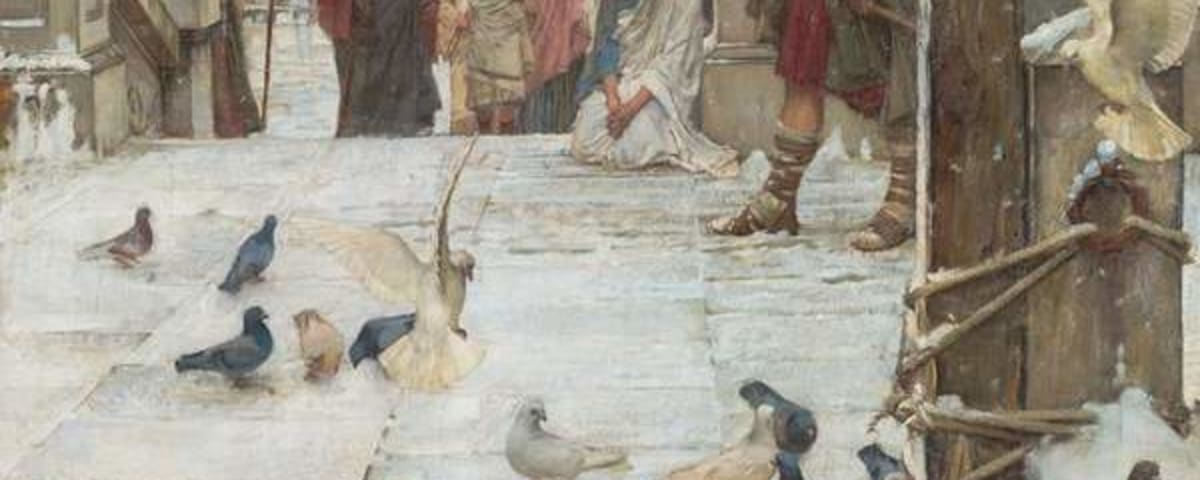
Foreshortening is the device of depicting an object or the human body at an angle to the picture plane so as to create a convincing illusion of projection into the depth of space. Forms pointing toward the viewer are shown shorter and compressed, while overlapping and sharp changes of scale reinforce the sense of three-dimensionality. Foreshortening is a particular case of the broader principle of perspective and became one of the chief technical challenges for artists, since it demands precise observation and often contradicts what the mind knows about the true proportions of the body. Masterly use of foreshortening has been a mark of high skill since the Renaissance: a classic example is the radically foreshortened figure in Andrea Mantegna's Lamentation of the Dead Christ, where the body seems to project straight toward the viewer. Caravaggio, Tintoretto, and the masters of the Baroque used dramatic foreshortening to heighten dynamism and emotional impact. The device remains fundamental to realist drawing, animation, and three-dimensional graphics.

Fresco is a technique of wall painting in which water-based pigments are applied directly onto fresh, damp lime plaster, known in Italian as buon fresco, meaning true fresco. As the plaster dries and the lime undergoes carbonation, the paint is absorbed into the surface and becomes an integral part of the wall, ensuring exceptional durability. The artist must work quickly, in sections called giornate, while the plaster is still wet, because once it dries corrections are impossible. Fresco reaches back to antiquity, as in the Minoan murals of Crete, and attained its heights in Italian art, from Giotto to Michelangelo and his ceiling of the Sistine Chapel. In Ukraine fresco has a thousand-year tradition: the pre-Mongol eleventh-century murals of the Saint Sophia Cathedral in Kyiv and the frescoes of Saint Cyril's Church are among the oldest monuments of monumental art. In the early twentieth century Mykhailo Boychuk and his school revived monumental fresco painting, drawing on Byzantine and folk heritage; tragically, most of their works were destroyed by the totalitarian regime.
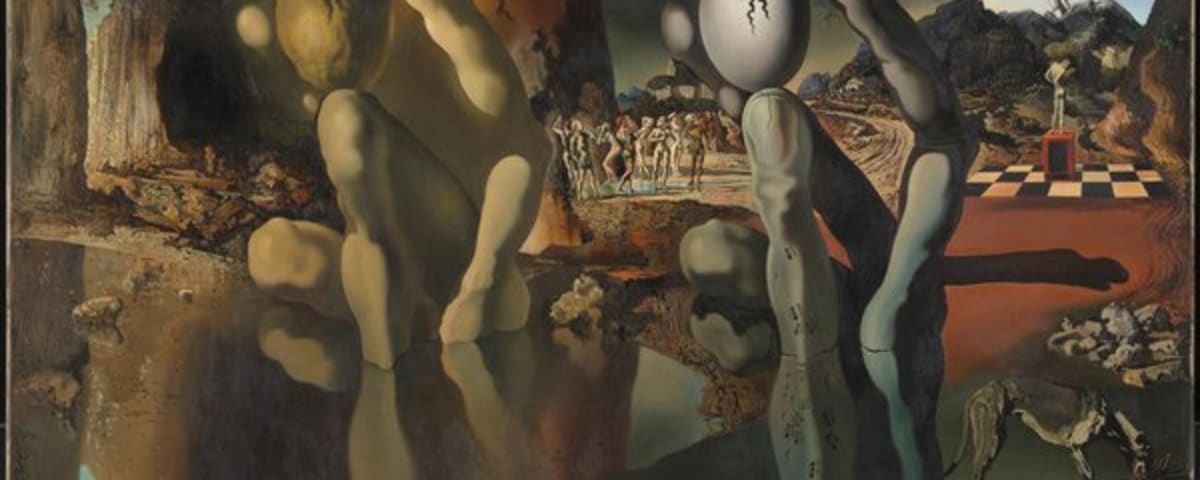
Illusionism is painting that creates a convincing illusion of a real object or space, or sculpture in which a figure is rendered so lifelike that it appears alive. The term covers a broad range of devices, from meticulous light-and-shade modelling to the use of linear and aerial perspective. The origins of illusionism reach back to antiquity — Pliny the Elder describes the contest between Zeuxis and Parrhasius, in which painted grapes supposedly attracted birds. Illusionism reached its most spectacular flowering in the art of the Renaissance and Baroque, when masters painted the ceilings of churches and palaces so that the architecture seemed to continue into the sky (the di sotto in su technique). Outstanding examples include the ceiling frescoes of Andrea Pozzo and Correggio. Illusionism is closely linked to trompe l'oeil and quadratura. In Ukrainian monumental painting, illusionistic murals adorned the interiors of Baroque churches, testifying to a deep assimilation of the European tradition of illusory space.

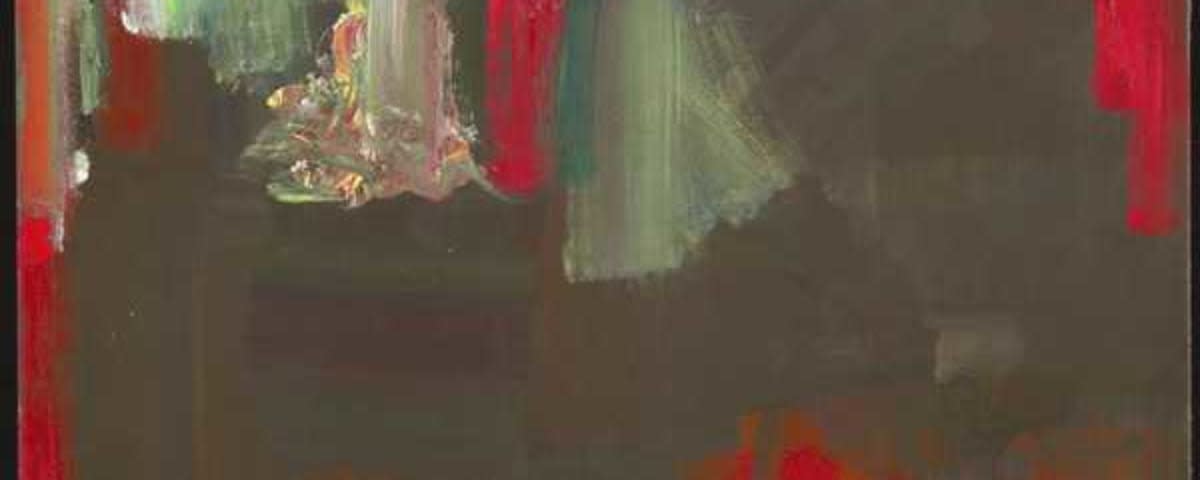
Impasto (from the Italian impasto, «dough» or «mixture») is an area of thickly applied paint or texture in painting, in which brushstrokes stand out from the surface of the canvas and preserve the marks of the brush or palette knife. The thick layer of paint catches the light, creating a play of relief, shadow, and material tangibility that lends an image energy and immediacy. The technique became possible with the spread of oil paints in European painting. It was used masterfully by Titian and Rembrandt, in whose work impasto modelled faces and fabrics, heightening the effect of an inner glow. In the nineteenth century, impasto achieved its most emotional expression in the work of Vincent van Gogh, whose swirling relief strokes became a hallmark of Post-Impressionism. Later, Expressionists and Abstract Expressionists developed the expressive potential of thick paint. Impasto stands in contrast to smooth, mark-free painting and remains one of the principal means of textural expressiveness.

Painterly is a term denoting the application of paint in a «free», less controlled manner, as a result of which visible brushstrokes remain in the finished painting. This approach is contrasted with the linear, or graphic, mode, in which forms are outlined by clear contours and the brushstrokes are smoothed away and imperceptible. The concept of the «painterly» (German malerisch) was developed and given theoretical grounding by the Swiss art historian Heinrich Wölfflin in his «Principles of Art History» (1915) as one of five pairs of opposites by which he distinguished the styles of the Renaissance and the Baroque. In the painterly style, forms merge, and emphasis falls on masses of light and shadow, on colour and movement, rather than on a closed contour. Classic examples of painterly handling are the works of Titian, Rembrandt, Velázquez, and Frans Hals, and later the Impressionists. The painterly approach stresses the very process of painting and the materiality of the paint, and so remains one of the key concepts for the analysis of style in European painting.
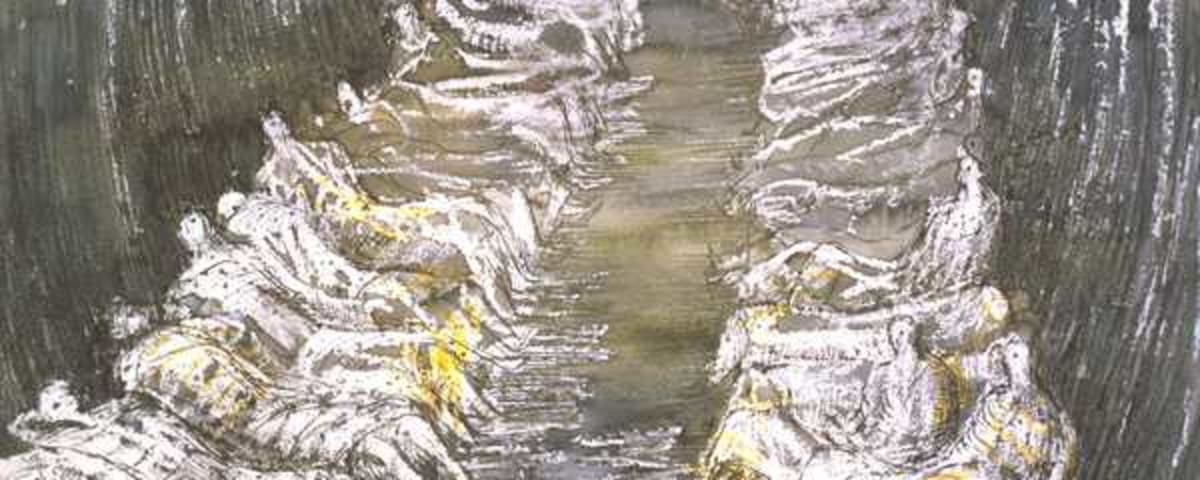
Perspective is a system for representing objects of three-dimensional space on the two-dimensional surface of a picture so as to convey an impression of depth, distance, and volume. Its most influential variety is linear perspective, in which parallel lines, as they recede, appear to converge towards one or several vanishing points on the horizon line, while objects diminish in proportion to their distance. The mathematical foundations of linear perspective were developed in Renaissance Florence: the first experiments are credited to the architect Filippo Brunelleschi around 1415, and they were set out theoretically by Leon Battista Alberti in his treatise «On Painting» (1435). This discovery fundamentally transformed European art, enabling artists to construct a convincingly coherent, measurable space. Alongside linear perspective there is aerial (atmospheric) perspective, which conveys depth through the softening of colour and clarity of distant objects, as in the works of Leonardo da Vinci. Perspective remained the basis of academic painting for centuries, until twentieth-century modernists began deliberately to reconsider and dismantle its conventions.

Plein air (from the French for «open air») is the practice of painting finished pictures outdoors rather than in the studio, in order to observe natural light, colour, and atmosphere directly. Although artists had long made studies from nature, the custom of executing the final work itself outdoors spread in the nineteenth century. This was aided by technical innovations, above all the invention of oil paints in metal tubes (around 1841), which made materials portable. Important precursors of plein-air painting were the masters of the Barbizon school, notably Camille Corot and Théodore Rousseau, who worked in the Forest of Fontainebleau. The principle of plein air was most fully embodied by the French Impressionists — Claude Monet, Auguste Renoir, Camille Pissarro — for whom the rendering of momentary effects of light and time of day became the chief aim. Monet painted series of the same motif under different lighting, so as to capture the changeability of the atmosphere. Plein-air painting transformed the very conception of colour and light and deeply influenced the subsequent development of European art.