




Art terms on "H"
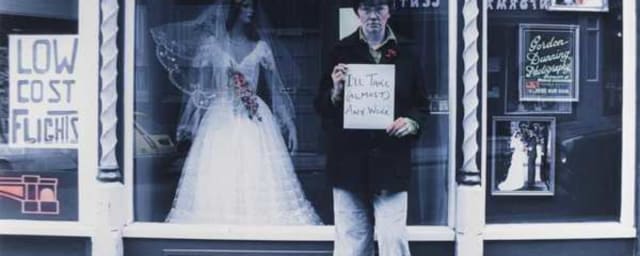
Hackney Flashers
The Hackney Flashers were a women's art collective active in Britain from 1974 to 1980. Most of its members were photographers who identified as socialists and feminists and sought to combine documentary photography with political analysis. The collective worked in the London borough of Hackney, examining the position of women in paid work, the household and childcare. Their best-known projects were the exhibitions Women and Work (1975) and Who's Holding the Baby? (1978), in which photography was combined with texts, statistics, montage and satirical collage to expose invisible and unpaid women's labour and the shortage of affordable childcare. The members deliberately rejected individual authorship in favour of a collective, critical practice. The Hackney Flashers became a notable example of feminist documentary and agitational art of the 1970s that used photography as a tool of social consciousness and activism, and their legacy continues to inform discussions of gender, labour and representation in photography.
Read more →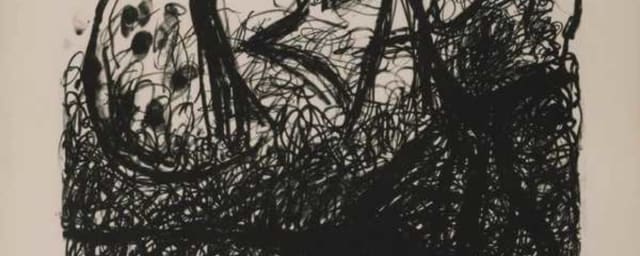
Happening
A happening is a theatrical event created by artists, originally in America in the late 1950s and early 1960s, that combined elements of visual art, theatre, music and everyday life in an unplanned or partly improvised action. Unlike a traditional performance, a happening usually had no clear plot, stage or division between actors and audience: participants often became co-creators of the event, drawn into actions, movement and immediate experience. The term was introduced and established by the American artist Allan Kaprow, who in 1959 staged an event in a New York gallery called 18 Happenings in 6 Parts. The origins of the genre lie in Dada, in the composer John Cage's ideas about chance and everyday sound, and in action painting. Happenings emphasised process, the body, immediacy and the unrepeatable nature of experience rather than the creation of a lasting object, which links them to ephemeral art. The genre was closely connected with the Fluxus movement and became an important precursor of performance as an independent art form. The happening radically expanded the boundaries of art, erasing the line between the artwork and life and between the artist and the public.
Read more →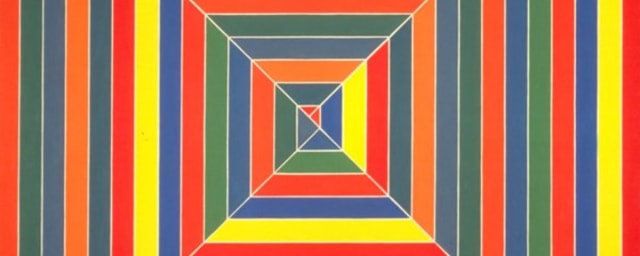
Hard edge painting
Hard-edge painting is an approach to abstract painting that became widespread in the 1960s and is characterised by areas of flat, even colour with sharp, clear, hard edges between them. The coloured planes meet one another without blurred transitions, visible brushwork or textural effects, so that the surface of the picture appears smooth, impersonal and carefully calculated. The term was proposed by the California critic Jules Langsner in the late 1950s to describe crisp, geometric painting set against the emotional, gestural manner of Abstract Expressionism. Hard-edge painting stresses the integrity of the picture as a flat object rather than a window onto depth, and often reduces the composition to a few large colour forms. Among its leading practitioners were Ellsworth Kelly, Kenneth Noland, the early Frank Stella and Al Held; it is also associated with the tendencies of Colour Field painting and Minimalism. The approach reflected the desire of post-war abstract art for clarity, objectivity and control, freeing colour and form from gesture and personal emotion in favour of a pure optical effect.
Read more →
Heidelberg School
The Heidelberg School was a late-nineteenth-century art movement in Australia, named after the village of Heidelberg near Melbourne, where a small group of artists went to work en plein air, in the open air and directly on site. The movement developed mainly in the 1880s and 1890s and is regarded as the first distinctly Australian school of painting, one that forged a national visual language. Its leading figures were Tom Roberts, Arthur Streeton, Charles Conder and Frederick McCubbin. Influenced by French plein-air painting and Impressionism, the artists sought to capture the peculiar bright light, heat, dust and pastel hues of the Australian bush, as well as scenes of rural and pioneer life. A key event of the movement was the 9 by 5 Impression Exhibition of 1889, which presented sketches painted on small wooden panels taken from cigar-box lids. The works of the Heidelberg painters, including monumental canvases about the labour of wool shearers and pioneers, became something like national icons and played a central role in shaping Australian cultural identity at the close of the colonial era.
Read more →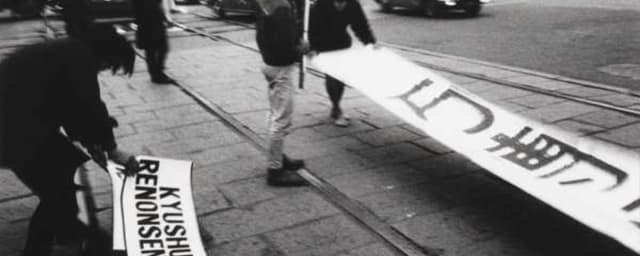
Hi-Red Center
Hi-Red Center was a short-lived radical art collective that arose in postwar Japan and was active in 1963 and 1964. The group was founded by three artists, Jiro Takamatsu, Genpei Akasegawa and Natsuyuki Nakanishi; the name itself is a wordplay based on the first characters of their surnames, which in Japanese relate to the words high, red and centre. The collective worked in the fields of performance, happenings and conceptual actions, dissolving the boundary between art and everyday life. Its most famous actions were provocative street events in Tokyo, notably the so-called Cleaning Event of 1964, in which participants in white coats ostentatiously scrubbed and disinfected the pavements of the city's business district, an ironic comment on the obsession with cleanliness and order during the Tokyo Olympics. Hi-Red Center operated in the context of the Japanese avant-garde of the 1960s, akin to the international Fluxus and Neo-Dada movements. Despite its very brief existence, the group had a marked influence on the development of Japanese conceptual art and performance.
Read more →
History painting
History painting is the genre depicting significant, mostly multi-figure scenes from classical history, ancient and other mythology, the Bible and great literature. The term arose in the seventeenth century and denoted not simply pictures on a historical theme but the most prestigious kind of painting, one meant to instruct, inspire and exalt virtue through the narration of heroic deeds. In the eighteenth century the concept broadened to include more modern historical events. In the classical hierarchy of genres, history painting invariably held the highest place. The high esteem of the genre rested on the theory that the artist had to command the widest knowledge — of anatomy, composition, perspective, history and literature — together with the ability to idealize reality for the sake of moral elevation. Exemplary masters were considered to be Raphael, Nicolas Poussin and later Jacques-Louis David, whose canvases such as the Oath of the Horatii glorified civic valour in the spirit of Neoclassicism. The Briton Benjamin West became famous for depicting a contemporary event (The Death of General Wolfe) with heroic pathos. In the nineteenth century, with the rise of Realism, Impressionism and interest in the everyday, history painting gradually lost its former dominant role.
Read more →
Hudson River school
The Hudson River School was an American art movement of the mid-nineteenth century whose members were landscape painters depicting picturesque scenes of natural beauty, including the Hudson River valley, the Catskill, Adirondack and White Mountains of the north-eastern United States. The movement was not a formal organisation but rather a generation of like-minded artists, whose founder is considered to be Thomas Cole and whose leading figures included Asher Durand, Frederic Edwin Church, Albert Bierstadt, John Kensett and Sanford Gifford. The painters of the school celebrated the grandeur and pristine quality of American nature, regarding it as a manifestation of divine presence and a symbol of the young country's national identity. Their canvases are distinguished by meticulous detail, dramatic lighting and a Romantic, sometimes exalted and religious mood; many works carry allegorical or moral-philosophical undertones, such as Cole's cycle The Course of Empire. Later painters of the school, notably Church and Bierstadt, expanded its geography to depict the Andes, the Rocky Mountains and the American West. The Hudson River School was the first major national movement in American painting and had a lasting influence on the development of landscape art in the country.
Read more →Hutsulshchyna
An ethnographic region in the Ukrainian Carpathians, the land of the Hutsuls, with a distinctive pastoral culture and highly developed crafts: wood carving, weaving, embroidery, pysanka painting, metalwork, leatherwork and pottery.
Read more →
Hyperrealism
Hyperrealism is a movement in painting and sculpture that emerged in the late 1960s and early 1970s in the United States and Europe as a development of Photorealism and a reaction against the dominance of abstraction and conceptualism. Its aesthetic rests on a scrupulous, almost obsessive reproduction of visible reality as mediated by photography: the artist deliberately works from the photograph as a source, transferring to the canvas not nature itself but its optical image. Its formal marks are extreme detail, a flawlessly smooth surface without any trace of brushwork, the precise rendering of highlights, reflections and the textures of glass, metal, chrome and skin, and often an enlarged scale and frontal composition. Unlike naïve illusionism, hyperrealism reflects on the very nature of the image in the age of media, emphasizing artificiality and the cold detachment of the camera's gaze. The movement's classics are Chuck Close with his monumental portraits, Richard Estes with his mirror-like urban storefronts, Robert Bechtle and Ralph Goings, and in sculpture Duane Hanson and John De Andrea with their startlingly lifelike human figures. Its contemporary phase, the hyperrealism of the twenty-first century, develops the body, skin and portrait with microscopic precision (Gottfried Helnwein and the sculptor Ron Mueck). The movement demands virtuoso technical mastery while posing a philosophical question about the boundary between reality and its copy, and about the truth of the image in a society saturated by photography and the screen.
Read more →



