




Art terms on "D"

Dada
Dada was a radical anti-art movement born in 1916 in Zurich, at the Cabaret Voltaire, as an outraged response to the carnage of the First World War and to the bourgeois rationalism that had produced it. At the core of the Dada aesthetic lay deliberate provocation: the rejection of logic, taste and the very notion of the masterpiece, and a cult of chance, absurdity and irony. The movement's formal arsenal was exceptionally heterogeneous — photomontage, collage, assemblage, the readymade (a ready-made industrial object elevated to the status of an artwork), and sound or phonetic poetry. Composition was governed by rupture, by the collision of irreconcilable fragments and the montage of clippings from newspapers and advertising. Marcel Duchamp, with his urinal "Fountain" (1917) and his defaced "Mona Lisa," undermined the institution of the museum itself; Kurt Schwitters devised his own "Merz" system out of rubbish and tram tickets; Hannah Höch and Raoul Hausmann in Berlin turned photomontage into a political weapon; Man Ray and Francis Picabia extended the field toward machine-like imagery. Tristan Tzara formulated the movement's manifestos and its technique of poems assembled from cut-up words. Dada was fundamentally international and short-lived, yet it opened the road to Surrealism, conceptualism and all later art of the object and the action. Its legacy is not a style in the narrow sense but a new strategy: art as a critical gesture that questions its own limits.
Read more →
Dansaekhwa: The Korean monochrome movement
Dansaekhwa is an influential movement of Korean monochrome painting that emerged in the late 1960s and 1970s as an attempt to reconcile the influence of Western modernism with Korean artistic culture and philosophy. The name literally means monochrome painting. Its artists worked mostly in muted, neutral palettes of white, beige, earth tones and grey, focusing not on depiction but on process and materiality. They repeated simple actions over and over: applying and scraping paint, pushing through the canvas from behind, soaking fabric in pigment, or pulling out the threads of the weave. These ritualistic, meditative gestures reflected Daoist and Buddhist ideas of patience, emptiness and the unity of hand, material and time. Key figures included Park Seo-bo, Chung Sang-hwa, Ha Chong-hyun, Lee Ufan and Yun Hyong-keun. Dansaekhwa was the first Korean movement to achieve international recognition and is still regarded as Korea's foundational contribution to the global history of abstraction, showing how a national spiritual tradition could renew the language of modernism.
Read more →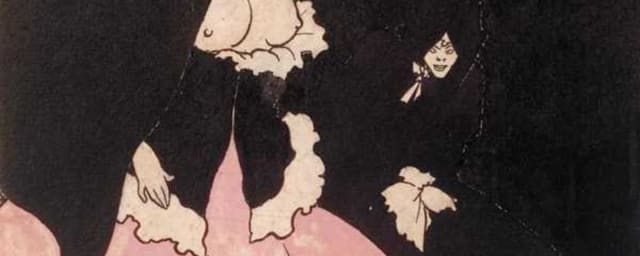
Decadence
Decadence is a late nineteenth-century literary and artistic tendency that represents an extreme, intensified manifestation of Symbolism and is closely bound to the idea of the fin de siècle. The term emphasises the spiritual, the morbid and the erotic, together with a cult of refinement, artifice and decline. Decadents set themselves against bourgeois morality and faith in progress, celebrating the beauty of decay, dissolution, sin and exquisite despair. In the visual arts these moods were expressed by Gustave Moreau, Odilon Redon and Aubrey Beardsley, whose sinuous erotic illustrations became emblematic, while in literature they appear in Charles Baudelaire, Paul Verlaine and Joris-Karl Huysmans, whose novel Against Nature served as a kind of manifesto. Decadent aesthetics prized art for art's sake and preferred the artificial to the natural. More broadly, the word describes any culture believed to be undergoing moral or creative decline. Its sensibility resonated across European modernism, feeding the taste for stylisation, ambiguity and heightened subjective feeling that shaped the turn of the century.
Read more →
Decalcomania
Decalcomania is an image-transfer technique in which liquid paint is applied to a surface, another surface such as paper, glass, or canvas is pressed against it, and the two are then pulled apart. The stretching and lifting of the paint produces unexpected, mirror-like branching, spongy, or lacy structures that suggest rocks, forests, coral, or clouds. Decalcomania began as a commercial method of transferring patterns onto ceramics in the nineteenth century, but around 1936 the Surrealist Oscar Dominguez developed it as an artistic device, and Max Ernst later used it extensively, embedding chance textures into fantastic landscapes. For the Surrealists decalcomania was another method of automatism, a way to invite chance and the unconscious and to free the image from the artist's conscious control. The resulting textures often became a starting point for painted-over scenes in which an abstract blot was transformed into a recognizable yet unsettling world.
Read more →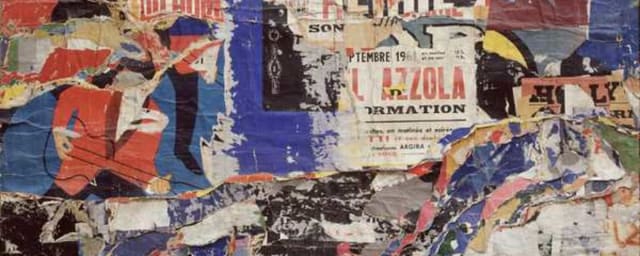
Décollage
Decollage is a technique and practice that is the opposite of collage: instead of pasting elements on, the artist tears, rips, or removes layers of already existing material, most often posters and billboards, exposing lower strata and accidental rents. The term is associated above all with the Nouveau Realisme movement in France of the late 1950s and 1960s. The affichiste artists Jacques Villegle, Raymond Hains, Francois Dufrene, and Mimmo Rotella stripped tattered, torn advertising posters from city walls and presented them as finished works, in which chance rips, overlappings, and traces of time became an aesthetic statement about the modern urban environment and consumerism. Decollage turned the anonymous street surface into a kind of palimpsest of the city's collective memory. This strategy of the found and partly destroyed image echoes the idea of the ready-made and influenced later practices of appropriation, street art, and conceptual art.
Read more →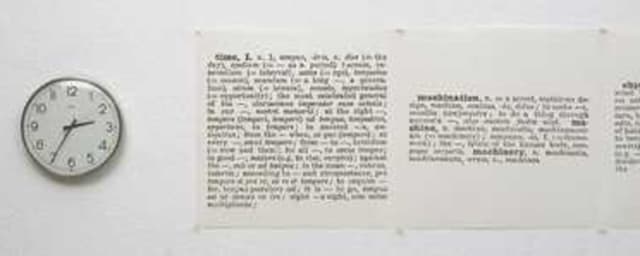
Deconstruction
Deconstruction is a form of philosophical and critical practice developed by the French philosopher Jacques Derrida in the late 1960s and 1970s. Deconstruction is a way of analysing texts, signs, and meanings that reveals how any work contains multiple, often contradictory meanings, and how the stability of meaning is an illusion. Derrida argued that Western thought has traditionally relied on binary oppositions, such as speech and writing, presence and absence, nature and culture, in which one term is always privileged, and deconstruction seeks to unsettle these hierarchies. Rather than destroying a text, deconstruction exposes the internal tensions, contradictions, and undecidabilities already contained within it. During the 1980s this approach deeply influenced art theory, architecture, and criticism. In deconstructivist architecture, represented by figures such as Frank Gehry, Zaha Hadid, and Daniel Libeskind, buildings deliberately violate notions of harmony, stability, and coherence, fragmenting form into displaced and dislocated elements. In the visual arts, deconstruction inspired artists to question the fixed meanings of images, representation, and authorship. Despite its complexity and controversy, deconstruction remains an influential tool for critical thinking about language, meaning, and power.
Read more →
Degenerate art
Degenerate art (German Entartete Kunst) was a derogatory label used by the National Socialist regime in 1930s Germany to condemn modern art that did not conform to its ideology. The term was applied to Expressionism, Dada, Cubism, Surrealism, abstraction and any work declared un-German, Bolshevik or diseased. In 1937 the regime staged the notorious Degenerate Art exhibition in Munich, where more than six hundred confiscated works were hung in a deliberately chaotic and humiliating manner, accompanied by mocking captions designed to ridicule them. Nearby, the Great German Art Exhibition displayed idealised, officially approved art. Thousands of works were removed from museums; some were sold abroad to raise foreign currency, while others were destroyed. Artists targeted included Ernst Ludwig Kirchner, Emil Nolde, Max Beckmann, Paul Klee, Oskar Kokoschka and Wassily Kandinsky. Many were forced into exile or banned from working. The campaign stands as one of the starkest examples of state suppression of creative freedom and of totalitarian control over culture in the twentieth century.
Read more →
Der Blaue Reiter
Der Blaue Reiter (The Blue Rider) was a German Expressionist group that formed in Munich around 1911 around the painters Wassily Kandinsky and Franz Marc. Its name came from the almanac they published in 1912 and, according to legend, from the founders' shared love of horses, riders and the colour blue, which they associated with spirituality. Unlike the harsh, angular aesthetic of the Dresden group Die Brücke, Der Blaue Reiter favoured a lyrical, mystical and increasingly abstract art in which colour and form were meant to express inner, spiritual realities. The circle included August Macke, Gabriele Münter, Alexej von Jawlensky, Marianne von Werefkin and the composer Arnold Schoenberg. Its members were fascinated by folk art, children's drawings, and medieval and non-European traditions, which they saw as possessing a sincerity lost to academic art. Kandinsky's treatise Concerning the Spiritual in Art provided the movement's theoretical foundation. The group dissolved with the outbreak of the First World War, in which both Marc and Macke were killed, yet it remained a decisive step towards abstract painting.
Read more →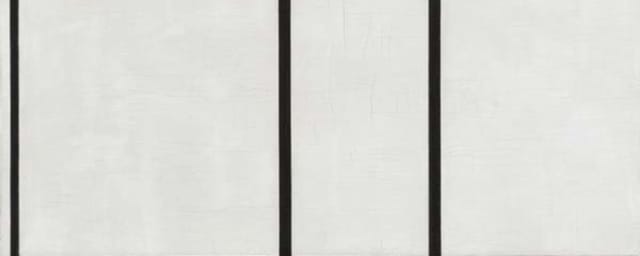
De Stijl
De Stijl (Dutch for The Style) was a circle of Dutch abstract painters and architects founded in 1917, together with the journal of the same name that spread their ideas. The movement promoted an art of strict geometry built exclusively from horizontals and verticals, right angles and flat planes, and a restricted palette of the three primary colours—red, yellow and blue—together with black, white and grey. Its adherents sought a universal, impersonal harmony purified of individual emotion and natural form, a philosophy that Piet Mondrian named Neoplasticism, also championed by Theo van Doesburg. Its most celebrated painter was Piet Mondrian, known for his balanced grid compositions, while its most famous three-dimensional expressions were Gerrit Rietveld's Red and Blue Chair and his Schröder House in Utrecht. The ideas of De Stijl had a profound impact on architecture, design, typography and the Bauhaus, becoming one of the cornerstones of the modernist pursuit of formal purity, clarity and rational order in the twentieth century.
Read more →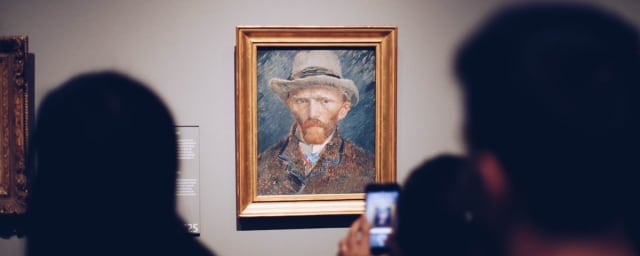
Diaspora
Diaspora is a term describing the dispersal of a population from its homeland and its settlement across various countries, as well as the communities that result. The word derives from the Greek diaspora, meaning a scattering. The term was originally applied to the Jewish people, dispersed after exile, and its meaning later expanded to encompass the Armenian, African, Irish, Ukrainian, and many other diasporas. Key features of the diasporic experience include the maintenance of ties to the homeland, collective memory, an often traumatic history of displacement, and a sense of dual belonging. The Ukrainian diaspora is one of the largest and most active in the world, formed by several waves of emigration, from the labour migrations of the late nineteenth century to flight from Stalinist repression, the postwar wave, and contemporary migrations, including those caused by the full-scale invasion. Ukrainian diaspora communities in Canada, the United States, Brazil, and elsewhere played an important role in preserving language, culture, and art at a time when these were persecuted in the homeland. In contemporary art, the theme of diaspora raises questions of identity, memory, displacement, belonging, and cultural heritage, becoming a source of powerful artistic statements by artists scattered across the world.
Read more →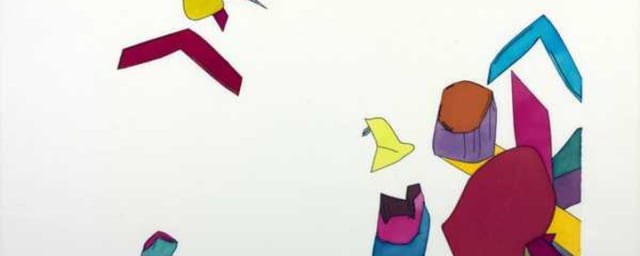
Digital art
Digital art is a general term for artworks that are created, processed or presented using digital technologies, including computers, software and electronic devices. It encompasses a wide range of practices: digital painting and graphics, 3D modelling, computer animation, video art, interactive installations, virtual and augmented reality art, and, from the 2020s, works associated with blockchain and NFTs. Digital art can be either a self-sufficient final work or a means of preparing a work in another medium. The origins of digital art go back to the 1960s, when the first artists and scientists, including Frieder Nake, Georg Nees and Vera Molnár, began creating graphics with computing machines and plotters. With the spread of personal computers and graphics software in the 1980s and 1990s, digital tools became accessible to a broad range of artists. Digital art raises important questions about the nature of the original, reproduction, authorship and the materiality of the work, since a digital file can be reproduced without loss of quality. Today it is a fully fledged part of contemporary art, represented in leading museums and at specialised media festivals around the world.
Read more →
Diptych
A diptych is an artwork consisting of two separate panels, pictures or images that together form a single whole, often joined by hinges so that they can be folded like a book. The word derives from the Greek diptychon, meaning "folded in two." In ancient Rome, diptychs were two joined wax tablets used for writing; in the early Christian and medieval periods, diptychs of carved ivory or wood were made into portable relics and altarpieces. In Western European art of the Middle Ages and the Renaissance, the diptych became a popular form of religious painting: one panel often depicted the Madonna and Child, while the other showed a portrait of the patron-donor in a praying pose. The folding structure protected the images and allowed the diptych to be used as a personal travelling altar. A classic example is the Melun Diptych by Jean Fouquet. The format did not disappear in modern art: twentieth- and twenty-first-century artists, including Francis Bacon with his treatment of the triptych and diptych and Andy Warhol in his Marilyn Diptych, used the paired juxtaposition of two images to create a dialogue of meaning, contrast or narrative sequence.
Read more →
Direct carving
Direct carving is an approach to making sculpture in which the artist works straight into a block of material, stone or wood, allowing the process of carving and the nature of the material itself to suggest the final form, rather than transferring a pre-made clay or plaster model by means of assistants. Established in the early twentieth century, this method was an aesthetic and ethical manifesto: it proclaimed truth to materials, a respect for the texture, grain, and weight of the natural substance. Direct carving restored the value of manual labour and the uniqueness of the artist's own touch, setting them against the academic practice of casting and reproduction. Its leading masters were Constantin Brancusi and Eric Gill, and later Henry Moore and Barbara Hepworth, who believed that form should grow organically out of the material. The ideas of direct carving profoundly shaped modernist sculpture and the very understanding of three-dimensional art.
Read more →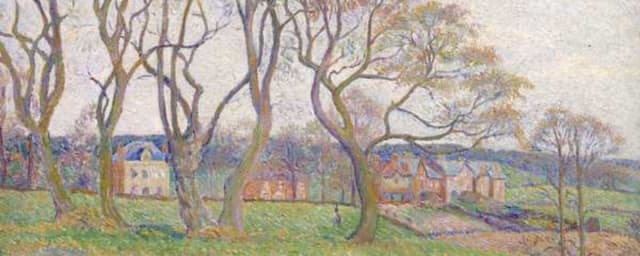
Divisionism
Divisionism is a late nineteenth-century painting technique that consists of applying tiny adjacent strokes or dots of pure colour to the canvas so that they mix optically in the viewer's eye, producing an effect of vibrant, luminous light. The method drew on contemporary scientific theories of colour and perception, including studies of simultaneous contrast. In French Neo-Impressionism this approach was developed by Georges Seurat and Paul Signac and is often identified with Pointillism, though Divisionism stresses the separation of colour according to optical principle rather than the dot technique alone. Its most famous example is Seurat's large canvas A Sunday on La Grande Jatte. A distinct Italian Divisionism also emerged, represented by Giovanni Segantini, Gaetano Previati and Giuseppe Pellizza da Volpedo, who combined the optical technique with symbolic and social themes. Divisionism was highly influential on later art: its understanding of the autonomy of colour and light fed into Fauvism, Futurism and early abstraction, preparing the ground for the liberation of colour from its descriptive function.
Read more →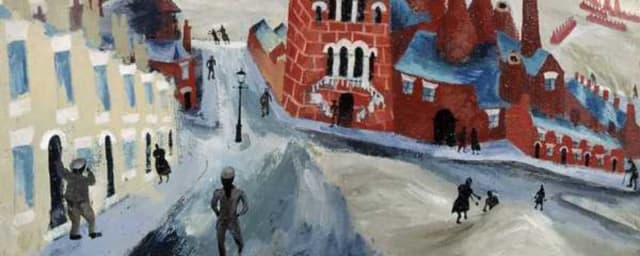
Documentary art
Documentary art is an artistic practice aimed at a truthful, witnessing depiction of real events, social conditions and people's lives, often with a pronounced critical or compassionate intent. In a narrower sense the term is associated with artists who recorded the harsh reality of life during economic crises and social upheavals, notably British artists of the Great Depression era of the 1930s. The documentary approach tends toward authenticity, the specificity of place and time, and attention to ordinary people and everyday circumstances. The documentary impulse is closely intertwined with the development of photography, which from the outset was seen as a means of recording reality. Classic examples include the photographs of Dorothea Lange and Walker Evans, made for the Farm Security Administration in the United States, or the socially charged photo-reportage of Jacob Riis. In painting, printmaking, film and contemporary media, the documentary is often combined with artistic interpretation, raising questions about objectivity, the author's position and the ethics of depicting another's suffering. Today documentary art remains an influential current exploring memory, testimony, war and social justice.
Read more →
Documentary photography
Documentary photography is a style of photography that provides a direct, accurate and truthful depiction of people, places, objects and events; it is often used in reportage and is intended to bear witness to reality. Unlike staged or purely artistic photography, documentary work seeks minimal interference with its subject, emphasising authenticity and context. Its tradition reaches back to the nineteenth century and flourished in the twentieth, when photographers recorded social ills, wars and everyday life. The classics of the genre include Jacob Riis and Lewis Hine, who photographed the living conditions of the poor and child labour, as well as the master photojournalists of the Magnum agency. Documentary photography plays a key role in shaping historical memory and civic consciousness. In Ukraine it has acquired particular significance during the Revolution of Dignity and the war, when photographers, often risking their lives, document crimes, suffering and human resilience, creating a visual archive of the nation's history.
Read more →
Drawing
Drawing is a technique by which images are produced on a flat surface chiefly through the drawing of lines, although drawings may also contain tonal areas, shading and other non-linear marks. It is one of the oldest and most fundamental forms of visual art: humans drew on cave walls long before the appearance of painting or writing. Drawing is carried out with dry or liquid means — pencil, charcoal, chalk, sanguine, pen and ink, silverpoint — on paper, parchment or other supports. In art, drawing performs a dual role. On the one hand, it is a preparatory tool — a sketch, study or cartoon by means of which an artist works out a composition, studies nature and plans a future work in painting, sculpture or architecture. On the other hand, a drawing can be a self-sufficient, finished work of art with its own aesthetic value. In the Renaissance, drawing (disegno) was regarded as the intellectual foundation of all the visual arts, a means of expressing an artist's conception and skill. Outstanding draughtsmen — from Leonardo da Vinci, Dürer and Rembrandt to Ingres, Van Gogh and contemporary artists — attest to the inexhaustible expressive possibilities of line. Drawing remains today the foundation of artistic education.
Read more →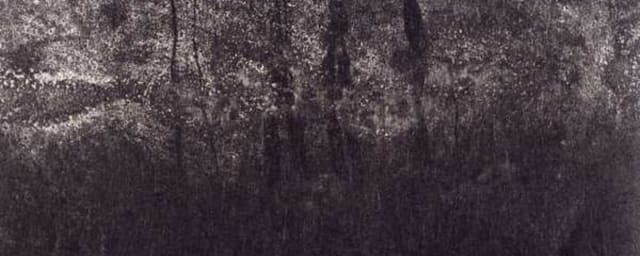
Drypoint
Drypoint is an intaglio printmaking technique in which the design is scratched into a metal, usually copper, plate with a sharp needle-like tool, without the use of acid. Unlike line engraving, drypoint does not cut a clean furrow but raises on both sides of the stroke a thin ridge of metal called the burr. It is this burr that holds extra ink and prints a soft, velvety, slightly blurred line, giving the impressions a characteristic warmth and depth. This delicate burr wears down quickly under the pressure of the press, so the run of fine impressions is small, which makes early sheets especially prized. Rembrandt was a master of the technique, combining it with etching for richness of tone, and modernists, including the Expressionists, used it actively. Drypoint remains a favourite means of printmakers because of the directness of its gesture: the act of scratching is close to free drawing, and the result preserves the intimacy of the artist's hand.
Read more →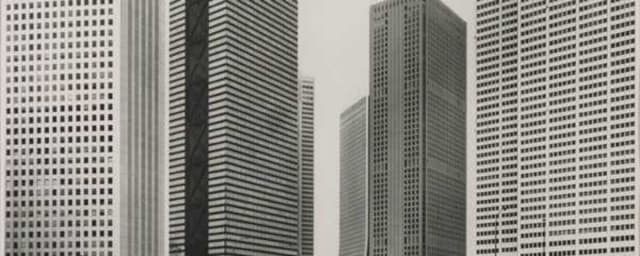
Dusseldorf School of Photography
The Düsseldorf School of Photography was a group of students at the Düsseldorf Art Academy (Kunstakademie Düsseldorf) who from the mid-1970s studied under the influential photographers Bernd and Hilla Becher. The Bechers became famous for their austere black-and-white "typologies", systematic series of images of industrial structures (water towers, blast furnaces, gas holders) shot in neutral light and under identical conditions. Their analytical, objective method trained a whole generation of artists, including Andreas Gursky, Thomas Struth, Candida Höfer and Thomas Ruff. These authors transferred the principles of conceptual rigour to large-format colour printing, often on a monumental scale, depicting architecture, museums, interiors and the landscapes of contemporary globalised civilisation. The Düsseldorf School made photography a full participant in the international art market and museum collections, greatly influencing the understanding of photography as an independent major art form, including for contemporary authors in Eastern Europe and Ukraine.
Read more →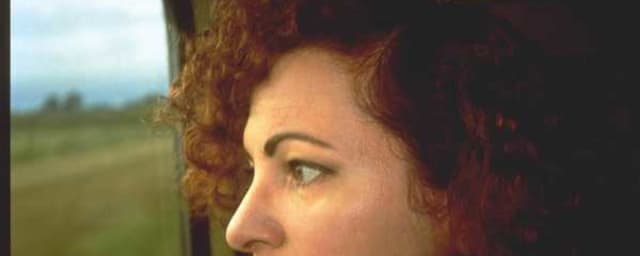
Dye destruction print
A dye destruction print (Cibachrome print, Ilfochrome print) is a print made by a photographic process in which colour dyes already embedded in the paper's emulsion are selectively bleached, that is destroyed, to create the colour image. Unlike chromogenic printing, where dyes are formed during development, here azo dyes are pre-incorporated into several light-sensitive layers, and wherever light acts the excess dye is chemically destroyed. The technology, commercially known as Cibachrome and later Ilfochrome, delivered exceptional saturation, purity of colour and remarkable resistance to fading, along with a deep glossy sheen thanks to its polyester base. These qualities made the process a favourite among masters of colour art photography, who printed large-format exhibition works from transparencies. Although manufacture of the materials ceased in the early 2010s, dye destruction prints remain a benchmark of permanence and colour quality in the history of analogue photographic printing.
Read more →



