




Art terms on "O"
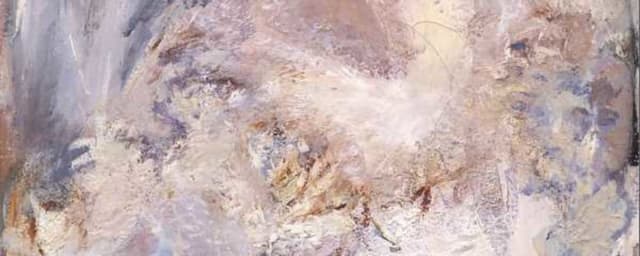
Objective abstraction
Objective Abstraction was a non-geometric, free style of abstract art developed by a group of British artists in the early 1930s. The tendency took definitive shape during the eponymous exhibition "Objective Abstractions," held in 1934 at London's Zwemmer Gallery. Unlike the strict geometric Constructivism widespread in Europe at the time, these artists worked in a manner of spontaneous, sensuous, almost improvisational brushwork, in which abstract form grew directly from the very process of painting rather than from a preconceived scheme. Painting appeared as a self-sufficient reality of color and texture, "objective" precisely because it did not depict the external world but existed as an independent material fact. Members of the group included Rodrigo Moynihan, Geoffrey Tibble, and Graham Bell. Objective Abstraction to some extent anticipated later Tachisme and Abstract Expressionism with their emphasis on gesture and the autonomy of the painted surface. Although the movement was short-lived, it became an important episode of early British abstract art.
Read more →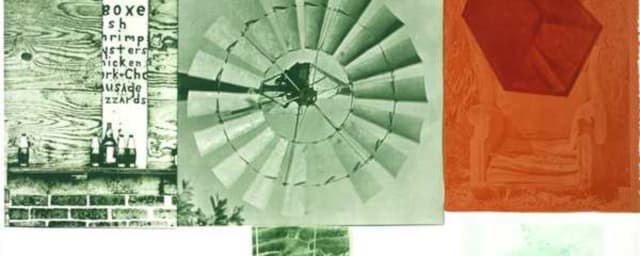
Offset lithography
Offset lithography is a variety of lithographic printing in which the image is transferred from the printing plate not directly onto the paper, but first onto an intermediate rubber cylinder (the offset blanket), and only from there onto the sheet. The word «offset» comes from the English term for «transfer» or «displacement». This indirect method reduces wear on the printing plate and yields an even, sharp impression on various surfaces. As in classical lithography, printing is based on the incompatibility of grease and water. Offset technology was developed in the early twentieth century and quickly became the dominant industrial method for the mass printing of books, magazines, posters, and reproductions. Although offset arose primarily as a commercial printing technology, twentieth-century artists, notably Pop Art masters, deliberately used its visual aesthetic — flat areas of colour and the characteristic halftone dot — as a means of expression. Offset lithography made high-quality reproduced imagery accessible and widespread, fundamentally transforming the culture of visual reproduction.
Read more →
Oil paint
Oil paint is a slow-drying paint made of pigment particles suspended in a drying oil (most often linseed) which, on contact with air, oxidises and forms a tough, coloured film. Slow drying is the technique's chief advantage: it allows the artist to blend colours directly on the canvas over a long period, to achieve smooth transitions, glazes and subtle modelling of light and shade. Oil gives deep, rich and durable tones, and by varying the thickness of the layer — from transparent glazes to thick impasto — the artist attains an extraordinary richness of texture. Oil painting spread in Europe in the fifteenth century, with Netherlandish masters, notably Jan van Eyck, playing a decisive role in its refinement. From then until the twentieth century oil remained the principal medium of easel painting — from Venetian colour and Caravaggesque dramatic chiaroscuro to Impressionism. In Ukrainian art, landmark works from the nineteenth century to the present were painted in oil, including landscapes, portraits and monumental canvases. Despite the arrival of acrylic, oil remains the favourite material of many painters for its plasticity and depth of colour.
Read more →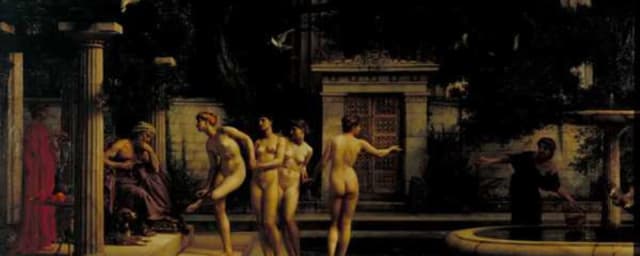
Olympians
Olympians is a term often used to describe certain British artists of the Victorian era whose work emphasised classical elements in both style and subject matter. These artists worked mainly in the second half of the nineteenth century and drew inspiration from the art and life of ancient Greece and Rome, creating elegant, meticulously executed scenes of the ancient world. The nickname Olympians points at once to the classical, Olympian subject matter of their works and to the lofty, prestigious status they attained in the art world of the time. The leading representatives of this circle are usually held to be Frederic Leighton, Lawrence Alma-Tadema, Edward Poynter and Albert Moore. Their paintings are distinguished by flawless technique, a love of marble, fabrics and luxurious settings, idealised nude or draped figures and an overall mood of serene, timeless beauty. The work of the Olympians was close to academic classicism and Aestheticism and closely bound up with the culture of late Victorian Britain. Many of these artists held high office; Leighton and Poynter, in particular, presided over the Royal Academy. Later, with the advent of modernism, their art long fell out of fashion, but in the twentieth and twenty-first centuries interest in it revived.
Read more →
Omega Workshops
The Omega Workshops were an English applied-arts company founded in 1913 by the painter and critic Roger Fry and located in London on Fitzroy Square. The enterprise was closely bound up with the Bloomsbury circle and aimed to unite fine and decorative art, giving modernist artists a means of earning a living by decorating interiors and creating household objects. Its leading members, besides Fry himself, were the painters Vanessa Bell and Duncan Grant. The workshops produced painted furniture, ceramics, textiles, carpets, stained glass and whole decorative ensembles marked by bright colour, simplified forms and the influence of Post-Impressionism, Fauvism and the European avant-garde, which Fry had introduced to the British public through his landmark exhibitions. One of Omega's guiding principles was anonymity: the products were not signed with the names of individual makers but marked only with the Greek letter omega, emphasising the collective rather than individual character of the work. The enterprise was short-lived and closed in 1919 owing to financial difficulties, partly caused by the First World War, yet it had a notable influence on the development of British modernist design.
Read more →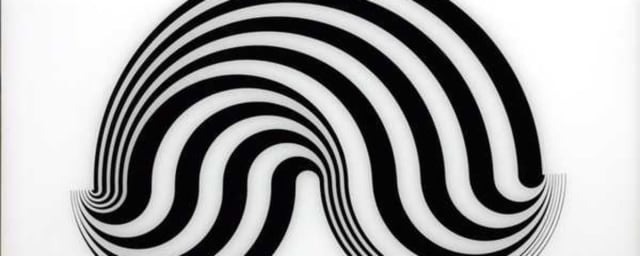
Op art
Op art (optical art) is an abstract visual language that investigates the mechanisms of visual perception and provokes illusions of movement on a static surface. Its central idea is to make the eye "see" what is physically absent: vibration, flicker, pulsation and the deformation of space. Formally, op art employs strict geometry — grids, concentric circles, waves, chequerboard and moiré structures. The palette may be starkly black-and-white, where the play is built on the edges of forms, or intensely spectral, where the illusion arises from the interaction of complementary colours. Composition is exactingly calibrated, almost mathematical, stripped of personal brushwork and emotional expression. The technique favours an impeccably smooth, impersonal surface that heightens the optical effect. Such works activate the physiology of sight: after prolonged looking, afterimages and a sensation of swaying appear. The movement took shape in the 1960s, and its manifesto was the exhibition "The Responsive Eye" in New York in 1965. Its leading masters are the Hungarian-French artist Victor Vasarely, called the father of op art, and the Briton Bridget Riley, with her hypnotic black-and-white waves. Op art is related to kinetic art and constructivism, with roots reaching back to the ideas of the Bauhaus. It quickly penetrated design, fashion and advertising. Today the movement is valued for its intellectual rigour, precision and capacity to turn the viewer into a participant in an optical experiment.
Read more →
Orientalist
Orientalism is a term that in art history denotes the work of mainly European artists of the nineteenth century who traveled to North Africa and the Middle East in search of new, exotic subjects, or who depicted these lands from imagination. The tendency flourished during the Victorian and Romantic eras, when colonial expansion, scientific expeditions, and the growth of travel opened images of the Maghreb, Egypt, the Ottoman Empire, and the Holy Land to Western audiences. Orientalists depicted bazaars, mosques, harems, deserts, caravans, and genre scenes with great attention to color, light, and decorative detail. Among the leading masters were Eugène Delacroix, whose 1832 journey to Morocco was pivotal, as well as Jean-Léon Gérôme and John Frederick Lewis. Modern scholars, especially after Edward Said's book "Orientalism" (1978), critically reassess this tendency, seeing in it not only aesthetic fascination but also a projection of colonial stereotypes and Western fantasies about the "East."
Read more →Ornek, a Crimean Tatar ornament
The system of symbols of Crimean Tatar ornament and the knowledge of their meanings, used in embroidery, weaving, pottery, metalwork, wood carving and glass painting. An element of an indigenous people of Ukraine inscribed by UNESCO.
Read more →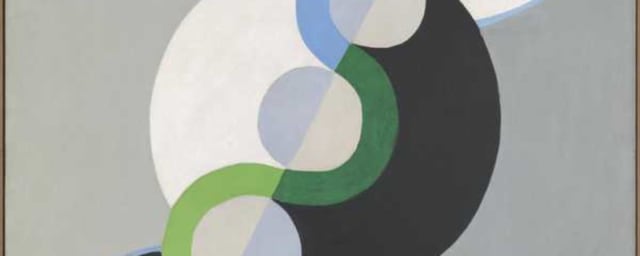
Orphism
Orphism was an abstract or semi-abstract painting style that arose under the influence of Cubism and was developed by the artist couple Robert and Sonia Delaunay from around 1912. The name was proposed by the poet Guillaume Apollinaire, who linked the new painterly language to the mythical singer Orpheus, emphasizing its lyrical, musical, almost poetic nature. Unlike Analytical Cubism with its muted palette and decomposition of form, Orphism made color an independent means of expression and the main driving force of composition. Artists built images on contrasts of pure spectral colors that, interacting, generated a sense of light, movement, and rhythm. Its theoretical foundation was the concept of the "simultaneous contrast" of colors. Key works of the tendency are Robert Delaunay's "Windows" and "Discs" series, as well as Sonia Delaunay's textile and painting works. Orphism influenced the development of abstraction in Europe and America, notably the American Synchromist painters, and became an important step in the emergence of non-objective art in the early twentieth century.
Read more →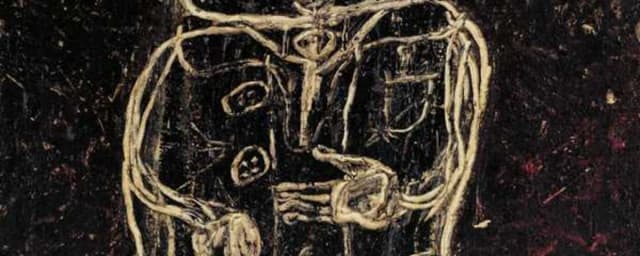
Outsider art
Outsider Art is a term denoting art that has a naive, spontaneous, often visionary quality and is created by people beyond the boundaries of the official art world: without academic training, without ambition for a career, and outside the traditional structures of art production and sale. The English term was introduced in 1972 by critic Roger Cardinal as an equivalent of the French concept "art brut" ("raw art"), coined by the artist Jean Dubuffet in the 1940s. Dubuffet collected the works of psychiatric hospital patients, self-taught creators, mediums, and socially isolated individuals, seeing in them a creative energy uncorrupted by cultural convention. Classic examples are considered to be the drawings of Adolf Wölfli and the elaborately detailed fantasy worlds of Henry Darger. Outsider Art is distinguished by deep personal obsession, idiosyncratic symbolism, and technical freedom. Over time it gained museum recognition and influenced professional artists, calling into question the boundaries between "high" and "marginal" art.
Read more →



