




Art terms on "L"
Laboratoire Agit’Art
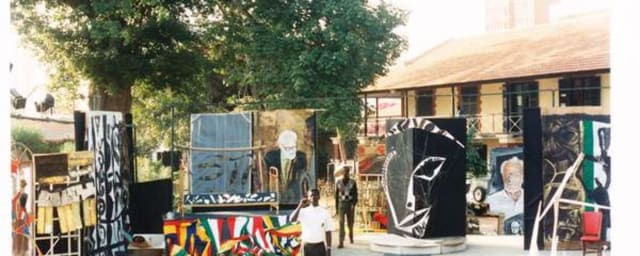
Laboratoire Agit'Art was a revolutionary and subversive art collective founded in Dakar, Senegal, in 1974 that sought to combine traditional African performance and creativity with a contemporary aesthetic. The group emerged as a reaction against official, state-sanctioned cultural policy, in particular the aesthetics of Negritude championed by Senegal's first president, Léopold Sédar Senghor. The members of the collective, among them the artist and writer Issa Samb (also known as Joe Ouakam), El Hadji Sy and others, rejected an orientation towards museum-bound, commodified art and emphasised process, performance, improvisation and the ephemerality of the creative act. Their practices combined theatre, poetry, painting, sculpture from found materials, installation and street actions, often unfolding in a shared courtyard studio in central Dakar that itself became a living, constantly changing work. Laboratoire Agit'Art became one of the most influential centres of avant-garde and conceptual art in West Africa and an important example of the critical, anti-institutional art of the postcolonial era, one that rethought the very nature of African modernity.
Read more →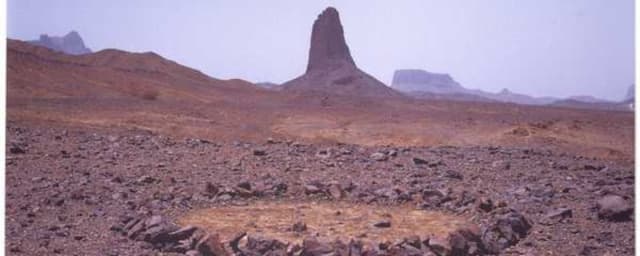
Land art
Land art (earth art) is a tendency that arose in the late 1960s in the United States and Europe, consisting in the making of artworks directly in the natural landscape: artists shape earthen mounds, trenches, spirals and lines, or arrange structures from stones, soil, branches and other found materials. Land art was born as a revolt against the commercialisation of art and the museum-gallery system: works are often sited in remote deserts or fields, impossible to buy and destined to be gradually eroded by the elements, so that they survive only in photographs and documentation. The textbook example is Robert Smithson's 'Spiral Jetty' (1970) on the Great Salt Lake. Leading practitioners include Nancy Holt, Michael Heizer and Walter De Maria, and in Europe Richard Long and Andy Goldsworthy, whose delicate interventions underscore the passage of time and natural cycles. Land art raised questions of ecology, scale, duration and the relationship between humanity and environment, becoming a precursor of contemporary ecological art.
Read more →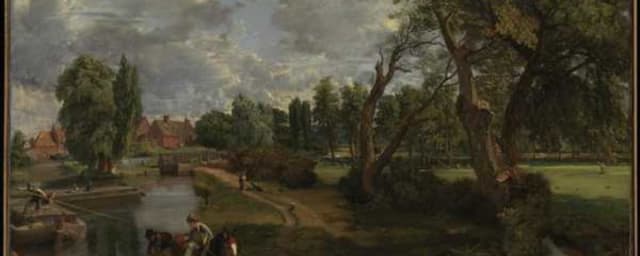
Landscape
Landscape is one of the principal genres of Western art, its subject being the natural environment: mountains, forests, rivers, fields, the sea and sky, as well as scenery altered by human hands. Landscape may be realistic, idealized, lyrical or wholly imaginary; it conveys not only a particular place but also a mood, a season, the quality of light and the artist's attitude to nature. For a long time, in the classical hierarchy of genres landscape occupied a low place, serving mostly as a background for religious or mythological scenes. As an independent genre landscape established itself in European art in the seventeenth century, notably among Dutch masters and in the classicizing compositions of Claude Lorrain and Nicolas Poussin. Its true flowering came in the nineteenth century: the Englishmen John Constable and J. M. W. Turner, the French painters of the Barbizon school and the Impressionists raised landscape to the level of a leading genre, making it a field for bold formal and colouristic experiment. In Ukrainian art landscape holds an honoured place: the vistas of Arkhip Kuindzhi with their inimitable light, the works of Serhii Vasylkivskyi and many other masters celebrated the nature of Ukraine — the steppe, the Dnipro and its villages — becoming an important part of the national artistic tradition.
Read more →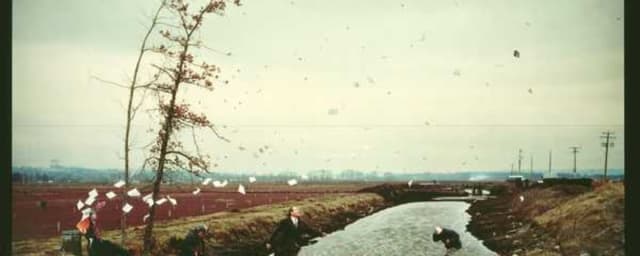
Lightbox
A lightbox is a box with a translucent white surface fitted with an internal light source, usually a fluorescent tube or small incandescent bulbs. Such devices were first used for utilitarian purposes, for viewing transparencies and X-rays, and in advertising and shop windows. In contemporary art the lightbox has become an expressive medium in its own right: a photograph is printed on transparent transparency material and backlit from within, so that the image glows with a depth, saturation of colour and illusion of light unattainable in an ordinary paper print. The best-known master of this format is the Canadian artist Jeff Wall, whose large-scale illuminated compositions, often carefully staged, deliberately echo the tradition of grand painting and cinema. The lightbox brings photography close to the experience of the screen and the shop window, raising questions about the consumption of images in a media society, and remains an influential device in contemporary photography, including in the practices of Ukrainian artists who work with light and image.
Read more →
Linocut
Linocut is a relief printing technique, akin to woodcut, but using linoleum as the surface into which the design is cut and from which it is then printed. The artist removes the areas that are to remain white, while the raised parts that are retained are inked and pressed against the paper. The softness of linoleum, which cuts equally easily in all directions, allows for free, energetic lines and large areas of colour, making the technique accessible and expressive. Linocut emerged in the early twentieth century; its artistic potential was revealed by the German Expressionists, and later by Henri Matisse and especially Pablo Picasso, who demonstrated the reductive method of printing multiple colours from a single block. Because of its simplicity and democratic character, the technique was widely used in posters, book graphics, and teaching. In twentieth-century Ukrainian art, linocut became an important means of easel and book graphics, notably in the work of masters who developed the national graphic school.
Read more →
Lithography
Lithography (from the Greek lithos, «stone», and graphein, «to write») is a planographic printing technique based on the mutual repulsion of grease and water. The artist draws the image with a greasy crayon or ink on a smooth limestone or metal plate; the surface is treated so that the image areas attract printing ink, while the non-image areas, dampened with water, repel it. Unlike intaglio or relief printing, there are neither recesses nor raised areas — printing takes place from a flat surface. Lithography was invented by Alois Senefelder in Munich around 1796. The technique quickly gained popularity for its ability to reproduce free drawing faithfully; it was used brilliantly by Honoré Daumier in political caricature, by Toulouse-Lautrec in colour posters, and by Odilon Redon. Lithography opened the age of the mass-reproduced image and remains an important medium of artistic graphics. In Ukraine, lithography was widely used in publishing and easel graphics of the nineteenth and twentieth centuries.
Read more →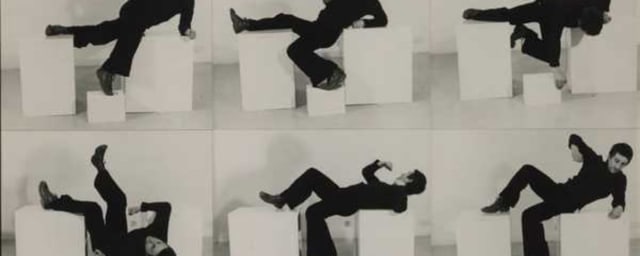
Live art
Live art is a broad category that encompasses performance carried out by an artist or group of artists as a work of art in its own right, usually innovative and experimental in nature. The term is current above all in the British context and serves as an umbrella for practices that do not fit the traditional bounds of theatre, dance, visual or media art: actionism, body art, interactive events, durational performances, hybrid interdisciplinary acts. A defining feature of live art is the presence of artist and viewer in the same time and space — immediacy, ephemerality and the unrepeatability of the event. Its origins reach back to the Futurist and Dada evenings of the early twentieth century, the happenings of the 1960s and the body art of the 1970s. In live art the artist's body often becomes the principal material and carrier of meaning, while risk, endurance and real time acquire artistic weight. Such practices raise questions of identity, gender, power and corporeality, expanding the notion of what art can be at all.
Read more →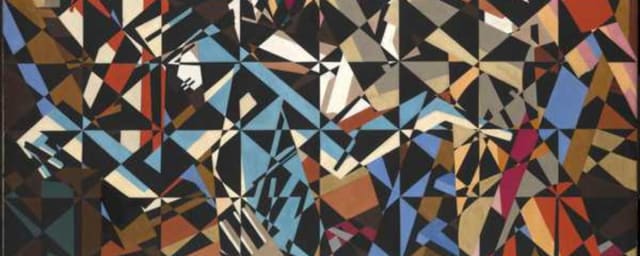
London Group
The London Group was an exhibiting association of artists founded in London in 1913 to organise exhibitions of modern art in Britain. It arose from the merger of several earlier associations, notably the Camden Town Group and other avant-garde circles, and aimed to provide an independent exhibiting platform for artists whose work was not accepted by the conservative Royal Academy. The group's first president was Harold Gilman. Its membership at various stages included leading figures of British modernism, among them Walter Sickert, Spencer Gore, Jacob Epstein, Wyndham Lewis, David Bomberg, Mark Gertler and many others, representing a wide spectrum of tendencies from Post-Impressionism to Vorticism. The London Group deliberately declined to confine itself to any single style or manifesto, seeking instead to be an open and pluralist community bringing together the various currents of new art. Its annual exhibitions became an important venue for presenting avant-garde tendencies to the British public over many decades. The group still exists today, remaining one of the oldest active artists' associations in Britain.
Read more →
Luminism
Luminism is a style of American landscape painting of roughly 1830 to 1870, closely linked to the Hudson River School and concentrated on the refined depiction of light and its effect on atmosphere. The luminists sought to render a clear, soft, almost crystalline light flooding across wide vistas, calm expanses of water, coastlines and valleys. Characteristic features of the style are horizontal compositions, brushwork reduced to near invisibility, careful tonal gradation of the sky, and a sense of stillness, immobility and almost meditative calm. Painters deliberately concealed the traces of the brush so that the surface of the canvas seemed smooth and the viewer's attention rested wholly on the light. The leading masters of luminism are considered to be Fitz Henry Lane, Martin Johnson Heade, John Frederick Kensett and Sanford Robinson Gifford. The term was applied retrospectively by art historians in the mid-twentieth century. Luminism reflected Transcendentalist ideas of nature as a manifestation of the divine and became a defining chapter of the national artistic tradition of the United States.
Read more →Lviv school of art textiles
The circle of artists shaped by the art textile department of the Lviv Institute of Applied and Decorative Art (now the Lviv National Academy of Arts); its graduates initiated the renewal of Ukrainian tapestry in the late 1950s and the 1960s.
Read more →



