




Art terms on "C"
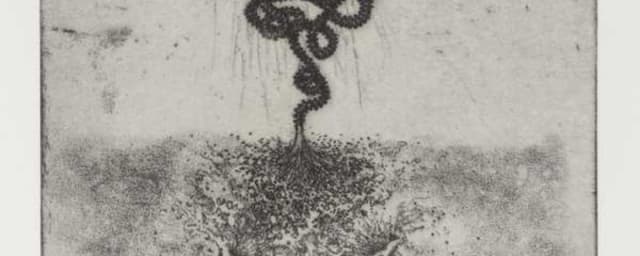
Cadavre exquis (exquisite corpse)
Cadavre exquis, the exquisite corpse, is a collective method of drawing or writing invented by the Surrealists around 1925. Several participants add a fragment to a shared work in turn without seeing the earlier parts: the sheet is folded to hide what has already been made, leaving visible only the connecting lines. The result is a strange, unpredictable creature or phrase born of the collective unconscious. The name comes from the first sentence produced in the literary version of the game: the exquisite corpse shall drink the new wine. Participants included Andre Breton, Yves Tanguy, Marcel Duchamp, and Joan Miro. The method embodied key Surrealist principles, automatism, chance, the refusal of individual control, and the freeing of imagination from logic. The exquisite corpse became not merely a game but a serious creative tool that influenced later collective and performative practices and is still used in art education to loosen the imagination.
Read more →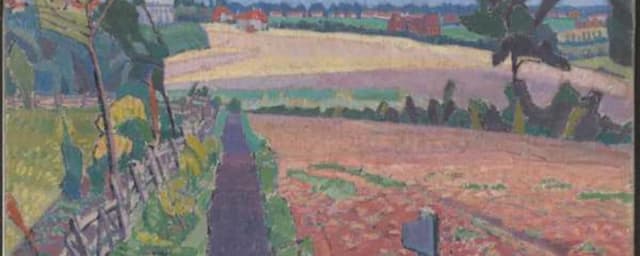
Camden Town Group
The Camden Town Group was a British Post-Impressionist association founded by the painter Walter Sickert in London in 1911 and named after the then-poor district of Camden Town, where Sickert lived and worked. The group had sixteen members—all men—among them Spencer Gore (its first president), Harold Gilman, Charles Ginner, Robert Bevan, and Lucien Pissarro, son of Camille Pissarro. The artists absorbed the lessons of French Post-Impressionism, familiar to them through Roger Fry's exhibitions, and applied bright, broken touches of colour to the depiction of the prosaic, sometimes bleak everyday life of modern London: cramped furnished rooms, music halls, streets, and nudes in ordinary interiors. Sickert defended art's right to address the unglamorous sides of urban life. Short-lived, the group merged in 1913 with other associations into the broader London Group, yet it left a marked imprint on the emergence of British modernism.
Read more →
Canvas
Canvas is a strong woven fabric traditionally used as a support for painting, that is, the surface on which paint is applied. It is made chiefly of linen or cotton; linen canvas is regarded as higher in quality and more durable, while cotton is cheaper and more common in modern times. Before painting, the canvas is stretched over a wooden stretcher and primed — covered with a layer of size and ground (such as gesso or acrylic primer), which insulates the fibres from the paint and creates a surface suitable for painting. Canvas gradually displaced the wooden panel as the principal support for easel painting in Europe from around the fifteenth and sixteenth centuries, especially in Venice, where the damp climate damaged wooden panels. Compared with wood, canvas was lighter, cheaper, allowed the creation of large-scale pictures and could be easily transported when rolled. This change also had aesthetic consequences: the grainy texture of the fabric encouraged a freer, more painterly brushstroke developed by masters such as Titian and Rembrandt. From the Renaissance to the present, stretched and primed canvas has remained the most common support for oil and acrylic painting, and the word "canvas" itself is often used as a synonym for a painting.
Read more →
Capitalist realism
Capitalist Realism was a movement that arose in Düsseldorf and Berlin in Germany around 1963 to challenge the dominant influence of American Pop art in the Western world while also ironically playing on the official art of totalitarian regimes. The name itself is a parodic play on the term Socialist Realism, the state-imposed official style of communist countries; the artists transferred this logic to consumer society, making advertising, commodities and Western mass culture the subject of art. The tendency was founded by the artists Gerhard Richter, Sigmar Polke and Konrad Lueg, later known as the gallerist Konrad Fischer. In 1963 Richter and Lueg staged a provocative event in a furniture store in Düsseldorf, presenting an everyday setting as an art exhibition. Works of Capitalist Realism drew on images from newspapers, advertising and household goods, often treating them with a restrained, critically detached irony, in contrast to bright American Pop art. The movement reflected the particular German experience of the postwar economic miracle and a divided country, and it was an important stage in the formation of influential individual practices, above all that of Gerhard Richter.
Read more →
Caricature
Caricature is a depiction of a person, object or situation in which characteristic features are deliberately distorted and exaggerated for comic, satirical or exposing effect. Most often it is a portrait in which the artist sharpens the recognizable peculiarities of the sitter's face and figure in order to ridicule them or to capture the very essence of their character. The word derives from the Italian caricare, 'to load' or 'to exaggerate'. Caricature balances between good-natured humour and a sharp political weapon. As a conscious genre, caricature took shape in Italy in the late sixteenth and seventeenth centuries, notably in the work of the Carracci brothers and Gian Lorenzo Bernini. In the eighteenth and nineteenth centuries it flourished through printmaking: the Englishmen William Hogarth, James Gillray and Thomas Rowlandson, and later the Frenchman Honore Daumier, turned caricature into an influential means of social and political criticism, mercilessly mocking authority, hypocrisy and the vices of the age. In the twentieth and twenty-first centuries caricature became firmly rooted in newspapers, magazines and digital media as political cartooning, remaining a powerful and sometimes dangerous instrument of free speech.
Read more →
Cercle et Carré (Circle and Square)
Cercle et Carré (Circle and Square) was an art group formed in Paris in 1929 that championed new directions in abstract art, in particular promoting its spiritual, almost mystical tendencies. The association was founded by the Belgian poet and critic Michel Seuphor and the Uruguayan painter Joaquín Torres-García as a kind of counterweight to the rise of Surrealism: they sought to rally artists devoted to clarity, order, geometric structure, and the constructive principle. The group published a journal of the same name and, in the spring of 1930, mounted a large exhibition in which some forty artists from various countries took part—Piet Mondrian, Wassily Kandinsky, Hans Arp, Sophie Taeuber-Arp, Fernand Léger, and Le Corbusier. This exhibition was one of the first major international manifestations of abstract art in Paris. Owing to disagreements between its founders the association was short-lived and soon dissolved, giving way to the group Abstraction-Création, yet it played an important role in consolidating the international abstract movement.
Read more →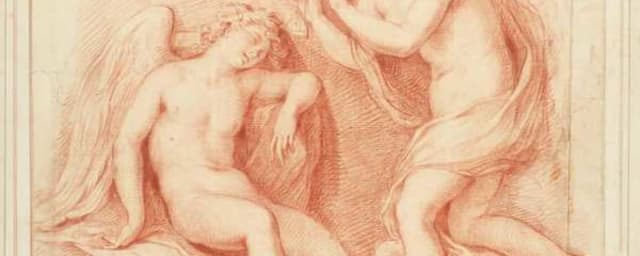
Chalk
Chalk is a soft, powdery material for drawing and writing that was traditionally made from natural rocks rich in calcium carbonate. Drawing chiefly employs three natural varieties of chalk: black (from carbonaceous shale), red, known as sanguine (from red iron-bearing clay, or haematite), and white (from soft limestone or gypsum). These natural chalks were shaped into thin sticks or set in holders, allowing the artist to draw lines, blend and model volume. Chalk drawing flourished in the Renaissance and Baroque and became one of the main means of both preparatory drawing and independent works. Especially prized was the technique à trois crayons — the combination of black, red and white chalk on toned paper, which allowed masters to convey skin tone and soft chiaroscuro transitions. Chalk was used by Leonardo da Vinci, Michelangelo, Peter Paul Rubens, Antoine Watteau and countless other draughtsmen. White chalk was often applied to dark surfaces for highlights and the brightest accents. In modern times, alongside natural chalk, synthetic pastel and chalk pencils have become widespread, but traditional chalk drawing still remains a classic means of academic drawing.
Read more →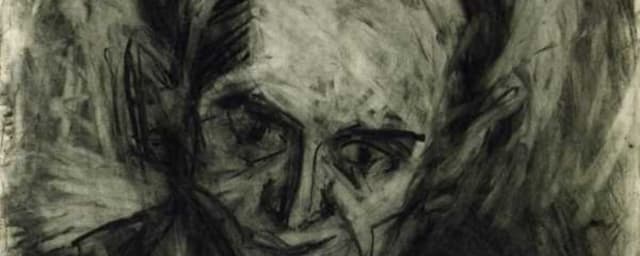
Charcoal
Charcoal (artists' drawing charcoal) is a black, brittle drawing material composed chiefly of carbon and produced by burning wood in the absence of air. It is one of humanity's oldest artistic materials: some prehistoric rock images, including those in caves such as Chauvet, were made with charcoal. Thanks to its ease of production and its expressiveness, charcoal has remained a principal means of instructional and preparatory drawing throughout the history of Western art. There are several kinds of charcoal: thin stick (willow or lime) charcoal, which erases easily and suits preliminary sketches, and compressed charcoal, mixed with a binder, which gives a deeper, richer and more permanent black tone. With charcoal an artist can create both quick linear sketches and finished tonal drawings with a wide range from delicate grey to velvety black; the material blends easily with a finger or cloth and can be lightened with an eraser. The finished drawing is fixed with a fixative to prevent it flaking off. Charcoal was widely used by masters from the Renaissance (for cartoons and underdrawings) to contemporary artists such as William Kentridge, who builds entire animated works on charcoal drawing.
Read more →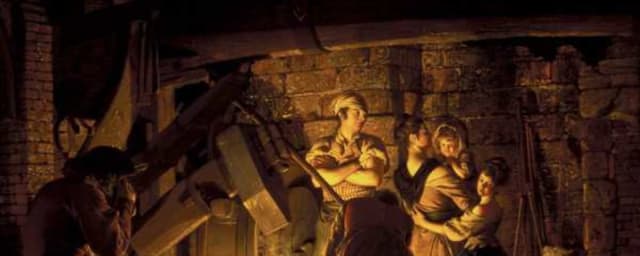
Chiaroscuro
Chiaroscuro is an Italian term meaning literally light-dark, denoting the distribution and interplay of light and shadow in a work, and the modelling of volume and space through tonal contrast. The device developed during the Renaissance: Leonardo da Vinci studied gradual transitions from light to shade, a related idea known as sfumato, giving forms a sense of three-dimensional fullness. Chiaroscuro found its most dramatic expression in the Baroque: Caravaggio used sharp contrasts of brilliant light and deep darkness, called tenebrism, to heighten the emotional tension and theatricality of his scenes. This approach influenced numerous masters of light and shade across Europe. Chiaroscuro remains a fundamental means of expression in painting, drawing, photography, and cinema, where the contrast of light and dark shapes mood, volume, and drama. The term is also applied to the chiaroscuro woodcut, printed from several blocks to render tones.
Read more →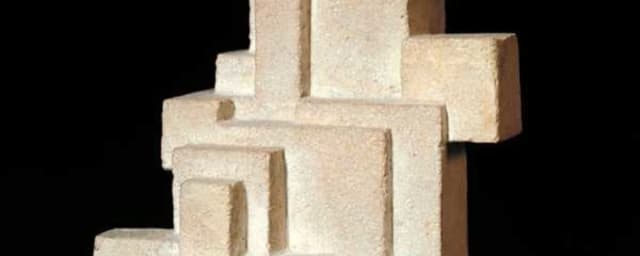
Círculo y Cuadrado
Círculo y Cuadrado (Circle and Square) was an art group and journal of the same name founded by the painter Joaquín Torres-García in Montevideo, Uruguay, in 1936 as a Spanish-language continuation of the Paris group Cercle et Carré. Having returned to his homeland after decades in Europe, Torres-García sought to establish abstract and constructive art in Latin America and to gather pupils around himself within the Association of Constructive Art that he created. At the core of his teaching was "Universal Constructivism"—an original synthesis of Mondrian's Neo-Plasticism, Cubism, and the symbolism of ancient American cultures, notably the art of the Incas and pre-Columbian civilisations. The journal Círculo y Cuadrado promoted the idea of a structured, grid-based composition filled with pictographic signs embodying universal concepts. Through this group and his workshop, Torres-García trained an entire generation of Uruguayan and Latin American modernists, and it became one of the most influential centres of constructive art in the southern hemisphere.
Read more →Cityscape
A branch of landscape whose principal subject is the city: its streets, squares, buildings and general views.
Read more →
Classicism
Classicism is an artistic language of the seventeenth to the early nineteenth century that took the art of ancient Greece and Rome as its model and elevated the ideals of reason, order and harmony. In contrast to the turbulence of the Baroque, Classicism affirms clarity, balance and the subordination of feeling to the discipline of form. Its aesthetic rests on the cult of clear drawing, which prevails over color, on a strict symmetrical composition, a calm rhythm and a noble restraint of gesture. Artists sought to depict not the accidental but the typical and the ideal, so they preferred heroic subjects from ancient history, mythology and civic virtue, meant to edify the viewer. Its formal marks are the plastic completeness of figures, as if carved from sculpture, local color, clear contours, a wing-like construction of space and the rational lucidity of the whole order of the work. The leading painter of Classicism was Nicolas Poussin, and in the age of Neoclassicism, Jacques-Louis David with his civic pathos and Jean-Auguste-Dominique Ingres. In architecture the style produced ordered palaces and rotundas that spread to Ukrainian lands as well: the classicist ensembles of Kyiv and Poltava and palace-and-park complexes such as the estate at Kachanivka. In Ukrainian painting the work of Dmytro Levytsky and Volodymyr Borovikovsky approaches the classicist tradition. Classicism established the idea of art as a school of taste and morality, and its expressive order long remained the basis of European artistic education.
Read more →
CoBrA
CoBrA was an avant-garde group formed in 1948 by artists from Copenhagen, Brussels, and Amsterdam, its name composed of the first letters of these three cities. The group's style was intensely expressive and drew inspiration from children's drawing, folk and primitive art, and the unconscious. It was founded, among others, by the Dane Asger Jorn, the Belgian poet Christian Dotremont, and the Dutch artists Karel Appel, Constant, and Corneille; they rebelled against both geometric abstraction and Surrealist intellectualism, championing spontaneity, freedom of gesture, and the immediacy of the creative impulse. Their canvases were populated by bright, grotesque, phantom-like creatures painted in thick, exuberant strokes of saturated colour. CoBrA published a journal of the same name and mounted several major international exhibitions, notably in Amsterdam and Liège. Although the group lasted only until 1951, it became one of the most important post-war European movements and significantly influenced the development of lyrical abstraction and Neo-Expressionism.
Read more →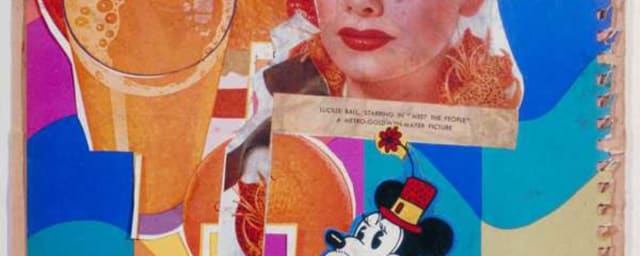
Collage
Collage, from the French coller meaning to glue, is a technique and its resulting work in which pieces of paper, photographs, fabric, newspaper clippings, and other found materials are arranged and pasted onto a supporting surface. Although pasting was long known in folk and decorative art, collage gained the status of a serious modernist method around 1912 through Pablo Picasso and Georges Braque, who introduced scraps of the real world into Cubist pictures, questioning the boundary between image and reality. Collage was then taken up by the Dadaists and Surrealists as well as the Constructivists. Within the Ukrainian avant-garde the Kharkiv artist Vasyl Yermilov developed montage and collage principles, combining wood, metal, typography, and texture. Collage radically expanded ideas about the material of art, becoming the basis for assemblage, photomontage, and mixed media. It remains one of the most widespread methods in contemporary visual art, design, and education.
Read more →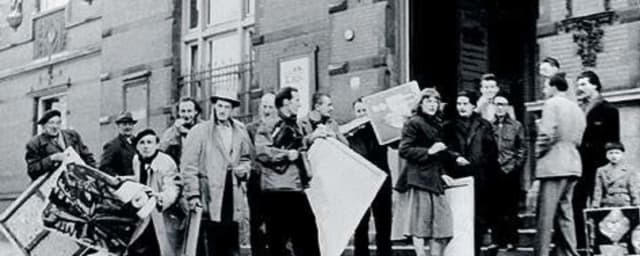
Collective
A collective is a group of artists who work together to achieve a shared creative, social, or political goal. In contrast to the traditional idea of the artist as a solitary genius, the collective is based on collaboration, shared authorship, and joint decision-making. Members may operate under a single name, concealing individual contributions, or retain their own identities while acting together. Collectives often emerge as a response to the commercialisation of the art market and a desire for solidarity and mutual support. History records many influential artistic collectives, from avant-garde associations of the early twentieth century to groups such as Fluxus, the Guerrilla Girls, and General Idea. In Ukraine, a powerful example of collective practice was the Boichukist school led by Mykhailo Boichuk in the 1910s to 1930s, which developed a national monumental style and was destroyed by the Stalinist regime. Collective practice has taken on new prominence in contemporary art, where groups of artists realise large-scale projects, installations, and social initiatives. The awarding of several leading art prizes to collectives testifies to the recognition of shared creativity as a fully valid and potent form of artistic expression.
Read more →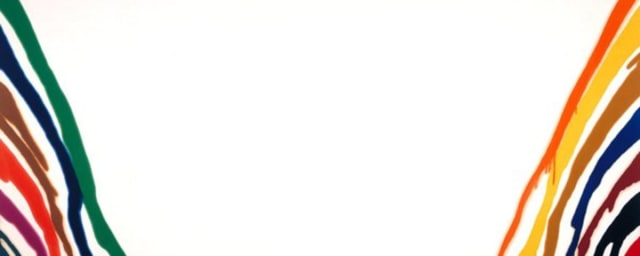
Colour field painting
Colour field painting is a term describing the work of abstract artists active mainly in the 1950s and 1960s, characterised by large areas of more or less uniform, single-toned colour. Unlike gestural action painting, colour field avoids the visible brushstroke, drama and personal trace of the hand, instead emphasising a continuous, almost boundless expanse of colour that envelops and surrounds the viewer. The tendency is closely linked with Abstract Expressionism; its early pioneers were Mark Rothko with his rectangles of softly glowing colour, Barnett Newman with his vertical zips, and Clyfford Still. These artists sought to evoke sublime, contemplative, almost religious experience through the sheer presence of large-scale colour. In the 1950s and 1960s a second generation, Helen Frankenthaler, Morris Louis and Kenneth Noland, developed the soak-stain technique (pioneered by Frankenthaler in 1952), in which thinned paint soaked directly into unprimed canvas, merging with its surface. The critic Clement Greenberg theorised this approach as a logical step toward the purity of painting. Colour field remains one of the most influential currents of postwar abstraction.
Read more →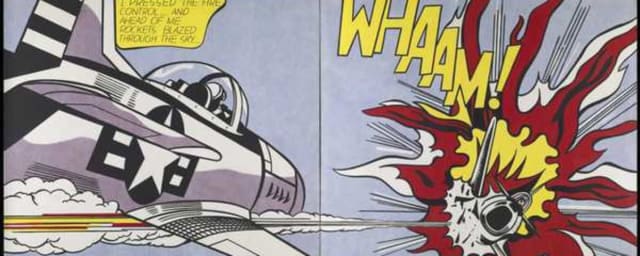
Comic strip art
Comic strip art is an artistic practice grounded in the language of comics: a sequence of panels, the combination of image and text (speech bubbles, onomatopoeia) and the characteristic commercial printing techniques. In a broader sense the term also covers fine-art works that borrow the style, themes and visual devices of comics and transpose them into a gallery context. The comic as an independent form combines features of literature and visual art, building narrative through the montage of separate panels. The most striking convergence of 'high' art with the comic occurred in the Pop art of the 1960s. The American artist Roy Lichtenstein appropriated frames from mass-market comics, enlarged them and reproduced the characteristic Ben-Day dots, transforming banal images into monumental canvases while ironically reflecting on the mechanisms of mass culture. Later the graphic novels of Art Spiegelman and other authors gained recognition as a serious artistic and literary form. Today the language of the comic is actively used in contemporary art, illustration and street art, and the boundary between the 'low' genre and museum art is increasingly blurred.
Read more →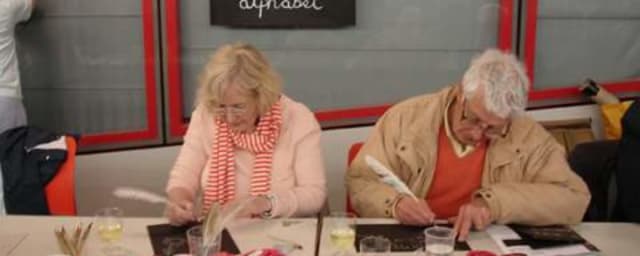
Community art
Community art is artistic activity that takes place in a community setting and is characterised by interaction or dialogue with that community; it often involves a professional artist who collaborates with local residents. The main emphasis falls not on the final object but on the process of shared creation, on involving people, empowering them and strengthening social ties. Here art becomes an instrument of social participation rather than a purely aesthetic product. The community art movement spread in the late 1960s and 1970s, when artists sought to move beyond elite galleries and make creativity accessible to broad sections of society, especially marginalised communities. Typical forms include murals, shared workshops, street festivals, theatrical events and projects in schools, hospitals and residential neighbourhoods. Community art is closely linked with activist and socially engaged art and raises questions about the role of the artist, authorship and participation. It emphasises that art can belong to everyone and be a means of collective self-expression, of solving local problems and of celebrating shared identity.
Read more →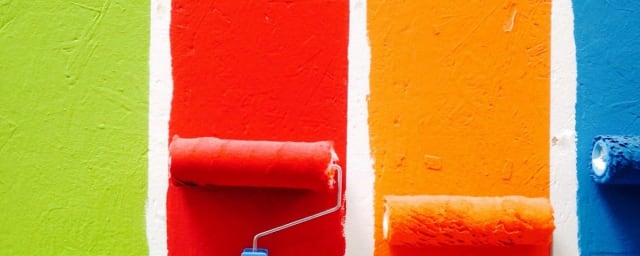
Complementary colours
Complementary colours are pairs of colours positioned on opposite sides of the colour wheel that create the strongest possible contrast with one another. The classic complementary pairs in the traditional model are red and green, blue and orange, and yellow and purple. When complementary colours are placed side by side, they mutually intensify each other's brightness and saturation, making one another appear more vivid and intense. When pigments are mixed, however, complementary colours neutralise each other, producing greys and neutral tones. The theory of complementary colours was systematised in colour science during the eighteenth and nineteenth centuries, notably in the work of Michel Eugène Chevreul on simultaneous contrast. Artists actively applied this principle to achieve visual tension and vibration. Post-Impressionists, especially Vincent van Gogh, deliberately built compositions on the juxtaposition of complementaries to heighten emotional expression. Pointillists such as Georges Seurat placed dots of complementary colours side by side so that the viewer's eye would blend them optically. An understanding of complementary colours remains fundamental to colour theory, design, and painting, allowing artists to control the perception of contrast, depth, and harmony.
Read more →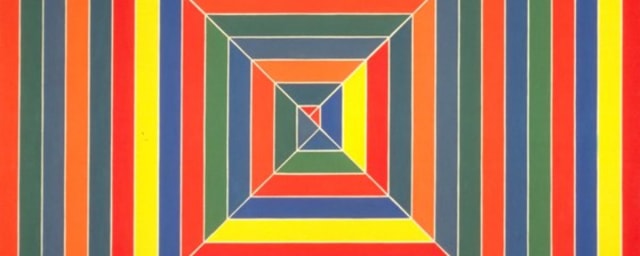
Composition
Composition is the arrangement and organisation of visual elements within a work of art, the way in which lines, shapes, colours, masses, space, and light are combined into a unified whole. Composition is one of the fundamental foundations of the visual arts, because it determines how the viewer perceives the work, where the gaze is directed, and what overall impression results. A successful composition creates balance, rhythm, unity, and expressiveness, whereas a poor one undermines the coherence of the image. Throughout the history of art, artists have developed numerous principles of composition: symmetry and asymmetry, the golden ratio, the rule of thirds, diagonal and pyramidal schemes, and the use of foreground, middle ground, and background. Renaissance masters such as Leonardo da Vinci and Raphael achieved perfection in balanced, harmonious compositions. Modernists of the twentieth century, by contrast, broke traditional rules, experimenting with fragmentation, abstraction, and dynamic imbalance. In Cubism, Suprematism, and abstract art, composition became a subject of study in its own right, freed from any representational function. Regardless of style, composition remains the central instrument through which an artist organises form and directs perception.
Read more →
Conceptual
Conceptual art is a movement of the second half of the twentieth century for which the idea or intention of a work matters more than its material embodiment and aesthetic form. As one of the movement's theorists, Sol LeWitt, put it, "the idea becomes a machine that makes the art": the mental concept itself, rather than skill of execution or beauty of the object, is recognized as the true content. Conceptual works are therefore often stripped of traditional "pictorialism" and appear as texts, instructions, documentation, photographs, diagrams, ready-made objects or ephemeral actions. The style questions the status of the art object, the role of the artist, the museum and the market, drawing the viewer into intellectual play and critical reflection. The movement's origins are linked to Marcel Duchamp's "Fountain," while classic examples were created by Joseph Kosuth with "One and Three Chairs," Lawrence Weiner, the Art & Language group and Yoko Ono with her instruction pieces. The language of conceptualism is the analysis of the very notion of art, the investigation of the relation between word, image and thing. In the Eastern European context a Soviet conceptualist circle developed, and in Ukraine kindred practices marked the work of nonconformist artists and later actionist and media experiments. By renouncing the unique handmade object in favor of thought, conceptual art radically expanded the boundaries of art and prepared the ground for performance, installation and contemporary post-medium practices.
Read more →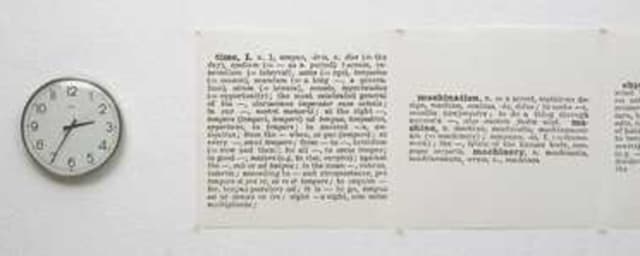
Conceptual art
Conceptual art is a term that came into use in the late 1960s to describe a broad range of practices in which the concept or idea behind a work is elevated above traditional aesthetic and material concerns. In the words of one of the movement's theorists, Sol LeWitt, the idea becomes a machine that makes the art: the plan, intention or instruction may matter more than the final physical object, and sometimes the object is absent altogether. Conceptual art called into question the fundamental notions of authorship, craftsmanship, uniqueness and the commodity status of the artwork. It took the form of texts, instructions, documentation, photographs, diagrams and actions. A landmark is Joseph Kosuth's One and Three Chairs (1965), which juxtaposes a real chair, its photograph and a dictionary definition, exploring the nature of representation. Among its influential figures are Sol LeWitt, Joseph Kosuth, the group Art & Language, Lawrence Weiner and Yoko Ono. The movement's roots reach back to the readymades of Marcel Duchamp in the early twentieth century. Conceptualism fundamentally changed ideas of what art can be and remains a foundation for much contemporary practice.
Read more →
Conceptual photography
Conceptual photography is a type of photography in which the image primarily illustrates or embodies an idea rather than aiming at a purely aesthetic or documentary depiction of reality. It emerged within the conceptual art of the 1960s and 1970s, when thought, intention and language became more important than skill of execution. In this approach photography often serves merely to record a performance, an action, a series or a logical sequence, rather than functioning as a self-sufficient "beautiful shot." Artists such as John Baldessari, Sophie Calle, Ed Ruscha, and Bernd and Hilla Becher with their typologies of industrial structures used the camera as a tool for research, classification and critique of the medium itself. Conceptual photography is frequently accompanied by text, an instruction or a system of rules that generate the work's meaning. This intellectual, idea-driven approach greatly expanded the boundaries of photography and shaped contemporary art, including the practices of Ukrainian authors who combine image with reflection on memory, history and identity.
Read more →
Concrete art
Concrete art is a current of abstract art that is entirely without any basis in observable reality and carries no symbolic or naturalistic implications. Its adherents insisted that line, plane and colour are concrete in themselves and should not depict or symbolise anything; a painting is as real an object as a chair or a tree. Works are constructed according to clear mathematical or geometric principles, methodically, without reliance on spontaneity or emotion. The term was proposed by the Dutch artist Theo van Doesburg in his 1930 manifesto Art Concret, contrasting concrete art with abstract art, which in his view still departed from reality through abstraction. After van Doesburg's death a leading role in the development of the current was played by the Swiss artist, designer and theorist Max Bill, who spread these ideas in the postwar decades. Concrete art developed significantly in Latin America, notably in Brazil and Argentina, where it influenced Neo-Concretism. The current is closely linked with Constructivism and geometric abstraction and emphasises clarity, order and rational structure.
Read more →
Constructionism
Constructionism is a strand of abstract art that developed in Britain from around 1950 as a late extension of the constructivist tradition. Rather than depicting the visible world, its practitioners sought to build the artwork according to objective, rational principles. They drew on naturally occurring proportional systems, mathematical sequences and rhythms to give geometric abstraction a sense of underlying order and harmony. Leading figures included Victor Pasmore, Kenneth Martin, Mary Martin and Anthony Hill, who produced reliefs, constructions and mobiles using industrial materials such as metal, glass and plastic. Constructionism rejected emotional spontaneity in favour of clarity, precision and structure, treating the work of art as something constructed rather than imitated. The movement is significant for carrying forward the analytical, materials-based ethos of European constructivism into the post-war period, and for its influence on later systems-based and kinetic art. It demonstrated that abstraction could be grounded in logic and measurement rather than in expressive impulse, offering an alternative to the gestural painting dominant at mid-century.
Read more →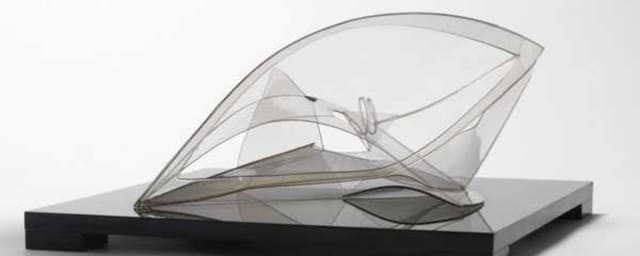
Constructivism
Constructivism is an avant-garde movement of the 1910s to 1930s that proclaimed art to be not contemplation but the construction of a purposeful material environment for a new society. Instead of depiction, the Constructivist artist thinks like an engineer who builds the work from real materials according to the laws of expediency, technology and economy of means. Its key concepts were "construction," "faktura" (texture) and "tectonics": what matters is not the subject but the logic of joining elements, the bared structure and the properties of the material itself — metal, glass, wood, cardboard. The formal language of Constructivism consists of clear geometric forms, straight and diagonal lines, a dynamic asymmetrical composition, a limited palette of red, black, white and gray, and the active introduction of type and photomontage. The style was realized above all in design, printing, the poster, stage design, architecture and production art, striving to erase the boundary between artist and manufacturer. Its leading masters were Vladimir Tatlin with his "Monument to the Third International," Alexander Rodchenko, El Lissitzky and Varvara Stepanova. In Ukraine a distinguished role was played by the Kharkiv artist Vasyl Yermilov, who created reliefs, journal designs and spatial constructions, and by Vadym Meller in theatrical stage design. Constructivism laid the foundations of modern graphic design, typography and functional architecture, and its visual language remains to this day a model of clarity and engineering beauty.
Read more →
Contemporary art
Contemporary art is a term used to denote the art of the present and the relatively recent past, generally from the second half of the twentieth century to the present day. The conventional boundary is often placed at the end of the 1960s or the 1970s, when modernism gave way to more diverse, pluralistic practices. Contemporary art succeeded classical modernism and has no single style or ideology; it is characterised by a plurality of languages, media, approaches and themes, as well as a global and often multicultural context. Its defining trait is not fidelity to a particular form but openness to any means. Alongside painting and sculpture, installation, performance, video art, photography, digital, media and networked practices, conceptual art, public art and participatory art all exist on equal terms. Contemporary art programmatically blurs boundaries — between genres, between high and popular culture, between art and everyday life, between artist and viewer — often using quotation, irony, appropriation and a conceptual approach. At the centre of its attention are pressing social, political, environmental, gender and identity questions, as well as critical reflection on the art institutions themselves. Biennials, art fairs, museums of contemporary art, independent venues and large exhibition projects play a key role in its circulation, and the curator frequently acts as a co-author of meaning. The role of non-state institutions, private foundations and self-organised initiatives in shaping the artistic process keeps growing. Among its influential figures are Joseph Beuys, Marina Abramović, Ai Weiwei and Anselm Kiefer. In Ukraine, contemporary art has developed vigorously since the "New Wave" and the Ukrainian Trans-avant-garde of the late 1980s, and experienced a powerful upsurge after independence in 1991. Among its emblematic names are Oleg Holosiy, Arsen Savadov, the R.E.P. group, Nikita Kadan and Zhanna Kadyrova, whose works represent the country at leading international venues, including the Venice Biennale. Ukrainian artists actively engage with national identity and historical memory, and under the conditions of war contemporary art has taken on particular urgency, becoming an instrument of testimony, memory and resistance while gaining increasing recognition on the international stage. Contemporary art remains a living space of experiment and dialogue with reality.
Read more →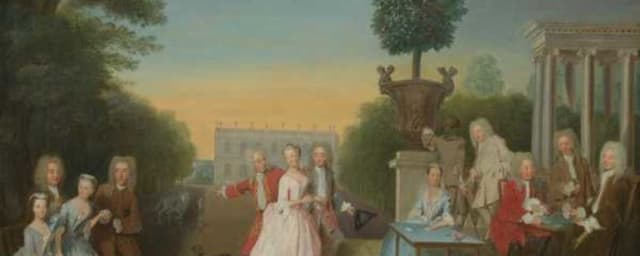
Conversation piece
The conversation piece is a type of informal, small-scale group portrait depicting several people — most often members of a single family, sometimes friends or acquaintances — in a domestic interior, drawing room or garden. The figures are usually absorbed in some relaxed activity: conversation, taking tea, making music, playing a game or strolling, which gave the genre its name. Unlike the formal state portrait, the conversation piece seeks to convey natural behaviour, the privacy of domestic life and the social bonds between the sitters. The genre flourished especially in England in the eighteenth century, when the prosperous gentry and bourgeoisie wished to commemorate their status, possessions and family ties in an intimate rather than pompous form. Leading masters of the conversation piece were William Hogarth, as well as Arthur Devis, Johann Zoffany and the young Thomas Gainsborough. Such paintings are a valuable source for historians, since they record in detail the interiors, costumes, furniture, manners and pastimes of the age. The conversation piece reflected a new bourgeois culture of privacy and family values, becoming a characteristic phenomenon of English art in the Age of Enlightenment.
Read more →
Cossack Baroque
Cossack (Ukrainian) Baroque (1650–1750) was the national variant of the European Baroque that flowered in the age of the Hetmanate and became the golden age of Ukrainian culture. Its rise is tied to the patronage of the Cossack officer class, above all Hetman Ivan Mazepa, whose foundations defined the era's face. Its architecture is marked by opulence, multi-tiered massing, pear-shaped cupolas, decorative gables and white masonry adorned with stucco. Under Mazepa, Kyiv's St Sophia was remodelled, the Rus-era Trinity Gate Church (1106–1108) was restored, and the All Saints' Church over the Lavra's Economic Gate was raised, along with the Military St Nicholas and Epiphany cathedrals and churches in Chernihiv and Pereiaslav. Models of the five-domed Baroque church became the St George Cathedral of the Vydubychi Monastery and St Catherine's in Chernihiv. The centre of learning and art was the Kyiv-Mohyla Academy — nursery of theologians, poets and engravers, among whom the Kyiv school of engraving stands out (Oleksandr and Leontiy Tarasevych, Ivan Shchyrsky). Painting cultivated the ceremonial Cossack portrait, donor images and the folk icon "Cossack Mamai." The era's iconostases astonish with carved gilded plasticity, such as the celebrated Bohorodchany iconostasis of the master Yov Kondzelevych. Ukrainian Baroque also nourished literature — sermons, verse, drama and the Cossack chronicles of Samiylo Velychko and Hryhoriy Hrabianka. Mazepa's defeat at Poltava in 1709 and the curtailing of Hetmanate autonomy gradually extinguished this brilliant style, which remained a symbol of Ukrainian statehood culture.
Read more →Cossack era
The period of Ukrainian history and culture from the late fifteenth to the second half of the eighteenth century, tied to the existence of the Cossacks as an estate, and the corresponding body of art and dress: portraits of Cossack officers, Pokrova icons with Cossacks, and officers' costume.
Read more →
Court
"Court" is a general term for the artists who worked at royal and princely courts, painting portraits of monarchs, members of their families, and favoured courtiers. The post of court artist began to take shape in Western Europe as early as the mid-thirteenth century and provided the master with a salary, lodging, a studio, and sometimes noble status, in exchange for a permanent readiness to glorify the ruler and document the life of the court. Such an artist's duties extended beyond portraiture: he might design decorations for ceremonies, costumes, tapestries, coins, banquet settings, and even palace interiors. Among the most celebrated court painters were Hans Holbein the Younger at the court of King Henry VIII of England, Diego Velázquez at the Spanish court of Philip IV, Anthony van Dyck under Charles I of England, and Peter Paul Rubens, who served simultaneously as a diplomat. Portraits made at courts had not only an aesthetic but also a political function—to affirm the power, legitimacy, and grandeur of the ruling dynasty—and so often idealised the sitter according to the strict rules of court etiquette.
Read more →
C-print
A C-print (C-type print, chromogenic print) is a photographic print made from a colour negative or slide on chromogenic photographic paper. Such paper has several emulsion layers sensitive to different parts of the spectrum; during development the chemicals react with dye couplers to form a full-colour image from cyan, magenta and yellow dyes. The name "C-type" comes from Kodak's chromogenic paper "Type C" (1955). This was the principal technology for colour photographic printing throughout much of the twentieth century, from amateur snapshots to large-format artworks. It was on chromogenic paper that the masters of the so-called Düsseldorf School and many strands of contemporary photography printed their large-scale works, seeking saturated colour and a museum-quality format. Although the organic dyes can fade over time, the C-print remains the classic analogue method of producing a colour print and an important part of the history of the photographic medium, familiar also to Ukrainian photographers of the analogue era.
Read more →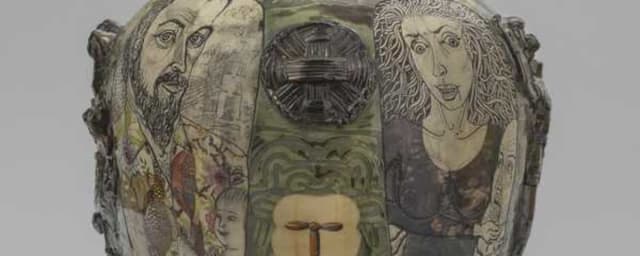
Craft
Craft is a form of creativity that usually involves making a functional object through skill, manual labour, and mastery of a material. Traditional crafts include pottery, weaving, blacksmithing, woodworking, glassblowing, embroidery, wood carving, and jewellery making. Unlike the fine arts, which have historically been valued primarily for aesthetic and conceptual significance, craft was long regarded as an applied activity connected to usefulness and everyday use. The boundary between craft and high art has been mobile throughout history and has been repeatedly renegotiated. The Arts and Crafts Movement, founded in Britain in the late nineteenth century by William Morris, championed the value of handwork as a counter to impersonal factory production. In the twentieth century the Bauhaus sought to unite art, craft, and industrial design. Ukrainian culture possesses an exceptionally rich craft heritage, from Petrykivka decorative painting and Hutsul ceramics to embroidery, pysanka egg decoration, and weaving, all of which form an important part of national identity. Today the boundaries between craft and contemporary art are increasingly blurred, and mastery of material is once again valued as a full-fledged artistic statement.
Read more →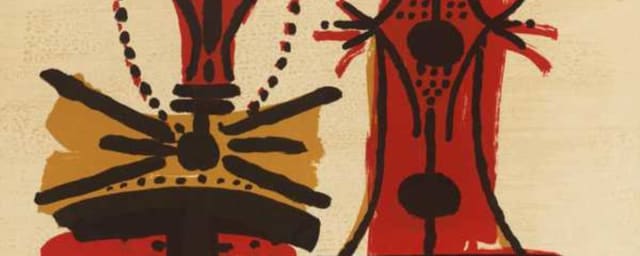
Creolisation
Creolisation is a concept that emerged in the Caribbean region and describes the process by which different peoples, languages, and cultures blend into a single new whole. The term derives from the word Creole, first used to designate people born in the colonies and later the languages and cultures that arose from the fusion of African, European, Indigenous, and Asian elements in the context of colonialism and the slave trade. Creolisation emphasises that from the violent collision of cultures there emerges not merely a mixture but a qualitatively new and distinctive form. Theorists such as the Martinican writers Édouard Glissant and Patrick Chamoiseau developed creolisation as a way of thinking about identity grounded in hybridity, plurality, and openness rather than purity or rootedness. In the visual arts, the concept has inspired diaspora artists to reflect on the complex interweaving of cultural heritages and to resist simplified national or racial categories. Creolisation has become an important tool in postcolonial studies, offering a model of culture as a dynamic, continuous process of mutual exchange. In contrast to the idea of assimilation, it affirms the creative power of cultural mixing as a source of new forms of expression and new ways of being in the world.
Read more →
Cubism
Cubism is a revolutionary avant-garde movement that emerged around 1907–1908 and radically changed ideas about the depiction of space and form. Its founding idea is that an object appears not from a single fixed viewpoint but is broken down into geometric planes and shown simultaneously from several angles, reduced to basic volumes — the cube, the cylinder, the cone. In this way the artist abandons classical linear perspective and the illusion of depth in favor of an analysis of the very structure of things on the flat surface of the canvas. Two phases are distinguished: Analytic Cubism, with the fragmentation of form into small facets and a muted ochre-gray range, and Synthetic Cubism, which restored brighter color and introduced collage, pasted papers and fragments of real materials. The style's founders were Pablo Picasso, whose "Les Demoiselles d'Avignon" became its manifesto, and Georges Braque, with Juan Gris and Fernand Léger among its leading masters; its first theoretical treatise, Du "Cubisme" (1912), was written by Albert Gleizes and Jean Metzinger. In Ukrainian art cubist inquiry was vividly developed by Oleksandr Bohomazov, who fused Cubism with dynamism in his Kyiv compositions (such as 'Lvivska Street in Kyiv', 1914), and by Alexandra Exter, whose Cubo-Futurist works merged the analysis of form with saturated color. Cubism opened the way to non-objective art, influenced Futurism, Constructivism and Suprematism, and the introduction of collage permanently expanded the technical arsenal of twentieth-century painting.
Read more →
Cyberpunk
Cyberpunk is a visual and narrative aesthetic born in the science fiction of the 1980s that later unfolded into an independent style of digital art, illustration, concept art and design. Its worldview is summed up as "high tech, low life": it portrays a near-future dystopia in which all-powerful corporations, artificial intelligence, the cyborgization of the body and total networks coexist with decay, poverty and social alienation. The visual language of cyberpunk is recognizable by the rain-soaked nocturnal megalopolis flooded with the neon glow of acid-pink, cyan and violet signs, by the contrast of darkness and artificial light, glitch effects, holograms, hieroglyphic inscriptions and a dense layering of technological "junk." Composition is often built on the verticals of skyscrapers, reflections in puddles and a smoky perspective that swallows space. The aesthetic took shape under the influence of William Gibson's fiction and the novel "Neuromancer," while its canonical visual image was set by Ridley Scott's film "Blade Runner" and Japanese anime and manga, notably "Ghost in the Shell" and "Akira." Today cyberpunk lives vigorously in digital painting, video games, motion design and art generated by neural networks. As a style it combines a fetishism of technology with a critique of dehumanization, offering a bleak yet visually seductive mirror of the anxieties of contemporary civilization.
Read more →



