




Art terms on "F"
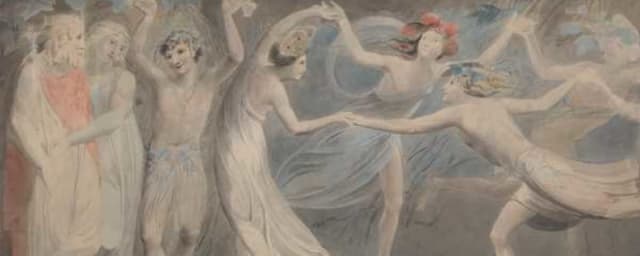
Fairy painting
Fairy painting is a genre depicting fairies, elves, gnomes and other creatures from folklore, mythology and the supernatural world. It is especially closely associated with Victorian Britain of the mid and later nineteenth century, when a fascination with fairy tales, legends and the otherworldly combined with an interest in literature — above all in Shakespeare's plays A Midsummer Night's Dream and The Tempest, which became favourite sources of subject matter. Such paintings are distinguished by extraordinary detail, the small scale of the figures and a fantastical, sometimes unsettling atmosphere. Among the best-known masters of the genre is Richard Dadd, whose meticulously obsessive The Fairy Feller's Master-Stroke (1855-1864) was created during the artist's confinement in a psychiatric hospital, as well as Joseph Noel Paton and John Anster Fitzgerald. Fairy painting reflected complex currents of Victorian culture: an escape from industrial reality into the world of imagination, an interest in childhood, the afterlife and the unconscious, and sometimes hidden erotic or anxious undertones. Today these works are valued for their technical mastery, rich fantasy and their peculiar window onto the psychology of the age.
Read more →
Fancy picture
The 'fancy picture' is a term that arose in eighteenth-century Britain to denote painting that combines scenes of everyday life with elements of imagination, invention, sentiment or implied narrative. Unlike the purely genre picture, which simply records a domestic scene, the fancy picture has no specific literary or historical source but instead creates a touching, idealized or poetic mood — often depicting children, peasants, beggars or shepherds in a sensuous, affecting manner. The word 'fancy' here means 'imagination' or 'fantasy'. The genre is most closely associated with the work of Thomas Gainsborough, who in his late period created moving images of rural children and the poor, as well as with Joshua Reynolds and William Hogarth. Such paintings were extremely popular on the art market and in engraved reproductions, answering the age's taste for sentimentality and moral instruction. The fancy picture reflected the aesthetic preferences of the Enlightenment, particularly the cult of sensibility, and occupied an intermediate place between portraiture, genre painting and the idealized poetic scene.
Read more →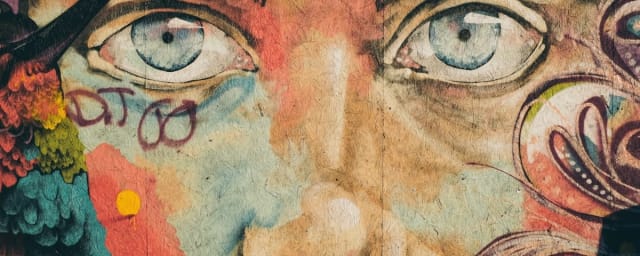
Fantastic realism
Fantastic realism is a movement associated above all with a group of artists who worked in the late 1940s and 1950s in Vienna, forming the so-called Vienna School of Fantastic Realism. Their work combined the flawless painterly technique of the old masters—fine glazing, meticulous detail and deep space—with an interest in contemporary artistic currents, Symbolism, mythology, religion and psychoanalysis. They gave form to ideas about the unconscious, dreams and archetypes in strange, sometimes grotesque images that fused convincing detail with impossible, phantasmagorical visions. The leading masters of the school were Ernst Fuchs, Rudolf Hausner, Arik Brauer, Wolfgang Hutter and Anton Lehmden. Their style was influenced by late Gothic art, Hieronymus Bosch, Pieter Bruegel and Surrealism, though, unlike Surrealist automatism, the Viennese deliberately cultivated painstaking craft and academic skill. Fantastic realism was an important instance of the post-war return to figuration and mythological imagination at a time dominated by abstraction, and it testified to the persistence of a visionary, symbolically rich tradition in twentieth-century European art.
Read more →
Fauvism
Fauvism is the name given to the painting of Henri Matisse, André Derain and other artists in their circle from about 1905 to 1910. The tendency is characterised by a bold, often unnatural use of bright, pure colour, energetic visible brushwork and simplified, almost flat forms. The name comes from the French phrase les fauves, meaning wild beasts: the critic Louis Vauxcelles used it disparagingly when he saw the artists' paintings displayed beside a Renaissance-style sculpture at the 1905 Salon d'Automne in Paris. The Fauves freed colour from its descriptive, imitative function, using it as an autonomous means of expressing emotion and building the composition. Besides Matisse and Derain, the movement included Maurice de Vlaminck, Albert Marquet, Georges Rouault and Raoul Dufy. They were influenced by the Post-Impressionism of Van Gogh and Gauguin and by Divisionism. Fauvism was short-lived as a cohesive group, yet its emphasis on the autonomy of colour was decisive for the development of modern art and directly influenced German Expressionism and the later pursuit of abstraction in the twentieth century.
Read more →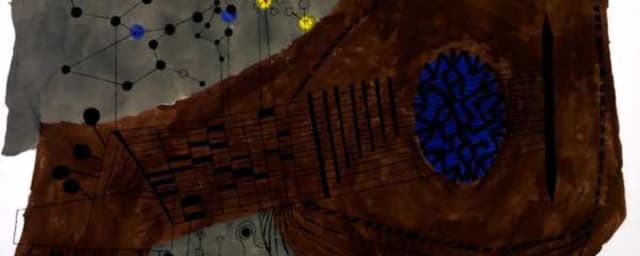
Federal Art Project
The Federal Art Project was a United States government programme intended to provide work for unemployed artists during the Great Depression of the 1930s. Established in 1935 as part of the Works Progress Administration under President Franklin Roosevelt's New Deal and directed by Holger Cahill, the project ran until 1943 and became the largest state support of art in American history. It paid thousands of artists who created murals for non-federal public buildings—schools and hospitals—as well as easel paintings, sculptures, posters, and prints; a separate division, the Index of American Design, documented the country's folk and applied art. The programme also opened community art centres and workshops across the country, bringing art closer to ordinary people. Among the artists supported early in their careers were the future leaders of Abstract Expressionism Jackson Pollock, Mark Rothko, Arshile Gorky, and Willem de Kooning, so the project indirectly nurtured the post-war flowering of American art.
Read more →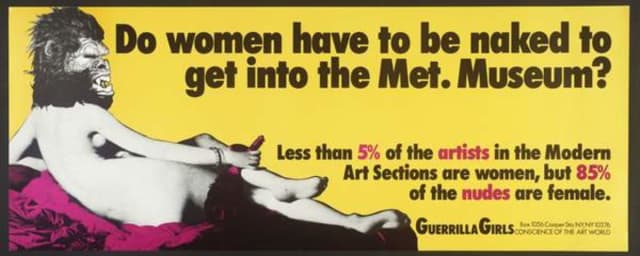
Feminist art
Feminist art is art made by women artists consciously in the context of the development of feminist theory from around 1970, and more broadly a tendency that questions the traditional, male-dominated understanding of art history. Its practitioners sought to make women's experience visible, to recover the forgotten names of women artists of the past, to reclaim the body, labour, domestic life and motherhood as valid artistic subjects, and to dismantle the hierarchy that dismissed so-called feminine crafts such as embroidery and textiles. A landmark figure was Judy Chicago, whose monumental installation The Dinner Party honours notable women throughout history; with Miriam Schapiro she founded an influential Feminist Art Program in California. Also important were the performances of Carolee Schneemann, the conceptual work of Martha Rosler, Cindy Sherman's photographic investigations of identity, and the collective actions of the Guerrilla Girls, who exposed gender inequality in museums. Linda Nochlin's essay Why Have There Been No Great Women Artists? provided a theoretical spur. Feminist art radically expanded ideas about who makes art, what it is about, and who has the right to write its history.
Read more →
Festac (Second Festival of Black Arts and Culture)
FESTAC 77, the Second World Black and African Festival of Arts and Culture, was a major cultural event held in Lagos and Kaduna, Nigeria, from January to February 1977. It continued the tradition of the First World Festival of Negro Arts held in Dakar in 1966 and became one of the largest gatherings of artists of African descent in history. The festival brought together over fifteen thousand participants from dozens of countries across Africa and its diaspora, including painters, musicians, dancers, writers, scholars and filmmakers. Its emblem was an ivory mask from Benin, symbolising the heritage and dignity of African peoples. The event had a distinctly postcolonial, pan-African character: it asserted the continent's cultural independence after decades of colonial rule and sought to reconsider the place of Black art within a global context. FESTAC had a lasting influence on the development of modern African art, strengthened networks of cooperation among diaspora artists, and became a symbol of cultural renewal and solidarity among peoples of African descent.
Read more →
Figurative art
Figurative art is any form of modern art that retains distinct, recognisable references to the real world, and above all to the human figure. The term acquired particular meaning in the twentieth century as the opposite of abstract art: whereas abstraction rejects the depiction of recognisable objects, figurative art deliberately maintains a link with visible reality. Importantly, figurative does not mean simple copying of nature—it can be highly stylised, distorted or expressive, as long as figures, faces or objects remain recognisable within it. After the mid-twentieth-century dominance of abstraction there was a powerful return to figuration, represented among others by the expressive, disquieting canvases of Francis Bacon, the monumental fleshly images of Lucian Freud and the School of London, and various currents of Neo-Expressionism and new realism. The human figure remains one of the oldest and most enduring subjects of art, from prehistoric cave images to the present day. Figurative art testifies to the persistent need of artists to reflect on the human being, the body and the surrounding world, developing alongside abstraction rather than in denial of its existence.
Read more →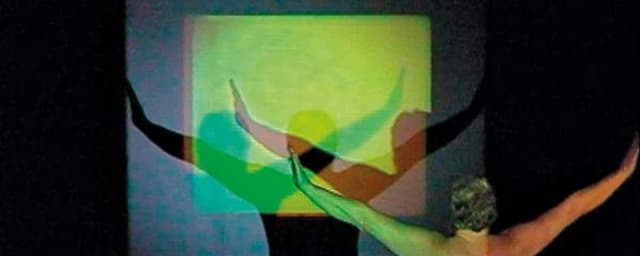
Filmaktion
Filmaktion was a loosely knit group of British experimental filmmakers who worked and performed together in the early 1970s. It included artists such as Malcolm Le Grice, Gill Eatherley, Annabel Nicolson and William Raban, figures associated with the milieu of structural and expanded cinema in Britain, particularly the London Filmmakers' Co-operative. The group sought to move beyond the conventional projection of a film onto a screen and to turn the screening itself into a live performance, using multiple projectors, superimposed images, hand manipulation of the film strip, the shadows of performers' bodies, and the interaction of projected light with the space of the room. This approach belonged to the movement known as expanded cinema, in which the boundary between film, installation and performance was deliberately dissolved. Filmaktion explored the materiality of film itself, treating light, grain, duration and the mechanics of the projector as expressive means in their own right. Though short-lived, the group played a notable role in the development of British avant-garde and experimental film and influenced later media-art practice.
Read more →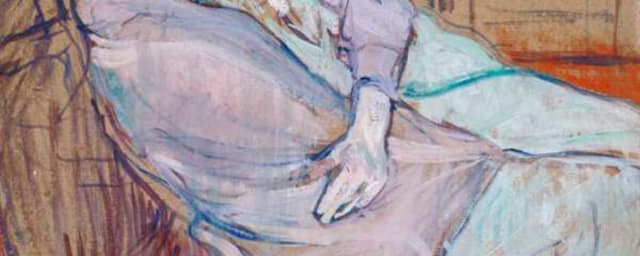
Fin de Siècle
Fin de siècle is a French phrase used chiefly as a historical term to denote the end of the nineteenth century, and more precisely the decade of the 1890s. It conveys the distinctive atmosphere of that age: a mixture of refined weariness, pessimism and a sense of an era coming to a close, combined with a restless anticipation of renewal and of something new. Culturally, fin de siècle is closely bound to Decadence, Symbolism and Aestheticism; its hallmarks were a fascination with artifice, eroticism, mysticism, morbid beauty and the dissolution of established values. In the visual arts the mood of the period was embodied in Art Nouveau with its flowing lines, the graphic art of Aubrey Beardsley, and the Symbolist painting of Gustav Klimt and the Vienna Secession. It was a time of turbulent social change, scientific discovery, urbanisation and anxiety about the future. The turn-of-the-century atmosphere also nourished modern culture across Europe, where Symbolism, Secession and the aesthetics of formal renewal marked painting, graphics and literature. The term is still used to describe the tense, exquisite moods that accompany the turning of historical epochs.
Read more →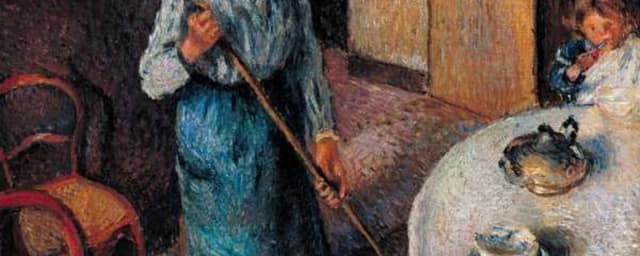
Flâneur
The flâneur is a French term meaning a stroller, an idler, or one who wanders without purpose. The concept acquired special cultural significance through the French poet Charles Baudelaire, who in the nineteenth century used it to designate the attentive observer of modern urban life. The flâneur is a person who ambles unhurriedly through the streets, arcades, and boulevards of the great city, dissolving into the crowd while remaining a detached observer who absorbs the impressions, images, and moods of the modern metropolis. The figure of the flâneur became a symbol of a new kind of urban experience generated by rapid urbanisation and the rebuilding of Paris. The German philosopher and critic Walter Benjamin developed the concept in his unfinished Arcades Project, turning the flâneur into a key figure for understanding modernity, consumption, and alienation in the city. For Benjamin, the flâneur embodied a particular way of seeing, an aestheticised, contemplative attitude toward the city as a text to be read. The figure of the flâneur has profoundly influenced modern art, literature, photography, and cinema, becoming a model of the artist as an observer who captures the fleeting beauty and rhythms of contemporary life.
Read more →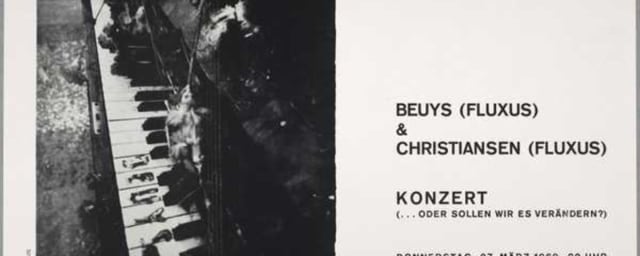
Fluxus
Fluxus was an international avant-garde group and, at the same time, a way of thinking that arose and flourished in the 1960s and in some forms continues today. Its name comes from the Latin word meaning flow, reflecting its members' commitment to constant change, lightness and elusiveness. Fluxus brought together artists, composers, poets and designers from many countries around the idea that art should be simple, everyday, witty and accessible, erasing the boundary between art and life. Its participants created events—short instruction scores for performing ordinary or absurd actions—as well as multiples, mail art, concerts, performances and publications. The movement's organiser and theorist was George Maciunas, and among its well-known members were John Cage as an inspiration, Yoko Ono, Nam June Paik, George Brecht, Dick Higgins and Joseph Beuys. Fluxus inherited the spirit of Dada and Cage's ideas about chance and everyday sound. Although the group was deliberately informal and impermanent, its influence on conceptual art, performance, intermedia and video art proved exceptionally deep and lasting.
Read more →
Folk Art
Folk art is a collective form of creativity that grows out of traditional life, ritual and craft, is handed down from generation to generation and requires no academic training. Its aesthetic rests not on individual innovation but on a canon: established types of ornament, colour combinations and symbols that the maker varies within a shared tradition. Its characteristic features are flatness, decorative stylization, the rhythmic construction of pattern, bright local colour, symmetry, and a sacred symbolism of fertility, goodness and protection. Folk art is inseparable from utilitarian function: it lives in ceramics, weaving, embroidery, carving, the painting of chests and stoves, and icons on glass. In Ukraine its richness is exceptional — Petrykivka painting with its flowering branches, Opishnia and Kosiv ceramics, paper-cut vytynanka, the pysanka, and Poltava and Borshchiv embroidery. A separate chapter belongs to the naïve painting of self-taught masters: Maria Prymachenko with her fabulous beasts and flowers, Kateryna Bilokur with her hyperbolically lavish bouquets, and Nikifor Drovniak of Krynica. These artists, without professional education, created self-sufficient worlds of exceptional plastic power. Folk art is marked by sincerity of feeling, an organic bond with the natural cycle and a deep symbolic density. Each region cultivated its own recognizable manner — its colouring, repertoire of motifs and technique — by which a connoisseur can unerringly tell where an object came from. Here ornament is never mere decoration: it carries a protective, calendrical and ancestral semantics encoded in signs of the sun, the tree of life, the field-rhombus and the bird. Passed from master to apprentice and from mother to daughter, this tradition secured the continuity of collective memory and of an aesthetic canon over the centuries. It became a nourishing source for the professional avant-garde and for design, and it remains the foundation of national visual identity — proof that great art can be born beyond the walls of the academy.
Read more →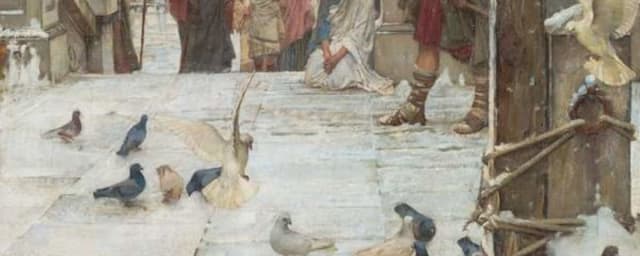
Foreshortening
Foreshortening is the device of depicting an object or the human body at an angle to the picture plane so as to create a convincing illusion of projection into the depth of space. Forms pointing toward the viewer are shown shorter and compressed, while overlapping and sharp changes of scale reinforce the sense of three-dimensionality. Foreshortening is a particular case of the broader principle of perspective and became one of the chief technical challenges for artists, since it demands precise observation and often contradicts what the mind knows about the true proportions of the body. Masterly use of foreshortening has been a mark of high skill since the Renaissance: a classic example is the radically foreshortened figure in Andrea Mantegna's Lamentation of the Dead Christ, where the body seems to project straight toward the viewer. Caravaggio, Tintoretto, and the masters of the Baroque used dramatic foreshortening to heighten dynamism and emotional impact. The device remains fundamental to realist drawing, animation, and three-dimensional graphics.
Read more →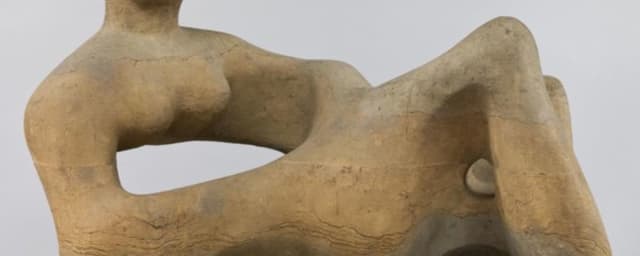
Form
Form is one of the fundamental concepts of art, carrying several interrelated meanings. In the broadest sense, form refers to the overall physical nature of a work, its material, three-dimensional or planar structure, contours, and volume. In a narrower sense, form is one of the elements of visual language alongside line, colour, tone, texture, and space; it denotes a bounded mass or figure that occupies space or creates the illusion of volume on a flat surface. The opposition between form and content is one of the key problems of aesthetics: some theories emphasise the primacy of content, that is, what is depicted or expressed, while others stress the self-sufficiency of form. Formalism, an influential current in twentieth-century criticism represented by figures such as Clive Bell, Roger Fry, and Clement Greenberg, argued that the aesthetic value of a work lies primarily in its formal qualities, the organisation of lines, colours, and masses, rather than in subject matter or narrative. Abstract art carried this principle to its logical conclusion, making form a subject in its own right. An understanding of form remains fundamental to art analysis, allowing one to describe how a work is constructed and how it affects the viewer independently of what is depicted.
Read more →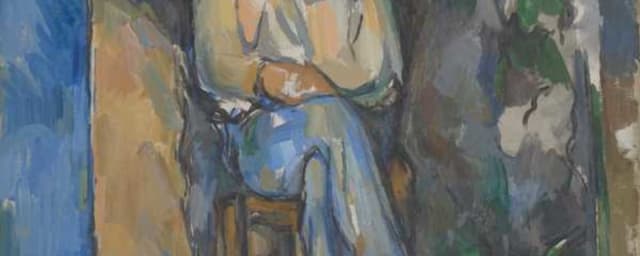
Formalism
Formalism is an approach to the study and evaluation of art based solely on the analysis of its form—that is, the way a work is made and how it looks: composition, line, colour, texture, space and the relationship of parts. For a formalist, the artistic value of a work lies in its visual, formal qualities rather than in subject matter, narrative, historical context or social message. Formalism played a major role in the formation of modernist criticism and in the theoretical justification of abstract art, since formal analysis makes it possible to discuss works that lack recognisable imagery. Significant contributions to formalist thinking were made by the British critics Roger Fry and Clive Bell, who proposed the notion of significant form. In the mid-twentieth century the most influential advocate of formalism was the American critic Clement Greenberg, who championed the idea of the purity of each art form and interpreted the history of modernism as the progressive purification of painting toward its purely optical, flat properties. Formalism was later sharply criticised by contextual and social approaches, yet it remains a basic tool for describing and analysing the visual language of art.
Read more →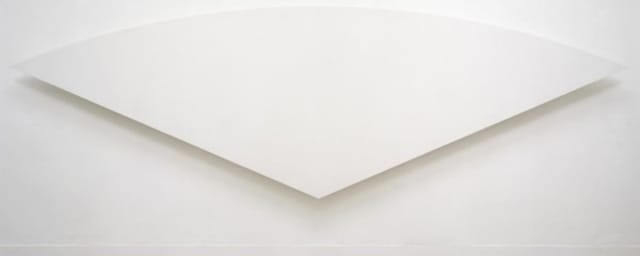
Format
Format is a term that traditionally describes the shape, size, and proportions of the support on which a work of art is created, such as a canvas, sheet, panel, or another usually flat surface like a relief. Format determines the basic dimensions of a work and the ratio of its sides. The most common formats are rectangular, which, depending on orientation, are divided into portrait (vertical), landscape (horizontal), and square. Historically there were also specialised format names, such as marine for elongated horizontal canvases depicting the sea. The choice of format is not neutral; it significantly affects the composition, perception, and meaning of a work. A vertical format emphasises height, monumentality, and spiritual elevation, which is why it was often used in icon painting and religious art, including the Ukrainian icon. A horizontal format fosters a sense of space, narrative, and panorama. Non-standard formats such as oval, circular (tondo), elongated, or shaped supports can lend a work particular expressiveness and challenge the viewer's usual expectations. In contemporary art, artists often deliberately experiment with format, moving beyond the rectangle to expand expressive possibilities and to reorganise the relationship between the image and the viewer's space.
Read more →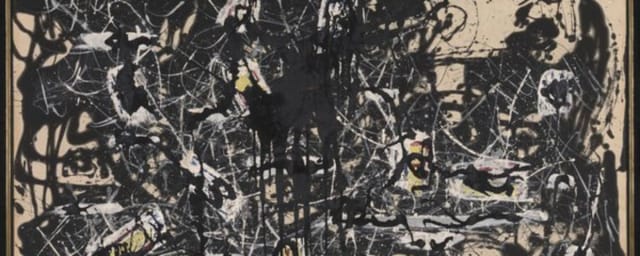
Formlessness
Formlessness, or in French informe, is a concept first introduced by the French writer and philosopher Georges Bataille in the late 1920s. In a short but influential entry published in the journal Documents, Bataille defined the informe not as a particular form but as an operation that lowers things, breaking down established categories and hierarchies. For him, formlessness was a way of dragging art down from its elevated, idealised status toward base materialism, toward the low, the bodily, and the disordered. The concept of formlessness had a profound influence on twentieth-century art, especially on Surrealism, art brut, Abstract Expressionism, and later material-oriented practices. Artists who worked with dripping, dirt, decay, and amorphous masses undermined the classical ideal of finished, harmonious form. In the 1990s the theorists Rosalind Krauss and Yve-Alain Bois reinterpreted the informe in the exhibition and book Formless: A User's Guide, proposing it as an alternative lens for the history of modern art, one focused not on form and content but on operations of decomposition, horizontality, and pulsation. Formlessness remains a powerful critical tool for thinking about art that resists order, purity, and idealisation.
Read more →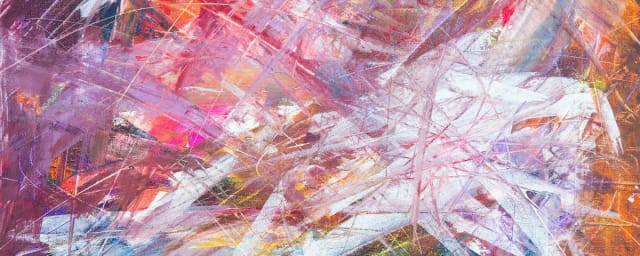
Found object
A found object (French objet trouvé) is a natural or artificial object, or fragment of one, found (and sometimes bought) by an artist and kept because of some intrinsic interest the artist sees in it. The key idea is that an ordinary, often utilitarian object is removed from its everyday context and turned into a work of art, or part of one, by the very act of artistic choice, with almost no physical intervention by the author. The concept of the found object revolutionised twentieth-century art through Marcel Duchamp, who in the early 1910s introduced the "ready-made" — mass-produced industrial goods, such as a bicycle wheel or the notorious urinal Fountain (1917), elevated to the status of art. In doing so Duchamp questioned the traditional notion of craftsmanship, authorship and the uniqueness of the art object. The idea was actively developed by the Dadaists and Surrealists: Pablo Picasso combined found things in assemblages, while the Surrealists valued chance finds for their poetic and subconscious power. Later the found object became the basis of assemblage, Pop art and conceptual art. This concept fundamentally changed the boundaries of art, emphasising that what is decisive is not the making but the choice and context themselves.
Read more →
Fresco
Fresco is a technique of wall painting in which water-based pigments are applied directly onto fresh, damp lime plaster, known in Italian as buon fresco, meaning true fresco. As the plaster dries and the lime undergoes carbonation, the paint is absorbed into the surface and becomes an integral part of the wall, ensuring exceptional durability. The artist must work quickly, in sections called giornate, while the plaster is still wet, because once it dries corrections are impossible. Fresco reaches back to antiquity, as in the Minoan murals of Crete, and attained its heights in Italian art, from Giotto to Michelangelo and his ceiling of the Sistine Chapel. In Ukraine fresco has a thousand-year tradition: the pre-Mongol eleventh-century murals of the Saint Sophia Cathedral in Kyiv and the frescoes of Saint Cyril's Church are among the oldest monuments of monumental art. In the early twentieth century Mykhailo Boychuk and his school revived monumental fresco painting, drawing on Byzantine and folk heritage; tragically, most of their works were destroyed by the totalitarian regime.
Read more →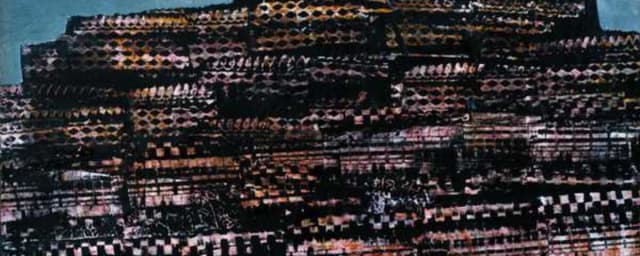
Frottage
Frottage, from the French frotter meaning to rub, is a Surrealist automatic method of creation in which a sheet of paper is laid over a textured surface, wood, leaves, fabric, or stone, and rubbed with a pencil or another dry material, so that the relief pattern of the support is transferred onto the paper. The technique was invented as an artistic device by Max Ernst around 1925: according to legend, inspiration came to him from contemplating the worn boards of an old floor. Ernst treated the resulting textures as a kind of vision, a starting point for the imagination out of which fantastic forests, creatures, and landscapes emerged; he gathered these works into the series Natural History. For the Surrealists frottage, like decalcomania and fumage, was a way to invite chance and the unconscious while bypassing the conscious control of the mind. Its simplicity and accessibility have made frottage popular not only in art but also in art education and children's creativity, where it develops sensitivity to texture and imagination.
Read more →
Fumage
Fumage, from the French fumee meaning smoke, is an artistic technique in which an image or texture is created by the soot and smoke of the flame of a lit candle or oil lamp held beneath a support, paper, canvas, or a still-wet painted surface. As it settles, the soot leaves soft, cloud-like, unpredictable traces that the artist can partly control by directing the flame, and then paint over or fix. The technique was developed by the Surrealist Wolfgang Paalen around 1936, and related experiments were made by Salvador Dalí, who called the technique sfumato. Fumage belongs to the circle of Surrealist automatic methods, alongside frottage, decalcomania, and solarisation, which sought to invite chance, the elemental, and the unconscious while loosening the artist's rational control. The ghostly, atmospheric images born of smoke suited the Surrealist interest in dreams, anxiety, and the irrational. Today fumage is used by experimental artists exploring elemental, process-based ways of making an image.
Read more →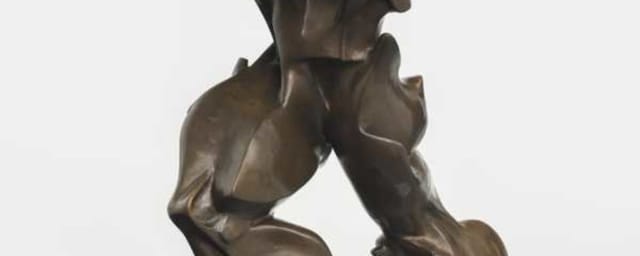
Futurism
Futurism was an avant-garde movement proclaimed in 1909 by the manifesto of Filippo Marinetti, which glorified speed, the machine, the energy of industrial civilization and a break with the museum past. Its aesthetic sought to convey the dynamism, movement and simultaneity of sensation of the modern city. Its formal means were the fragmentation of form into successive phases of motion, "lines of force" that traced trajectories, the interpenetration of objects and space, the rhythmic repetition of contours, sharp diagonals and machine-like imagery. The Italian Futurists Umberto Boccioni, Giacomo Balla, Gino Severini and Carlo Carrà embodied the plasticity of movement and the vibration of light. The Ukrainian and East Slavic contribution was especially powerful: David Burliuk, the "father of Futurism" in the Empire, combined shock tactics with an uninhibited handling of surface; Oleksandr Bohomazov, in his treatise "Painting and Elements," developed a theory of dynamic form and created masterpieces of Cubo-Futurism such as "Lvivska Street in Kyiv" (1914); Aleksandra Exter synthesized Cubism and Futurism in explosive colour rhythms; the early Kazimir Malevich and Vadym Meller also gravitated to this circle. Cubo-Futurism became a distinctive East European version of the movement, closely tied to the poetic avant-garde. Futurism embraced painting, sculpture, graphic art, poetry, theatre and typography, proclaiming a cult of technological progress. Despite the political controversy of its Italian branch, the movement radically changed the depiction of time and motion and prepared the ground for Constructivism and kinetic art.
Read more →



